
Few things capture the imagination like the angular marks the Norse carved into stone, wood and bone. If you have ever wondered about viking rune meanings before choosing a design to wear, this beginner’s guide walks through where runes came from, what the individual characters signified, and how to read modern “rune” charts with a sceptical eye. The short version: runes were a genuine writing system first, and a source of meaning second.
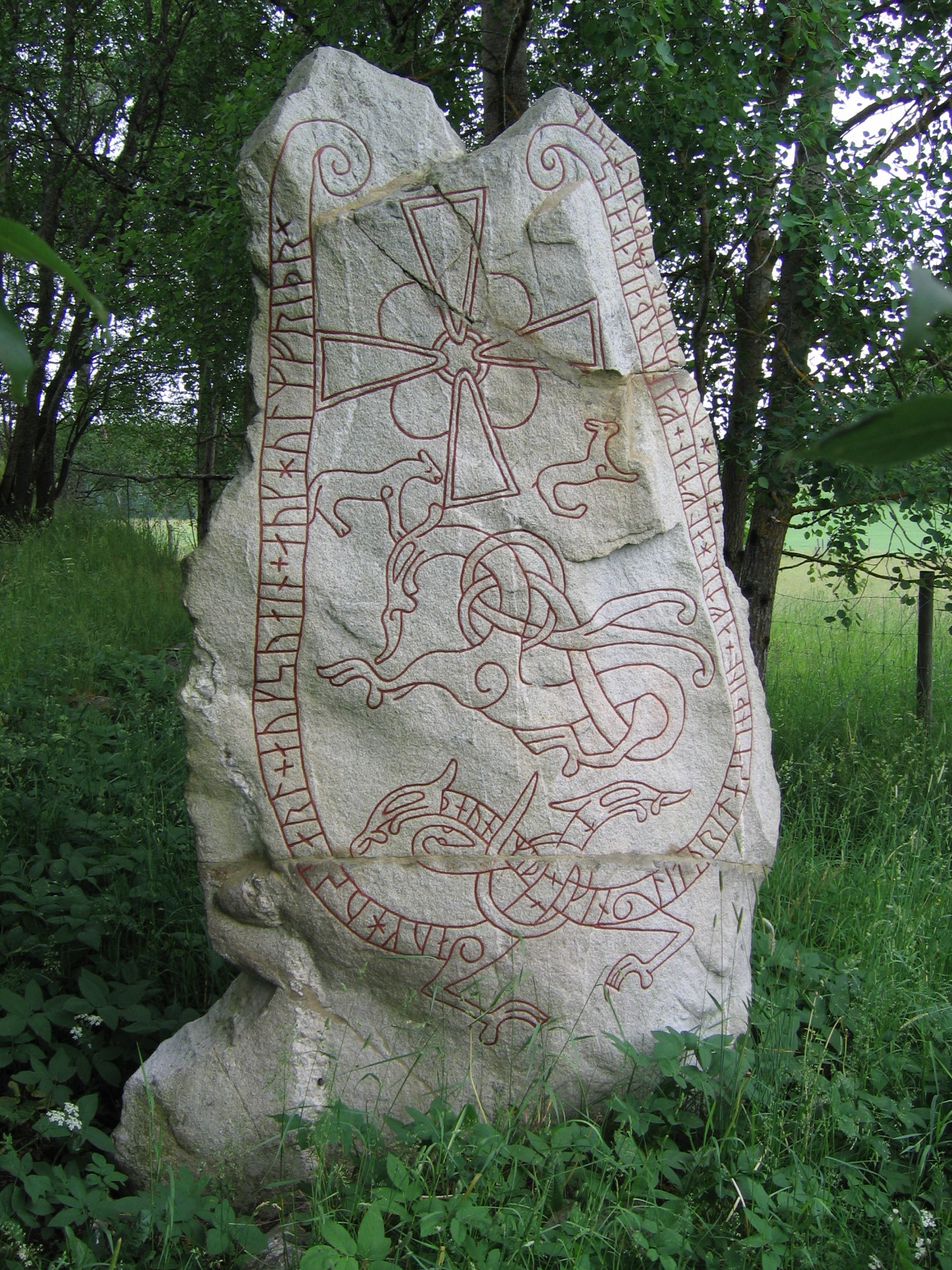
Runes were letters first, meanings second
Before anything else, runes were an alphabet. Each character stood for a sound, so people used them to write ordinary things: names, memorials, ownership marks scratched onto tools and weapons, trade notes, and the occasional rude joke. What makes them special is that every rune also had a name, and that name carried a concept. The rune for the “f” sound was called fehu, meaning cattle, and cattle meant wealth. So a single carved line could work as a letter, a word and a small charm all at once, which is why runes turn up on protective amulets and memorial stones alike.
What the Elder Futhark actually is
The Elder Futhark is the oldest known runic alphabet, in use roughly from the 2nd to the 8th century across the Germanic world. It has 24 characters, and its odd-looking name is simply the first six of them read in order: F, U, Th, A, R, K. It is the script most people picture when they think of runes, and it is the one nearly every online “viking rune” chart reproduces.
Here is the detail those charts usually get wrong. By the Viking Age proper, from around the year 800 onwards, Scandinavians had stopped using the 24-character Elder Futhark. They wrote instead in the shorter Younger Futhark, which had been trimmed down to just 16 runes. So a truly “Viking” inscription uses the younger set, while the familiar 24-rune meanings people love actually belong to the older, pre-Viking alphabet. Both are worth knowing; they are just not the same thing.
The three aettir
The 24 Elder Futhark runes were traditionally grouped into three families of eight, called aettir. Each is named after the rune that opens it:
- Freyr’s aett — the first eight, tied to fertility, growth and everyday life.
- Heimdall’s aett (also called Hagal’s aett) — the middle eight, often linked to disruption, trial and change.
- Tyr’s aett — the final eight, associated with law, courage and the world of gods and heroes.
Key viking rune meanings to know
You do not need all 24 to get started. A handful of runes carry the ideas people most often want to wear:
- Fehu — cattle, and by extension wealth and prosperity.
- Uruz — the aurochs, a wild ox; raw strength and vitality.
- Thurisaz — the thorn, linked to Thor; a sharp, defensive force.
- Ansuz — a god, often connected with Odin; wisdom, speech and communication.
- Raidho — riding; a journey, movement and travelling well.
- Kenaz — the torch; fire, craft and hard-won knowledge.
- Sowilo — the sun; guidance, energy and victory.
- Tiwaz — the god Tyr; justice, honour and courage.
- Algiz — protection and defence; comfortably the most common rune in modern talismans.
- Berkano — the birch; growth, renewal and new beginnings.
Bindrunes: two runes, one glyph
A bindrune is what you get when two or more runes are merged into a single design, usually by having them share a central stave. Historically these worked as monograms and maker’s marks, a compact way to sign an object or condense a name. Today they make an ideal personal charm: pick the runes whose meanings suit you, overlap them into one symbol, and you have a mark that is genuinely your own rather than a copied chart entry.
The honest truth about rune “divination”
Plenty of modern books present runes as a tarot-style oracle, with upright and reversed positions, elaborate spreads and set fortune-telling meanings. It is worth being clear: those systems are largely a 20th-century invention. The Roman writer Tacitus did describe Germanic peoples casting marked pieces of wood to read signs, but whether those marks were runes, and how any such practice worked, is genuinely uncertain. The surviving evidence for detailed rune casting is thin. Enjoy the practice if it appeals to you, but treat the “ancient rune divination” framing as inspired by history rather than documented fact.
Choosing and wearing runes today
Most people now meet runes as design rather than script, on rings, pendants and printed apparel. The nicest approach is to choose by intent: Algiz if you want a protective piece, Sowilo for energy and success, Berkano for a fresh start, or Tiwaz if courage and fairness speak to you. A single clear rune reads beautifully on a shirt, while a small bindrune makes a subtle, meaningful piece of jewellery. Whatever you pick, knowing the real meaning behind the mark makes it far more satisfying to wear.
Wear it: Viking Symbols
Premium Norse-inspired apparel, made on demand.
🇺🇸 Fast US shipping · 🇪🇺 Ships across the EU · 🔒 Secure checkout

 vikings


