
Wear it: The Heart of Odinism
Premium Norse-inspired apparel, made on demand.
🇺🇸 Fast US shipping · 🇪🇺 Ships across the EU · 🔒 Secure checkout
Forging the warrior: embodying Thor’s divine might
In the echoes of the North, where thunder rolled across the fjords like the wheels of a great chariot, one name resonated with power: Thor. He was more than a deity of lightning and storms; he was the ideal, the archetype of the Norseman. For the Viking warrior, to walk the earth was to strive to be a son of Thor, not in literal lineage, but in spirit and in deed. This was the true bloodline of the thunder god—a legacy of strength, loyalty, and protection, forged not in the womb, but in the heart of the warrior and the fire of the smithy.

Thor was the protector of Midgard, the realm of humanity. He was the brawny, bearded champion who stood against the chaotic forces of the giants. Unlike the cunning and enigmatic Odin, Thor was straightforward, dependable, and fiercely protective of those in his charge. This made him profoundly relatable. A Viking farmer, a fisherman, or a warrior could see a reflection of their own struggles in Thor’s eternal fight. They too had to be strong to protect their homestead, loyal to their jarl, and courageous in the face of the unknown, whether it be a harsh winter or the shield wall of an enemy.
This emulation began in youth. A Viking boy was not raised in softness. He learned to endure the cold, to wield an axe with purpose, and to understand that his strength was his clan’s shield. Training was relentless, a constant honing of the body into a weapon. This physical prowess was a direct tribute to Thor, whose sagas were filled with tales of lifting impossible weights, wrestling giants, and swinging his legendary hammer, Mjölnir, with devastating force. Every swing of an axe, every heave of an oar, was a quiet prayer to the thunder god, a testament to a shared ideal of physical power.
The choice of weapon itself was a nod to their patron deity. While the sword was often a mark of wealth and status, the axe was the tool of the common man, the yeoman, the farmer-warrior. It was practical, versatile, and deadly—a symbol of raw, untamed power, much like Mjölnir. To wield an axe was to channel the accessible strength of Thor. It was a declaration that even a common man, through courage and might, could become a protector of his people. Before battle, it was common for warriors to call upon Thor’s name, not for complex strategies, but for raw courage—for the strength to hold the line and the fury to break their enemies.
The community forge: a brotherhood of steel
The strength of a Viking was never a solitary pursuit. While individual prowess was celebrated, the true power of the Norse people was found in the unbreakable bonds of their community. This, too, was a reflection of Thor’s ethos. He was not a lone god wandering the cosmos; he was the defender of a people, the champion of a collective. The Viking community was a forge where individual lives were hammered together into something stronger: a clan, a crew, a brotherhood bound by steel and oath.
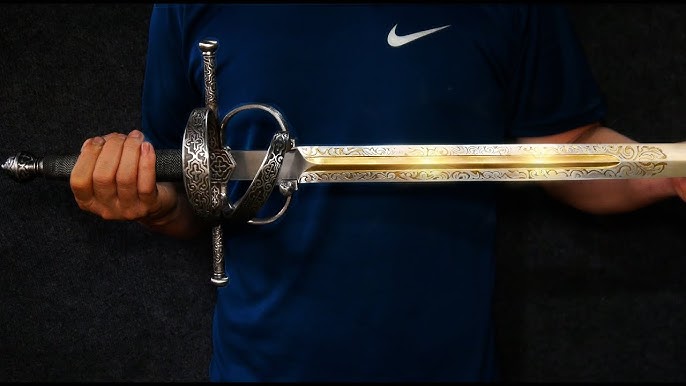
At the heart of this forge was the blacksmith. The smith was one of the most revered figures in Norse society, a master of fire and metal who turned raw iron into tools of survival and weapons of conquest. His workshop was a sacred space, filled with the rhythmic clang of the hammer—a sound that echoed Thor’s own work in the heavens. The blacksmith did not merely shape metal; he wove strength into steel. He understood the soul of the iron, knowing how to fold it, quench it, and temper it to create a blade that would not fail a warrior in his moment of need. This craftsmanship was a holy act, a physical manifestation of the Viking ideal of creating order and strength from the raw chaos of the world.
This sense of shared strength was most visible in the Viking shield wall. Here, individual warriors locked their shields together, creating a nearly impenetrable barrier of wood and steel. A shield wall was the ultimate expression of the community forge. One man’s weakness was covered by his neighbor’s strength. Trust was not a choice; it was a necessity. Each warrior was a single link in a chain, and the chain was only as strong as its weakest point. This deep, instinctual reliance on one another was the social equivalent of a perfectly forged sword—a composite of different elements blended together to create something far more resilient than any single part. Oaths sworn upon a hammer or a sacred arm-ring were not mere words; they were the spiritual rivets holding this human shield wall together, a promise of loyalty stronger than any steel.
This powerful sense of community, this brotherhood of steel, is what allowed the Vikings to push the boundaries of the known world. Whether exploring new lands or raiding for wealth, they did so as a unified force. The crew of a longship was a microcosm of their society—each man with a role, each man trusting the others with his life. They were a family forged in the crucible of the sea and the heat of battle, all living by the same code of mutual protection that Thor himself championed.
Woven in symbols: the mark of the thunder god
The spirit of Thor was not just an abstract ideal; it was a tangible presence in the daily lives of the Vikings, woven into the very fabric of their material culture. From the amulets they wore around their necks to the great stones they raised to honor their dead, the mark of the thunder god was everywhere, a constant reminder of the strength they sought to embody.
The most iconic of these symbols is, without a doubt, the Mjölnir amulet. Archaeologists have unearthed more pendants depicting Thor’s hammer than any other Norse symbol. These small hammers, crafted from silver, iron, or amber, were worn by men and women alike. It was far more than a simple piece of jewelry; it was a powerful statement of identity and faith. To wear Mjölnir was to place yourself under the protection of Thor. It was a ward against evil, a charm for strength in battle, and a symbol of one’s commitment to the old ways, especially as Christianity began to spread across Scandinavia.
The hammer was a tool of both destruction and creation. With it, Thor destroyed giants, but he also consecrated, blessed, and hallowed. Sagas tell of Thor using Mjölnir to bless a marriage or sanctify a funeral pyre. This duality was central to the Viking worldview. The same axe that felled a foe could also build a home. The same ship that carried raiders could also carry settlers and merchants. The Mjölnir pendant encapsulated this complex reality, representing not just brute force, but also order, protection, and the sanctification of life’s most important moments.
Beyond personal adornment, Thor’s legacy was carved in stone. Runic inscriptions and picture stones across Scandinavia depict his epic battles, most famously his fight against Jörmungandr, the Midgard Serpent. The image of Thor, braced for battle with the world-encircling serpent, was a powerful metaphor for the Norse people. It was a story about facing an insurmountable, world-ending foe with unflinching courage. It was an acknowledgment that some fights are not about victory, but about facing one’s destiny with honor. These carvings on shields, bedposts, and memorial stones served as a constant narrative, reminding them that their own struggles, no matter how great, were part of a larger, cosmic battle between order and chaos.
This bloodline of Thor, then, was a legacy woven in steel, sworn in oaths, and worn in symbols. It was the understanding that true strength was not just the might of a single warrior, but the resilience of a unified community, protected by gods and bound by loyalty. It was a spirit that lived in the clang of the blacksmith’s hammer, the lock of a shield wall, and the simple silver pendant resting against a warrior’s heart—a thunderous pulse that still echoes through the ages.

 History Warrior Team


