
The historical roots of norse ink
The image of a Viking warrior is rarely complete without picturing skin etched with powerful, intricate symbols. But were these fearsome tattoos a reality, or just a modern romanticization? While we lack the perfectly preserved, tattooed Viking mummies found in other ancient cultures, compelling historical accounts suggest that body art was indeed a part of Norse life. The most famous and vivid description comes from Ahmad ibn Fadlan, an Arab diplomat who encountered a group of Scandinavian traders known as the Rus’ in the 10th century. He wrote of men covered from their “fingertips to their necks” with dark green patterns depicting trees and other figures. While scholars debate whether these were permanent tattoos or temporary body paint, this account provides a tantalizing glimpse into a culture that used its own skin as a canvas for identity and belief.
These markings were far more than simple decoration; they were a language of the soul, a visual declaration of one’s place in the world. For a Viking warrior, a tattoo could serve as a powerful talisman, invoking the protection of the gods in the chaos of battle. Symbols associated with Odin, the Allfather, or Thor, the thunder god, were not just art but prayers etched into the flesh. They could function as a spiritual shield, a ward against evil spirits, or a conduit for drawing strength from the divine. The very act of being tattooed, likely a painful process involving a sharp tool and a dye made from ash or natural pigments, was a rite of passage—a test of endurance that proved one’s mettle.
Furthermore, these tattoos were a social marker. They could signify allegiance to a specific chieftain, membership in a warrior brotherhood, or commemorate a significant personal achievement, such as a victorious raid or a heroic deed. Imagine a shield wall, each warrior a tapestry of personal history and divine favor, their tattoos telling a silent story of their journey. This visible commitment to their beliefs and their community would have been an intimidating sight for any foe, turning their bodies into living banners of their fierce culture. It was this deep, multi-layered meaning—blending the spiritual, the social, and the personal—that made Norse body art so potent and ensures its legacy endures today.
Decoding the symbols: a lexicon of viking power
The enduring appeal of Viking tattoos lies in the raw power of their symbolism. Each line and knot carries centuries of meaning, rooted in a worldview of gods, giants, and the inexorable hand of fate. Understanding these symbols is key to appreciating why they continue to be chosen by so many to adorn their bodies. These aren’t just cool designs; they are fragments of an ancient spiritual lexicon, each with a story to tell.
Perhaps one of the most enigmatic and sought-after symbols is the Valknut, or the “knot of the slain.” Composed of three interlocked triangles, this symbol is found on ancient runestones and artifacts closely associated with Odin. Its exact meaning is lost to time, but it is widely believed to represent the transition between life and death and Odin’s power to bind and unbind the fates of men. For warriors, it symbolized a willingness to die in battle and be chosen by the Valkyries for a glorious afterlife in Valhalla. A Valknut tattoo is a mark of dedication, sacrifice, and an acceptance of one’s destiny, making it a profoundly powerful choice for those who feel a connection to the warrior’s path.
Another symbol steeped in protective magic is the Aegishjalmur, the Helm of Awe. This striking sigil, composed of eight armed staves radiating from a central point, was believed to grant invincibility and strike fear into the hearts of one’s enemies. In the sagas, heroes would draw this symbol on their foreheads before battle to channel its protective power. As a tattoo, the Helm of Awe is a potent talisman, chosen by those seeking strength and protection against adversity. It is a declaration of inner fortitude and the will to overcome any obstacle.
While its origins are from a later Icelandic period, the Vegvisir, or runic compass, has been wholeheartedly adopted into the modern Viking aesthetic. Described in the 17th-century Huld Manuscript as a symbol that will help the bearer find their way through storms and bad weather even when the way is not known, its meaning resonates deeply today. The Vegvisir is more than a magical compass; it’s a metaphor for guidance through the storms of life. A Vegvisir tattoo represents a search for direction, a trust in one’s path, and the resilience to navigate uncertainty without losing your way.
Of course, no discussion of Norse symbols is complete without the runes themselves. The letters of the Elder Futhark alphabet were more than a writing system; each rune held a specific, esoteric meaning and magical property. Tattoos of individual runes like Tiwaz for victory and justice, or Algiz for protection, are common. Even more personal are bindrunes—the combination of two or more runes into a single, unique sigil to create a specific intention or spell. This allows for a deeply personal tattoo that carries a hidden meaning known only to the bearer.
Beyond these, mythological creatures offer another rich vein of inspiration. Tattoos of Jormungandr, the world-encircling serpent, symbolize the inescapable cycle of life and destruction. Fenrir, the great wolf destined to slay Odin during Ragnarok, represents untamable strength and the wild forces of nature. And Odin’s ravens, Huginn (thought) and Muninn (memory), are popular symbols for wisdom, knowledge, and the quest for spiritual insight. Each of these symbols offers a way to connect with the epic, elemental stories that defined the Norse world.
The modern shield wall: why we still crave norse ink
The resurgence of Viking-inspired tattoos in the 21st century is a fascinating cultural phenomenon. In a world that often feels disconnected and sanitized, these ancient symbols offer a primal link to something raw, authentic, and powerful. The reasons we are drawn to them today are as complex and layered as the knotwork in a traditional Norse design, blending a reverence for the past with the challenges of the present.
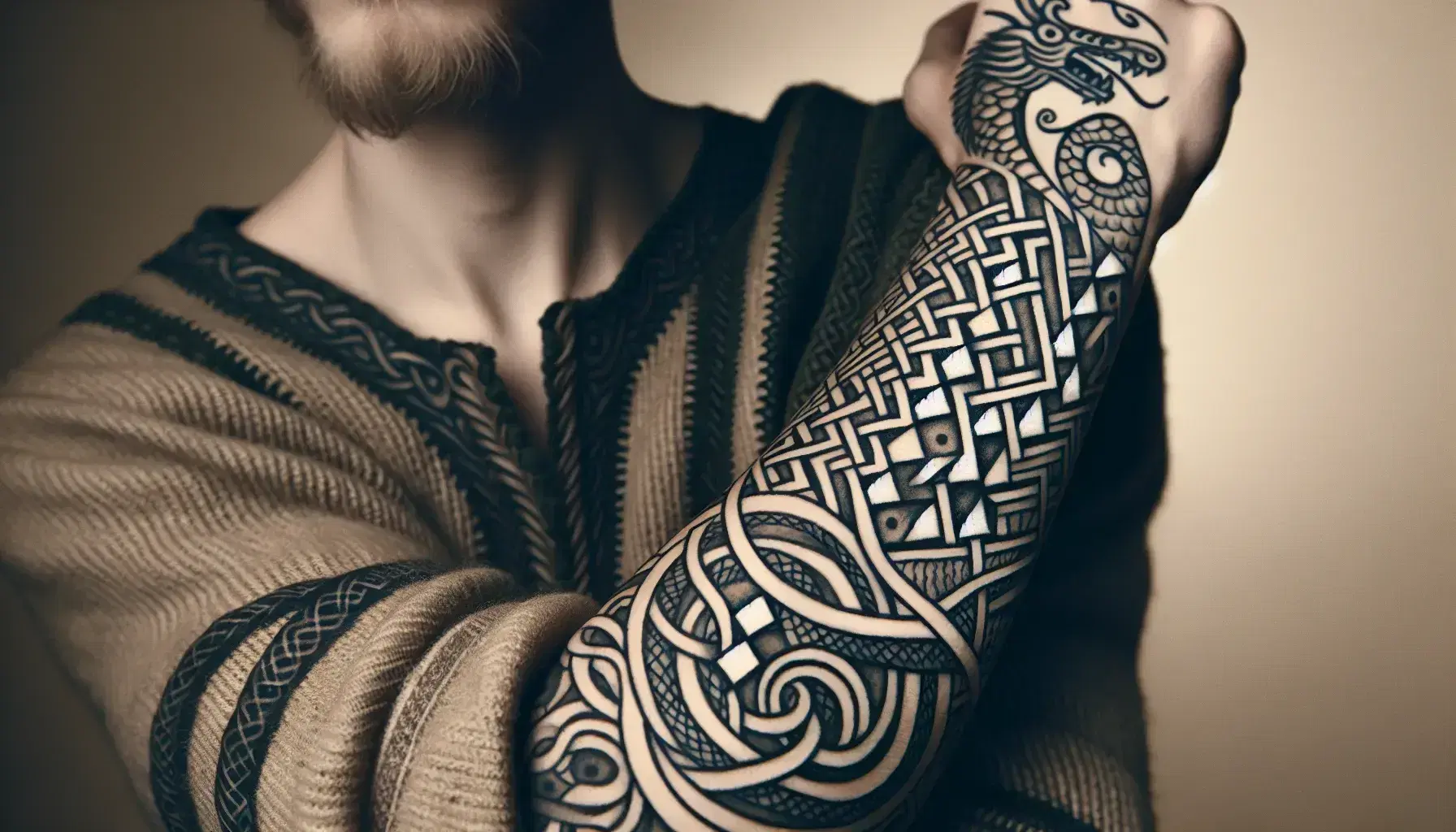
For many, it’s a powerful connection to ancestry. Individuals with Scandinavian heritage often choose Viking tattoos as a way to honor their roots and carry a piece of their history with them. It becomes a badge of identity, a way of saying, “This is where I come from. This is the blood that runs in my veins.” In a globalized world, this tangible link to one’s lineage provides a profound sense of belonging and grounding. It’s a way to keep the stories of the ancestors alive, not in a dusty book, but on living skin.
Beyond heritage, these tattoos are chosen for the timeless values they represent. The Viking Age was a brutal, unforgiving time that demanded courage, resilience, and an indomitable will to survive. Symbols that once protected warriors in battle now serve as modern armor for navigating life’s challenges. A Norse tattoo can be a personal reminder to be strong in the face of adversity, to be fearless in the pursuit of one’s goals, and to live with honor and conviction. It’s a way of externalizing an internal warrior spirit, a commitment to embodying the virtues of strength, loyalty, and freedom that are as relevant today as they were a thousand years ago.
We also cannot ignore the undeniable influence of pop culture. Blockbuster shows like “Vikings” and “The Last Kingdom,” along with epic video games like “God of War” and “Assassin’s Creed Valhalla,” have brought the Norse world to life for a massive global audience. They have showcased the stunning aesthetic of Viking art, the drama of their mythology, and the compelling nature of their warrior ethos. This exposure has demystified the symbols, making them accessible and desirable to a new generation who see in them a reflection of the epic stories they love.
Ultimately, choosing a Viking tattoo today is a statement of fierce individuality. It is a rejection of the mundane. The bold lines, the intricate and often asymmetrical patterns, and the powerful, primal imagery stand in stark contrast to fleeting trends. It’s a permanent mark that speaks of an affinity for the wild, the mythological, and the heroic. Whether it’s a full sleeve depicting a scene from Ragnarok or a single, discreet rune, a Viking tattoo is a declaration that the wearer walks their own path, guided by an ancient spirit of fearless exploration and unwavering strength. They are more than just ink; they are a modern-day shield wall, a testament to the fact that the spirit of the North is not just history—it is a living, breathing legacy.

 vikings


