
The shadow of the raven’s wing
Imagine the scene. A grey, northern sea churns beneath the hull of a longship. The wind, cold and sharp, carries the scent of salt and pine. At the masthead, a black banner snaps and dances in the gale. Woven into its fabric is the stark image of a raven, its wings outstretched, its beak open in a silent cry. This is the Hrafnsmerki, the raven banner. For the warriors on that ship, it was more than a flag; it was a promise, a prophecy, and a direct link to the Allfather, Odin himself.

The raven banner is one of the most potent and feared symbols of the Viking Age. Mentioned in sagas and chronicles, it was said to possess supernatural qualities. Legend holds that if the raven appeared to be flying, victory in the coming battle was assured. If it hung limp, defeat was imminent. This belief was not merely superstition; it was a core part of the Norse warrior’s worldview. The ravens, Huginn (thought) and Muninn (memory), were Odin’s eyes and ears, flying across the nine realms to bring him knowledge. To fight under the raven banner was to fight under the watchful gaze of the god of war, poetry, and wisdom. It was a declaration that this was not just a raid for plunder, but a destiny being fulfilled.
This powerful symbolism didn’t just fly at the mast; it permeated the very identity of the warrior. Their attire was a reflection of this fierce, fatalistic, and deeply spiritual mindset. The clothing of a Viking wasn’t just for warmth or protection; it was a canvas that told the story of their life, their allegiance, and their place in the world. From the weave of their tunic to the tooling on their belt, every element was imbued with a purpose that echoed the spirit of the raven: pragmatic, resilient, and ever-ready for what fate might bring.
Weaving the warrior’s wardrobe: From the loom to the longship
Before a Viking could earn their scars in battle, their journey began with the simple, foundational garments of their people. The popular image of the savage clad in rough furs is a dramatic oversimplification. In reality, Viking attire was a sophisticated, layered system built on practicality, resourcefulness, and a surprising touch of color. The very foundation of this wardrobe was born from the land itself: wool and linen.

The primary garment for a man was the kyrtill, or tunic. Typically made from wool, this was the workhorse of Norse clothing. Wool was a miracle fabric of the ancient world. Its natural lanolin oils made it water-resistant, and it could retain up to 80% of its insulating properties even when soaking wet—a life-saving feature for seafarers constantly battling ocean spray and harsh weather. These tunics were not baggy sacks; they were tailored to the body, often with gores (triangular fabric inserts) in the skirt to allow for freedom of movement, essential for working an oar or swinging an axe. Underneath the wool tunic, a Viking would often wear an undertunic of linen. Smoother and more comfortable against the skin, linen was cooler in warm weather and provided a crucial base layer.
Paired with the tunic were the brækur, or trousers. These varied in style, from close-fitting to the more voluminous ‘puffy’ trousers gathered at the knee, as seen on runestones. To keep the lower legs warm and protected from thorns and underbrush, Vikings wore leg wraps known as vindingr. These long strips of wool were wound from the ankle to the knee, providing support, insulation, and a degree of protection. This layered approach was the key to survival, allowing a warrior to adapt to changing conditions by adding or removing garments as needed.
Contrary to the drab, brown-and-grey palette often depicted in media, Vikings loved color. Using dyes derived from plants, they could create a range of hues. Madder root produced vibrant reds, woad created deep blues, and weld yielded a bright, sunny yellow. The cost and intensity of the color were often a signifier of wealth and status. A chieftain might wear a deep red tunic, a color associated with power and wealth, while a farmer might wear more muted, undyed wool known as vaðmál. The edges of tunics and cloaks were often decorated with woven tablet-braid bands, sometimes incorporating complex patterns and even silk threads obtained through trade, adding another layer of personal expression and status to their attire.
The hardened hide: Leather, iron, and the story of survival
While wool and linen formed the core of everyday life, the call to battle demanded something more. When the raven banner was raised, the Viking warrior added layers of hardened hide and iron, transforming their practical attire into the gear of a raider. This was not the gleaming plate armor of later knights but a functional and often brutalist collection of protective equipment that told a story of past conflicts and hard-won experience.
Leather was indispensable. A strong leather belt, often fitted with a decorative buckle of bronze or iron, was the centerpiece of a warrior’s kit. It did more than just hold up their trousers; it was a tool belt from which hung their most essential items. A seax (a long single-edged knife), a whetstone for keeping blades sharp, a fire-starting kit, and a pouch for coins or personal treasures were all suspended from the belt, always within reach. Sturdy leather boots, often of the ‘turn-shoe’ construction, protected their feet on long marches and slippery ship decks. Simple leather bracers, or arm guards, could deflect a glancing blow and prevent a disabling injury.
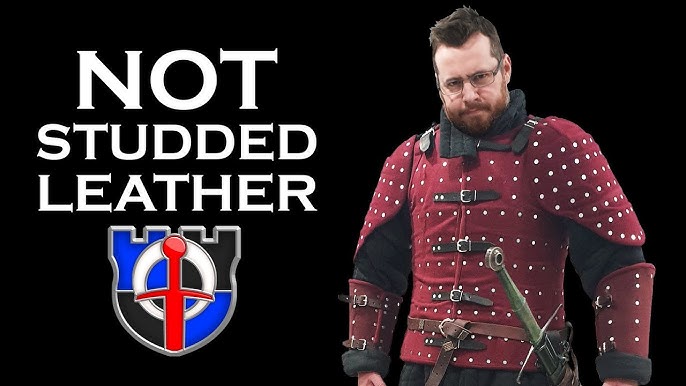
For body armor, the average warrior likely relied on a padded leather jerkin or a thick wool gambeson. This ‘soft’ armor was surprisingly effective at absorbing the shock of a blow and could turn aside a sword cut that wasn’t perfectly placed. It was affordable, easy to make, and offered significant protection without sacrificing too much mobility. The most iconic piece of Viking armor, the mail shirt or byrnie, was a symbol of immense wealth and success. Each byrnie was made of thousands of interlinked iron rings, each one individually riveted shut. The amount of labor and precious iron required to create one made it the equivalent of a modern luxury car. Only jarls, chieftains, and their most elite hearth-guard would have owned such a prize. A warrior wearing mail was a fearsome sight, a walking testament to their prowess and plunder.
Finally, there was the helmet. The quintessential Viking helmet was not adorned with horns—a theatrical invention of the 19th century. The real thing was a brutally simple and effective piece of design. The Gjermundbu helmet, one of the only complete examples ever found, features a simple domed bowl, a reinforcing band, and a ‘spectacle’ guard that protected the eyes and nose. It was designed to do one thing: stop a sword or axe from cleaving a man’s skull. The dents, scratches, and repairs on a warrior’s helmet, leather, and shield were not imperfections; they were his chronicle. They told of battles fought in distant lands, of duels won, and of a life lived on the edge, all under the watchful, unblinking eye of the raven on the banner.
From the humblest linen undertunic to the priceless iron byrnie, Norse attire was a language in itself. It spoke of a culture deeply connected to its environment, unflinchingly practical, and rich with symbolism. The threads that clothed the Viking warrior were woven with the stories of their gods, their status, and their unyielding spirit. The raven banner may have long since turned to dust, but the echo of its fierce spirit lives on in the legacy of their legendary attire.

 vikings


