
The soul of the symbols: Understanding the Elder Futhark
Before the first chip of wood is carved or the first line is etched into bone, one must understand that runes are far more than a simple alphabet. To the Norse people, these symbols were a living, breathing conduit to the forces that shaped the cosmos. They were whispers from the gods, keys to unlocking fate, and potent charms woven into the very fabric of their existence. This ancient script, known as the Elder Futhark, is the oldest form of the runic alphabets, a collection of 24 symbols, each pulsing with its own unique identity and power.
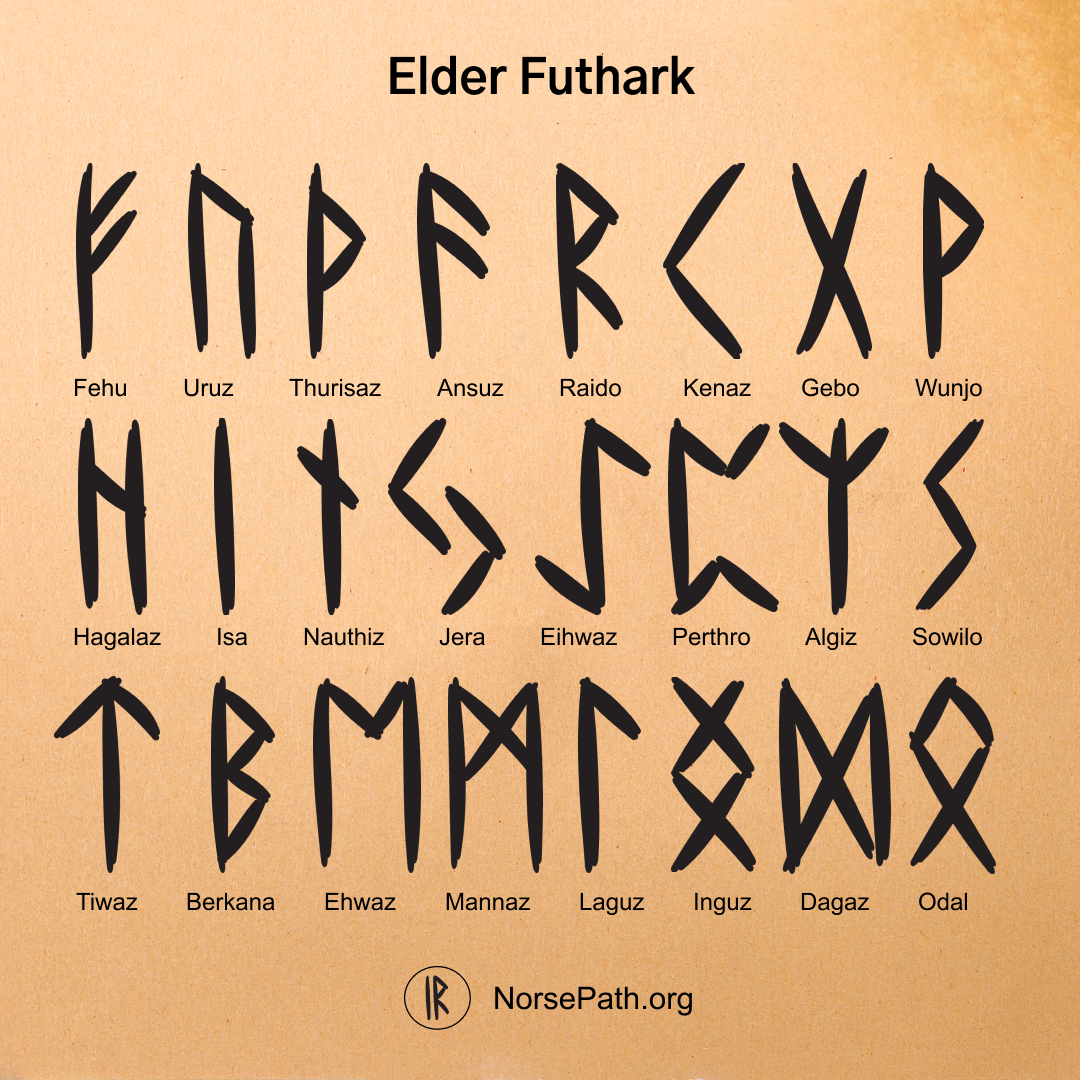
Unlike modern letters, each rune possesses a name, a phonetic sound, and a deep, layered symbolic meaning. Fehu (ᚠ) is not just the ‘f’ sound; it is the embodiment of cattle, wealth, and abundance. Uruz (ᚢ) is not merely ‘u’; it is the untamed strength of the aurochs, representing primal power and endurance. This understanding is crucial. To carve a rune was to invoke its essence, to call upon its specific power and bind it to an object, a place, or a person.
The origin of this knowledge is steeped in divine sacrifice. Legend tells us that Odin, the Allfather, hung himself from Yggdrasil, the World Tree, for nine days and nine nights, pierced by his own spear, to gain the wisdom of the runes. He sacrificed himself to himself, a profound act that underscores the immense value and sacred nature of this knowledge. When a Viking carved a rune, they were partaking in this divine inheritance, handling a power that even the gods sought.
This power was intricately linked to their attire. A warrior didn’t just wear a cloak for warmth; they might have the Algiz rune (ᛉ) stitched into the hem for protection, its shape mimicking the horns of an elk or a person with arms outstretched to the heavens. A leather bracer wasn’t just for deflecting a blow; it could be tooled with the Tiwaz rune (ᛏ), the symbol of the sky god Tyr, to grant courage and victory in battle. Runes were worn as amulets, carved into the handles of tools, and inscribed on the pommels of swords. They were a constant, tangible connection to the spiritual world, turning everyday garments and battle armor into items of profound significance. To understand the art of handcrafting runes is to understand this foundational belief: you are not merely decorating an object, you are imbuing it with a soul.
From forest and forge: Choosing your materials
The spirit of a rune begins with the vessel chosen to hold it. The material is not a blank canvas; it is the rune’s first body, a partner in its magical purpose. The Norse people lived in harmony and conflict with a harsh, beautiful world, and they drew their materials directly from this environment. To craft runes with authenticity is to honor this connection, to feel the history and energy in the wood, bone, or metal you hold in your hands.
Wood is the most traditional and accessible material. The forests of Scandinavia were the heart of the Viking world, and trees were seen as sacred beings. Different woods carried different energies. Oak, with its immense strength and longevity, was a natural choice for runes of power and endurance. Ash was deeply sacred, as it was the wood of the World Tree, Yggdrasil, making it ideal for runes of cosmic connection and knowledge. Rowan, often planted near homes, was known for its protective qualities, perfect for carving wards and talismans. The act of gathering the wood was itself a ritual. A true craftsman would seek a fallen branch, one given freely by the forest, rather than harming a living tree. The wood would then be seasoned, sanded, and smoothed, preparing it to receive the sacred marks.
Bone and antler were also highly prized. Sourced from the hunt, these materials carried the life force of the animal they came from. Carving runes into a piece of deer antler or the bone of a bull was a way to honor the creature’s spirit and harness its strength. These materials are harder and more durable than wood, creating runes that could last for generations. The process is more demanding, requiring patience and stronger tools, but the result is a set of runes with a primal, visceral connection to the cycle of life and death.
Of course, the Viking Age was also an age of iron. The forge was a place of powerful magic, where earth was transformed by fire and will into something new. Runes were often engraved onto metal objects of great importance. A warrior’s axe head might bear symbols to guide its strike, while a blacksmith would stamp his maker’s mark—a personal bindrune—into his creations. Silver and bronze were used for personal adornments, like the iconic Mjölnir pendants worn for Thor’s protection, often decorated with intricate patterns and runic inscriptions. Working with metal is a different skill, one of engraving and etching rather than carving, but it follows the same principle of embedding intention into a durable form.
Finally, leather, the very skin of an animal, was a fundamental part of Norse attire. Belts, pouches, shoes, and armor were all crafted from it. Tooling or branding runes onto a leather belt or bracer was a powerful way to carry their protection and power with you constantly. The choice of material is the first step in the creative ritual, a declaration of your intent and a tribute to the natural world from which all power flows.
The ritual of creation: Carving and coloring your runes
With your chosen material in hand and a deep respect for the symbols in your heart, the physical act of creation can begin. This is not mere whittling; it is a meditative practice, a ritual where intention is made manifest through focused action. The environment you create is important. Find a quiet space, be it a workshop bench or a spot beneath an old tree. Clear your mind of distractions and focus entirely on the rune you intend to carve. This focus, this channeling of your will into the work, is what separates a simple carving from a potent talisman.
The tools of the Viking Age were simple yet effective. A sharp knife, known as a ‘knifr’, was the most essential tool for wood and bone. For more detailed work, a small V-gouge or chisel allows for clean, precise channels. You don’t need elaborate equipment; a single, well-sharpened blade is all it takes to begin. The distinct, angular shapes of the runes are a direct result of their primary medium: wood grain. It is far easier to carve straight lines and sharp angles than it is to carve smooth curves against the grain. This practical limitation gave the runes their iconic, stark beauty.
Begin by lightly sketching the rune onto your surface. As you prepare to make the first cut, hold the rune’s meaning in your mind. If carving Thurisaz (ᚦ), the rune of the giant Thor, feel its raw, chaotic power and its protective force. If carving Ansuz (ᚨ), the rune of Odin and communication, contemplate the divine inspiration you seek. Let each push of the blade be a deliberate, meaningful act. Carve slowly, following the lines. The physical sensation of the blade biting into the material, the scent of the wood or bone, the focused sound of the work—all of it becomes part of the ritual. You are breathing life into the symbol with every motion.
Once the rune is carved, the final and most vital step is to give it life and color. Ancient texts, like the Poetic Edda, speak of ‘rísta og fá,’ to carve and to color. The traditional method was to redden the runes, often using one’s own blood. This was not a sinister act but a deeply symbolic one. Blood represents life force, sacrifice, and personal connection. By giving a drop of your own blood, you were forging an unbreakable link between yourself and the rune, feeding it a part of your own spirit to awaken its power. For modern practice, red ochre mixed with a natural oil like linseed is a historically accurate and excellent alternative. The red color itself is symbolic of life, magic, and power. As you apply the pigment, pressing it into the carved grooves, it is customary to speak or chant the rune’s name, a practice known as Galdr. This vibrates the rune’s essence into existence, fully activating its potential. The rune is no longer a silent mark; it is now a living symbol, humming with the energy you have poured into it. In every carved line and drop of color, you are not just making an object; you are weaving your own destiny into the great tapestry of the North.

 vikings


