
The fabric of a people: beyond the myth
Close your eyes and picture a Viking. What do you see? A towering figure, clad in rough furs, leather straps crisscrossing their chest, and a horned helmet casting a fearsome shadow. It’s a powerful image, immortalized in countless films, games, and tales. But like many legends, it’s a picture woven more from fantasy than fact. The reality of Viking apparel is a far more intricate and fascinating saga, a story told not in crude leather and bone, but in the skillful weave of wool, the vibrant hues of natural dyes, and the practical design born from a life lived in the unforgiving North.

At Viking Blogs, we are dedicated to peeling back the layers of myth to reveal the historical truth. The clothing of the Norse people was not merely a covering; it was a statement of identity, a tool for survival, and a canvas for artistry. Every garment, from the simple linen undertunic worn by a farmer to the silk-trimmed cloak of a wealthy jarl, held a purpose. It spoke of their connection to the land, their station in a complex society, and their readiness to face the elements, whether on a peaceful fjord or a stormy sea. To understand what the Vikings wore is to understand a fundamental part of who they were: resourceful, resilient, and deeply connected to their craft. Forget the stereotypes and join us as we explore the true threads of the North — the authentic garments of glory that clothed a legendary people.
The foundation of the Norse wardrobe: wool, linen, and the loom
The core of any Viking’s attire, regardless of their social standing, was built upon two essential fabrics: wool and linen. These materials were the bedrock of their textile world, each chosen for its unique and life-sustaining properties. The unforgiving Scandinavian climate demanded clothing that could insulate, breathe, and withstand a great deal of wear. Wool was the undisputed champion of the North. Sheep, particularly the hardy Northern European short-tailed breeds, provided a fleece rich in lanolin, a natural oil that makes wool water-resistant and incredibly warm, even when damp. This made it the perfect material for outer garments like tunics, trousers, and cloaks, offering a vital shield against biting winds and chilling rain.
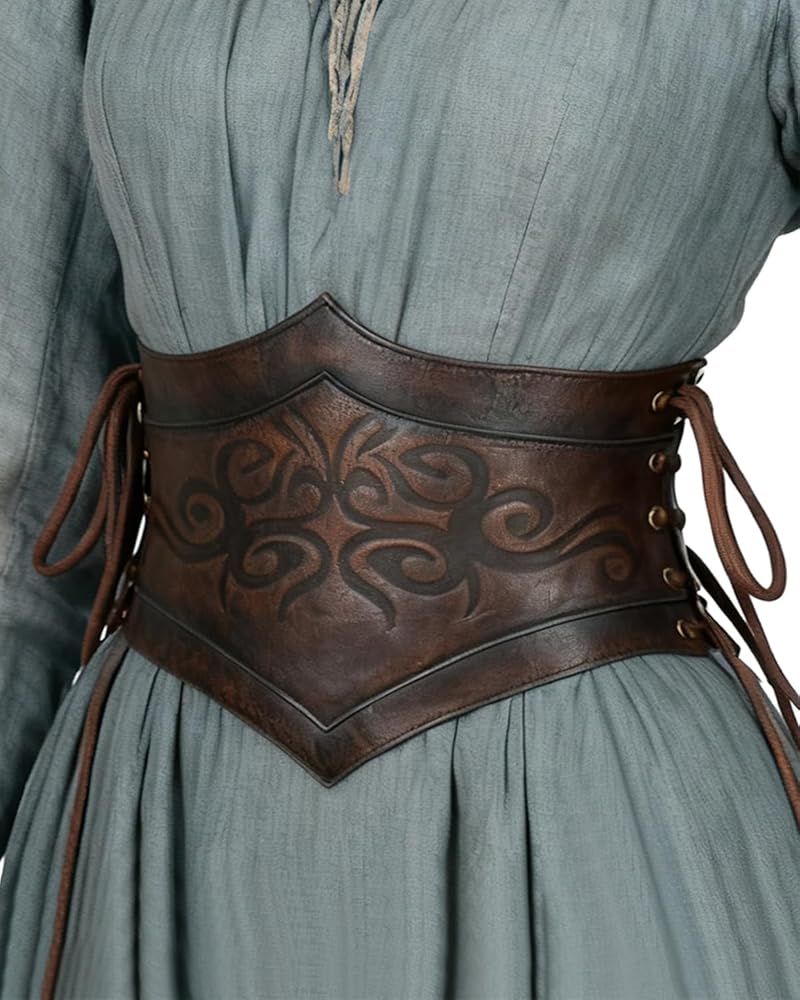
Linen, derived from the flax plant, was wool’s essential partner. While wool provided warmth, linen offered comfort. Worn against the skin as an under-tunic or ‘serk’, linen is soft, absorbent, and breathable, wicking moisture away from the body. This prevented the chafing and irritation that could come from wearing coarse wool directly on the skin. Cultivating flax and processing it into linen thread was a labor-intensive process, but its value in creating comfortable and hygienic base layers was indispensable. For a Viking woman, the primary garment was a long linen shift, over which she would wear a suspended apron-dress known as a ‘smokkr’ or ‘hangerok’. This tube-like garment, typically made of wool, was held up by two straps fastened at the shoulders with ornate oval brooches, from which she might hang keys, a knife, or other essential tools.
For men, the foundational outfit consisted of a linen under-tunic and a woolen over-tunic, or ‘kyrtill’. This tunic was a simple but effective T-shaped garment, often reaching to the mid-thigh or knee. It could be plain for a common farmer or decorated with intricate tablet-woven braids along the neckline and cuffs for a man of higher status. Paired with the tunic were trousers, or ‘brók’, which varied in style from loose-fitting to snug, sometimes featuring foot coverings like early socks. The creation of this fabric was a testament to Norse craftsmanship. Women were the masters of the loom, using the warp-weighted loom to weave these textiles. Dyes were derived from the natural world around them: woad for blues, madder root for reds, and various lichens and plants for yellows and greens. A person’s wealth could often be judged by the vibrancy and variety of the colors they wore, as some dyes were far rarer and more difficult to produce than others. This foundational wardrobe of wool and linen was the practical, colorful, and highly functional uniform of the Viking Age.
Layers of status and survival: cloaks, leather, and finery
A Viking was rarely seen without a belt. Far more than a simple device to hold up trousers, the leather belt was a Viking’s utility strap. From it hung everything a person needed for their daily life: a small knife (the ‘seax’), a pouch for coins or personal items, a fire-starting kit, and other essential tools. The quality of the belt itself, particularly the buckle and strap-end, was a significant indicator of wealth. While a simple farmer might have an iron or bone buckle, a chieftain could boast one of silver or bronze, intricately cast with knotwork or animal motifs. Leather was a vital material, used not just for belts but also for shoes, pouches, and armor components. Viking shoes, known as ‘skór’, were simple turn-shoes, crafted from a single piece of leather stitched together and then turned inside out, creating a soft, pliable form of footwear perfectly suited for walking on uneven terrain.

The most important outer garment, however, was the cloak, or ‘feldr’. This was the ultimate multi-purpose tool for survival in the North. Typically a large rectangle of thick, heavy wool, the cloak served as a blanket by night and a shield against the elements by day. It was worn over one shoulder, usually the left to keep the sword arm free, and fastened with a single, large pin or brooch known as a ‘fibula’. These brooches were another opportunity for displaying status and wealth. They ranged from simple iron pins to elaborate, gilded silver or bronze pieces that were masterpieces of Norse art. A high-quality, well-made cloak was a prized possession, often passed down through generations. Some were even lined with fur—beaver, marten, or even bear—for added warmth and a clear display of a warrior’s hunting prowess or a trader’s success.
While the common Viking wore clothes of sturdy, locally produced materials, the wealthy had access to a world of luxury through extensive trade networks. The rivers of Rus’ brought shimmering silks from the Byzantine Empire and the Far East, which were used as decorative trim on tunics and cuffs or as fine head coverings for high-status women. Intricate embroidery, using brightly colored threads to create geometric patterns or scenes from mythology, further distinguished the garments of the elite. Furs from the deep northern forests, amber from the Baltic coast, and glass beads from across Europe were all incorporated into their dress. This layering was both practical and social. It allowed individuals to adapt to changing weather by adding or removing garments, but it also visually reinforced the strict social hierarchy of Norse society. The more layers, the finer the materials, and the more ornate the accessories, the higher one’s standing in the community.
Clad for conflict: the truth about Viking battle gear
The image of the Viking as a peerless warrior is central to their legend, and their battle gear was a direct reflection of their brutal and pragmatic approach to combat. But first, we must shatter the most persistent myth of all: the horned helmet. There is absolutely zero archaeological or historical evidence to suggest that Vikings ever wore horned helmets into battle. This popular image is a 19th-century invention, likely stemming from romantic opera costumes. The real Viking helmet was far more practical and effective. The most famous example, found at Gjermundbu in Norway, is a simple, effective piece of armor. It’s a rounded cap made of iron plates riveted together, with a spectacle-like guard protecting the eyes and nose. This design, known as a spangenhelm, was designed to deflect blows from swords and axes, not to be a decorative statement.
For most Vikings, their primary defense was not on their head, but in their hand: the shield. The iconic round shield was made of wooden planks, often covered in leather or linen to prevent it from splitting, and edged with a leather or iron rim. In the center was an iron boss to protect the hand. It was a dynamic and essential piece of equipment, used to parry blows, create openings, and form the formidable ‘shield wall’ in large-scale battles. Beyond the shield, personal body armor was a luxury few could afford. The legendary chainmail shirt, or ‘byrnie’, was the pinnacle of Viking protection. Each one consisted of thousands of interlinked iron rings, a painstaking and expensive product of a master blacksmith. A mail shirt could take hundreds of hours to create, making it a treasure reserved for kings, jarls, and their most elite warriors. It offered excellent protection against cutting weapons but was heavy and still vulnerable to the crushing force of an axe or spear.
So what did the average warrior wear? The most common form of body armor was likely a thick, padded leather jerkin or a gambeson known as a ‘vápntreyja’. Made from multiple layers of linen or wool quilted together, or from hardened leather, this type of armor was much cheaper to produce than mail and offered significant protection against slashes and impacts. It was a practical solution for the common free man who was called to fight. Underneath it all, a warrior would wear their standard woolen tunic and trousers, designed for mobility and warmth. Viking battle gear was not about fantasy or flair; it was a brutally functional system. It prioritized the shield, used helmets for essential head protection, and employed body armor that was often simple but effective. This was the true armor of the Northman: practical, resilient, and built for victory.
From the first thread spun from sheep’s wool to the last rivet hammered into a helmet, the garments of the Vikings tell a rich and complex story. They were a people whose clothing was inseparable from their environment, their society, and their warrior spirit. By looking at the real threads of the North, we gain a clearer, more authentic vision of who they were and how they conquered their world.

 vikings


