
Not Thor’s Brother: Who Loki Actually Is
Marvel’s Loki is Thor’s adopted brother, raised alongside him in Asgard. The loki norse mythology sources say something stranger: Loki is Odin’s blood-brother. In Lokasenna, Odin himself reminds the assembled gods that the two of them mixed their blood together in the earliest days — a sworn oath, not a family tie — which is precisely why Loki is entitled to a seat at the feast he’s about to ruin. He isn’t Aesir by birth at all. His father is the jötunn Fárbauti, and his mother is Laufey, a giantess whose name Loki carries instead of his father’s — unusual in a patronymic culture, and a small clue that Fárbauti mattered little to the story.
He’s also already a father and husband when the major myths take place, married to Sigyn, with sons Narfi and Váli. None of that prepares anyone for what he does with a horse.
Loki at a glance
- Parents: the jötunn Fárbauti and the giantess Laufey
- Sworn blood-brother of Odin — not related to Thor by blood or adoption
- Wife: Sigyn; sons Narfi and Váli
- Monstrous children by the giantess Angrboða: Fenrir, Jörmungandr and Hel
- Also gave birth to Sleipnir, Odin’s eight-legged horse
- Main sources: Lokasenna and Gylfaginning/Skáldskaparmál in the Prose Edda
Loki’s Children: Fenrir, Jörmungandr, Hel — and Sleipnir
With the giantess Angrboða, Loki fathers three beings the gods fear enough to act on: the wolf Fenrir, the World Serpent Jörmungandr, and Hel, who ends up ruling over the dishonorable dead in the realm that bears her name. Odin has all three dealt with pre-emptively — Fenrir bound, Jörmungandr thrown into the sea, Hel exiled to Niflheim — a decision that costs the gods dearly at Ragnarök.
Then there’s Sleipnir, and this is where Loki’s myths get genuinely strange even by Norse standards. When a giant mason threatens to finish Asgard’s defensive wall on time and claim the sun, moon, and Freya as payment, Loki — who’d talked the gods into the wager in the first place — shapeshifts into a mare to distract the mason’s stallion, Svaðilfari. The distraction works a little too well: Loki, still a mare, later gives birth to an eight-legged foal. He hands the horse to Odin. It becomes Sleipnir, the fastest horse in the Nine Realms and Odin’s own mount.
Wear it: The Heart of Odinism
Premium Norse-inspired apparel, made on demand.
🇺🇸 Fast US shipping · 🇪🇺 Ships across the EU · 🔒 Secure checkout
Lokasenna: The Feast Where Loki Insulted Every God
Lokasenna (“Loki’s flyting”) stages Loki crashing a feast hosted by the sea-giant Ægir and, one by one, airing every god and goddess’s dirty laundry — infidelities, cowardice, incest accusations — daring anyone to deny it. Most can’t. It ends only when Thor arrives and threatens him with Mjölnir, at which point Loki finally backs down and leaves. It’s the closest thing Norse myth has to a tell-all memoir, and it’s also, not coincidentally, the poem that spells out his blood-oath with Odin.
Baldur’s Death: Loki’s Unforgivable Crime
Frigg, Baldur’s mother, had extracted a promise from every object and creature in existence not to harm her son — every object except mistletoe, which she judged too small to bother asking. Loki finds out, fashions a dart from mistletoe, and hands it to the blind god Höðr during a game where the gods have taken to gleefully lobbing weapons at the now-invulnerable Baldur for sport. Guided by Loki’s hand, the dart kills him instantly. It’s the one act the gods never forgive, and it’s the hinge the rest of Loki’s story turns on.
Loki the Instigator: The Bet That Also Made Mjölnir
Loki’s scheming often backfires into the gods’ favor, and the best example starts with a prank. He sneaks into Sif’s chamber (Thor’s wife) and cuts off her famous golden hair for no better reason than mischief. Thor, unamused, threatens to break every bone in his body until Loki agrees to fix it — so he travels to the dwarves known as the sons of Ivaldi and commissions real gold hair that will grow like living hair on Sif’s head. While he’s at it, the same dwarves throw in Odin’s ring Draupnir and Freyr’s folding ship Skíðblaðnir. Loki, riding high, then bets his own head with the dwarf brothers Brokkr and Sindri that they can’t outdo those gifts — a bet he very nearly loses, and one that ends up producing Thor’s hammer, Mjölnir, as a side effect of Loki trying to cover his own prank.
Bound in a Cave: Punishment and the Road to Ragnarök
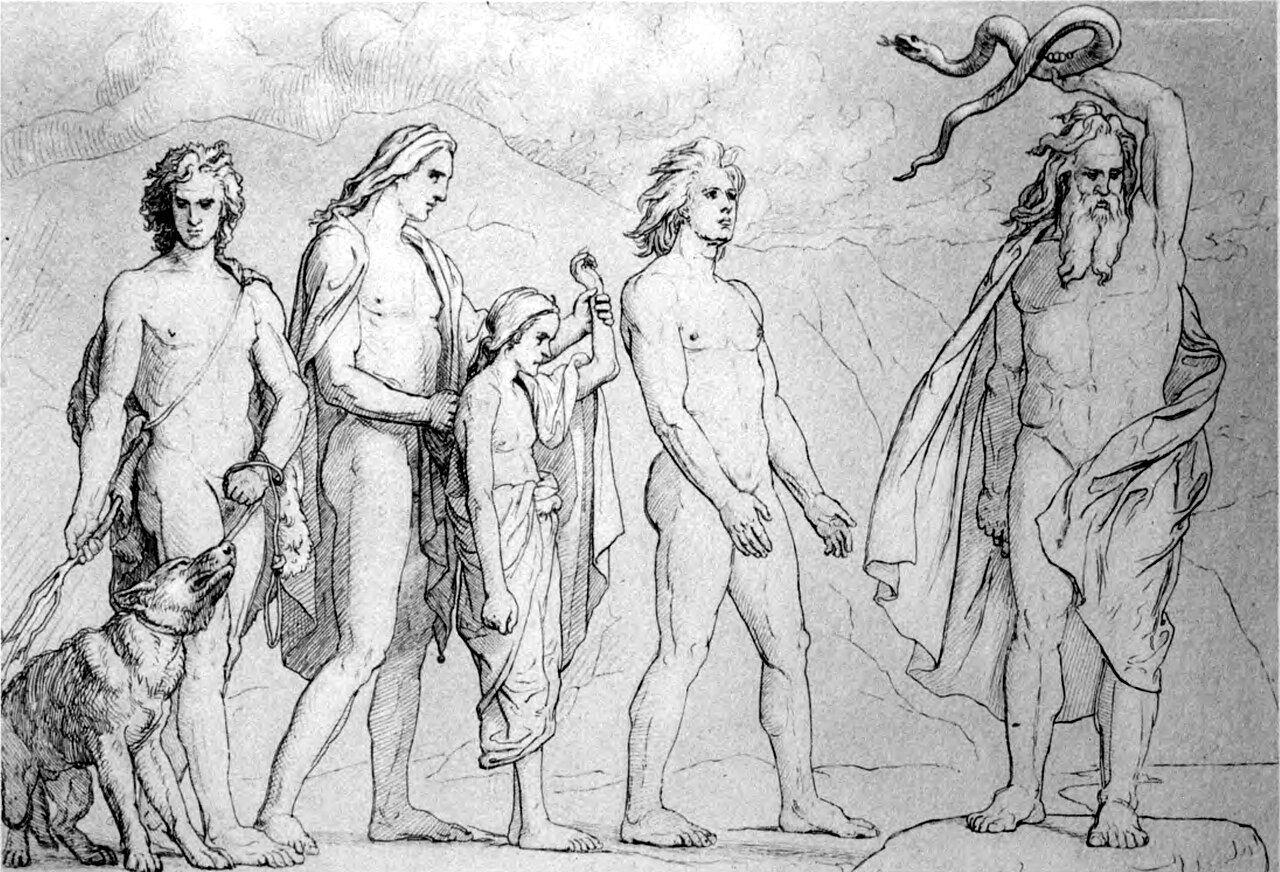
The gods hunt Loki down — he tries hiding as a salmon at one point — and bind him to three stones with the entrails of his own son. Skaði fixes a venomous serpent above his face to drip poison onto him as punishment; his wife Sigyn stays at his side, catching the venom in a bowl. Only when she has to empty it does the poison touch him, and his convulsions are said to cause earthquakes.
He doesn’t stay down forever. At Ragnarök, Loki breaks free, captains the ship Naglfar — built from dead men’s nails — and leads an army against the gods. He and the watchman Heimdall meet on the battlefield and kill each other, closing out a rivalry that runs through most of his myths.
Quick Answers
Is Loki Thor’s brother? No. He’s the sworn blood-brother of Odin, not related to Thor by blood or adoption — that detail is a Marvel invention.
Who are Loki’s children? With Angrboða: Fenrir, Jörmungandr and Hel. With Sigyn: Narfi and Váli. He also gave birth to Sleipnir after shapeshifting into a mare.
Why did Loki kill Baldur? He tricked the blind god Höðr into throwing a mistletoe dart at Baldur — the one thing that hadn’t sworn an oath not to harm him.
How does Loki die? He and Heimdall kill each other during the final battle at Ragnarök.

 History Warrior Team


