
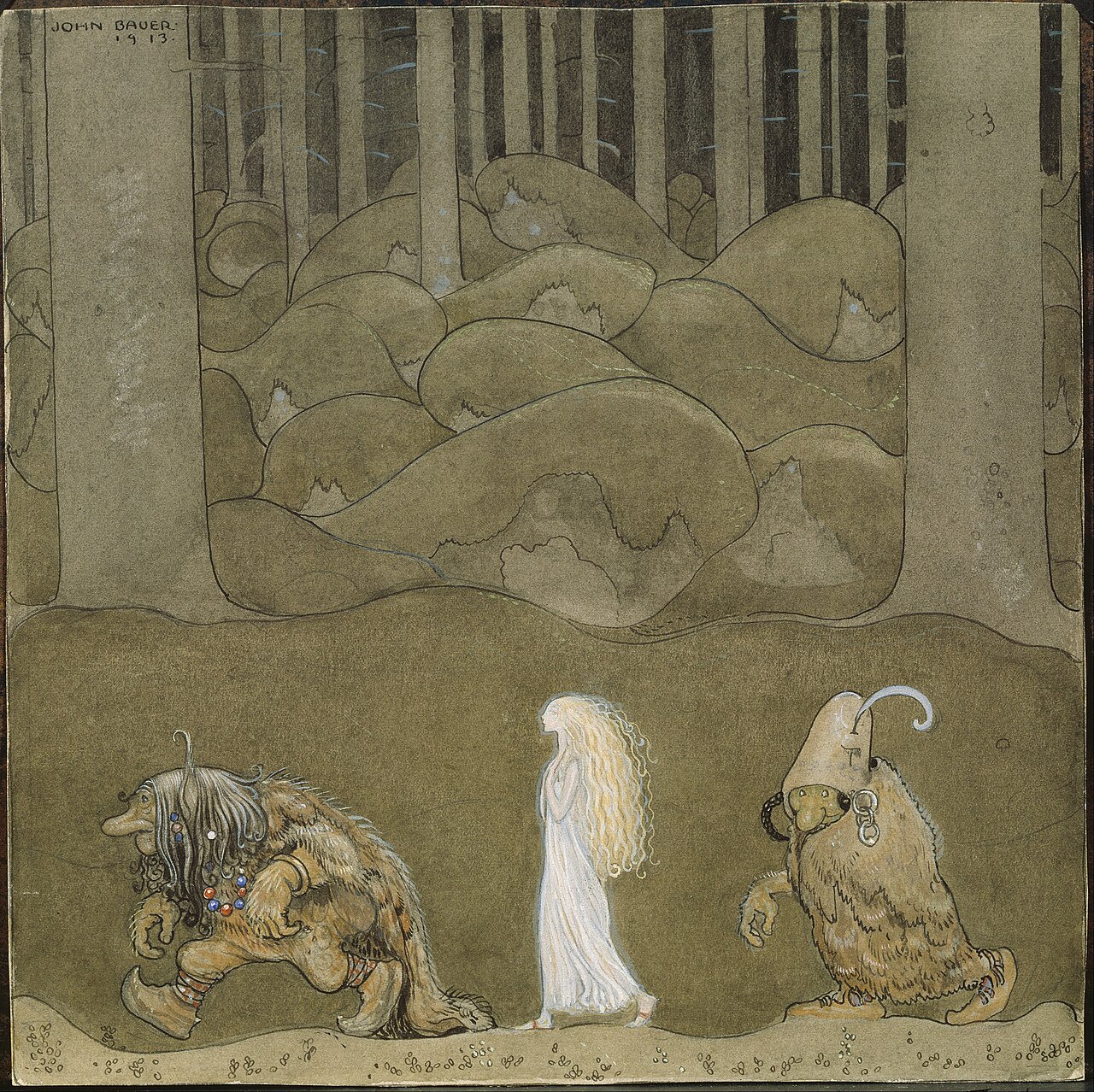
Norse mythology monsters are rarely just monsters. The draugr that terrorizes a valley in Grettis saga is also a commentary on a bad neighbor gone worse in death. The giants who keep marrying into the gods’ family are proof that “us versus them” was never as clean a line in Norse myth as pop culture makes it look. Halloween is as good an excuse as any to actually meet these figures on their own terms, straight from the sagas and Eddas rather than a video-game character sheet.
Here’s a working tour of the major ones: the walking dead, the giants, and the handful of world-ending monsters that show up when Ragnarok finally arrives.
Norse monsters at a glance
- Draugr — reanimated corpses from burial mounds, closer to vampires than shambling zombies
- Jotnar (giants) — not necessarily large; a race that both fights and intermarries with the gods
- Fenrir — Loki’s monstrous wolf-son, bound by the gods until Ragnarok
- Jormungandr — the World Serpent, coiled around Midgard, Thor’s great enemy
- Hel — ruler of the underworld realm of the same name, also one of Loki’s children
- Nidhogg — the dragon that gnaws the roots of Yggdrasil and feeds on oathbreakers
Draugr: The Undead Who Don’t Stay Buried
A draugr is a reanimated corpse, usually someone buried in a mound who comes back wrong — stronger, malicious, and hard to kill twice. The best-documented example is Glámr in Grettis saga, a bad-tempered herdsman who dies under strange circumstances, is buried without a proper rite, and starts terrorizing the district shortly after: driving cattle mad, wrecking buildings, and killing people outright. The saga’s hero, Grettir, eventually corners and beheads him, but not before Glámr curses Grettir with bad luck for the rest of his life — a curse the saga treats as taking hold immediately and shaping everything that happens to Grettir afterward. Draugar in the sagas are consistently tied to burial mounds and grave goods, which is part of why grave robbery shows up so often as the trigger for a haunting.
Jotnar: Giants Who Aren’t Always Giant
Jotnar get translated as “giants,” but size was never really the point. Plenty of jotnar in the myths are described as human-sized, and the word functions more like a tribal label — the way “Æsir” or “Vanir” name a group — than a description of height. What actually defines them is that they stand in ongoing tension with the gods: sometimes enemies, sometimes in-laws. Thor’s mother was a giantess. Odin’s own lineage runs through jotnar ancestors. Loki, arguably the most consequential figure in the entire mythology, is a jotunn who lives among the Æsir. The gods-versus-giants framing that shows up in modern retellings flattens a relationship that the actual sources treat as much messier and more intermarried than a clean rivalry.
Wear it: Viking Bear
Premium Norse-inspired apparel, made on demand.
🇺🇸 Fast US shipping · 🇪🇺 Ships across the EU · 🔒 Secure checkout
Fenrir and Jormungandr: Loki’s Monstrous Children
Loki fathered three of Norse mythology’s most consequential monsters, all with the giantess Angrboda: the wolf Fenrir, the serpent Jormungandr, and Hel. The gods, forewarned that all three would bring trouble, acted early. Fenrir grew so fast and so strong that the Æsir had a magical ribbon-thin binding made by dwarves to restrain him, tricking him into testing it as a show of strength; he’s bound that way until Ragnarok, when the sagas say he breaks free and kills Odin. Jormungandr was thrown into the sea, where it grew until it encircled Midgard entirely, biting its own tail — Thor’s oldest, most persistent enemy, and the two are fated to kill each other at the end of the world.
Hel and the Realm Beneath Niflheim
Hel, the third of Loki’s children, was given dominion over the realm that bears her name, the destination for those who die of sickness or old age rather than in battle. Norse sources describe her as half living-colored and half corpse-colored, a fitting ruler for a realm caught between life and death. Her hall receives Baldr after his death, one of the more consequential arrivals in the whole mythology, since getting him back out again becomes the gods’ obsession for the rest of the story.
Nidhogg and the Trolls of Later Folklore
Nidhogg is the dragon-like serpent gnawing at one of the roots of Yggdrasil, the world tree that holds the nine realms together. According to the Völuspá, Nidhogg also feeds on the corpses of oathbreakers, murderers, and adulterers at Náströnd, a grim hall in the underworld with walls woven from serpents. It’s one of the more literal images in the Eddas: the thing eating away at the foundation of the cosmos is also the thing punishing people who broke their word. Trolls, by contrast, barely appear in the Eddas and sagas as the single well-defined creature they became later. Old Norse sources use “troll” loosely, closer to a general word for a dangerous, magic-touched being than a fixed species — the lumbering, mountain-dwelling troll of modern fairy tales owes more to later Scandinavian folklore than to the Viking Age sources themselves.
Why These Monsters Never Really Left
Part of why draugr, jotnar, and Loki’s brood still show up everywhere from video games to Halloween decorations is that the sagas never treated them as background noise. A draugr haunting is a full narrative arc with its own tension and resolution, not a jump-scare. The giants are family as often as they’re enemies. Even Ragnarok, the end of the world, is framed less as a monster movie than as a set of long-fated grudges finally coming due — Fenrir versus Odin, Thor versus Jormungandr, old debts getting settled all at once. That’s a more durable kind of horror than anything built purely to frighten, and it’s why these figures keep getting reused instead of retired.
Quick Answers
What is the scariest monster in Norse mythology? Different sagas nominate different answers, but Fenrir and Jormungandr get the most weight in the myths themselves, since both are fated to kill a major god at Ragnarok.
Are draugr the same as zombies? Not exactly. Draugar are closer to vampires or ghosts with physical strength — reanimated, intelligent, and tied to their burial mound — rather than the mindless shambling zombies of modern horror.
Are jotnar always giant-sized in the myths? No. Many jotnar are described as roughly human in size; the word marks them as a distinct tribe of beings rather than describing their height.
Where does the draugr Glámr story come from? Grettis saga, one of the Icelandic family sagas, written down in the 13th or 14th century about events set a few centuries earlier.

 History Warrior Team


