
Archaeologists from Moesgaard Museum have uncovered a 1,000-year-old Viking textile production center at Søften, just north of Aarhus, Denmark — and it is enormous. Spread across roughly 100,000 square meters, the site contains 82 pit-house workshops packed with loom weights and spindle whorls, evidence that Viking cloth was made here on an almost industrial scale. For anyone who pictures Vikings as raiders in ragged furs, this find tells a very different story.
What archaeologists found at Søften
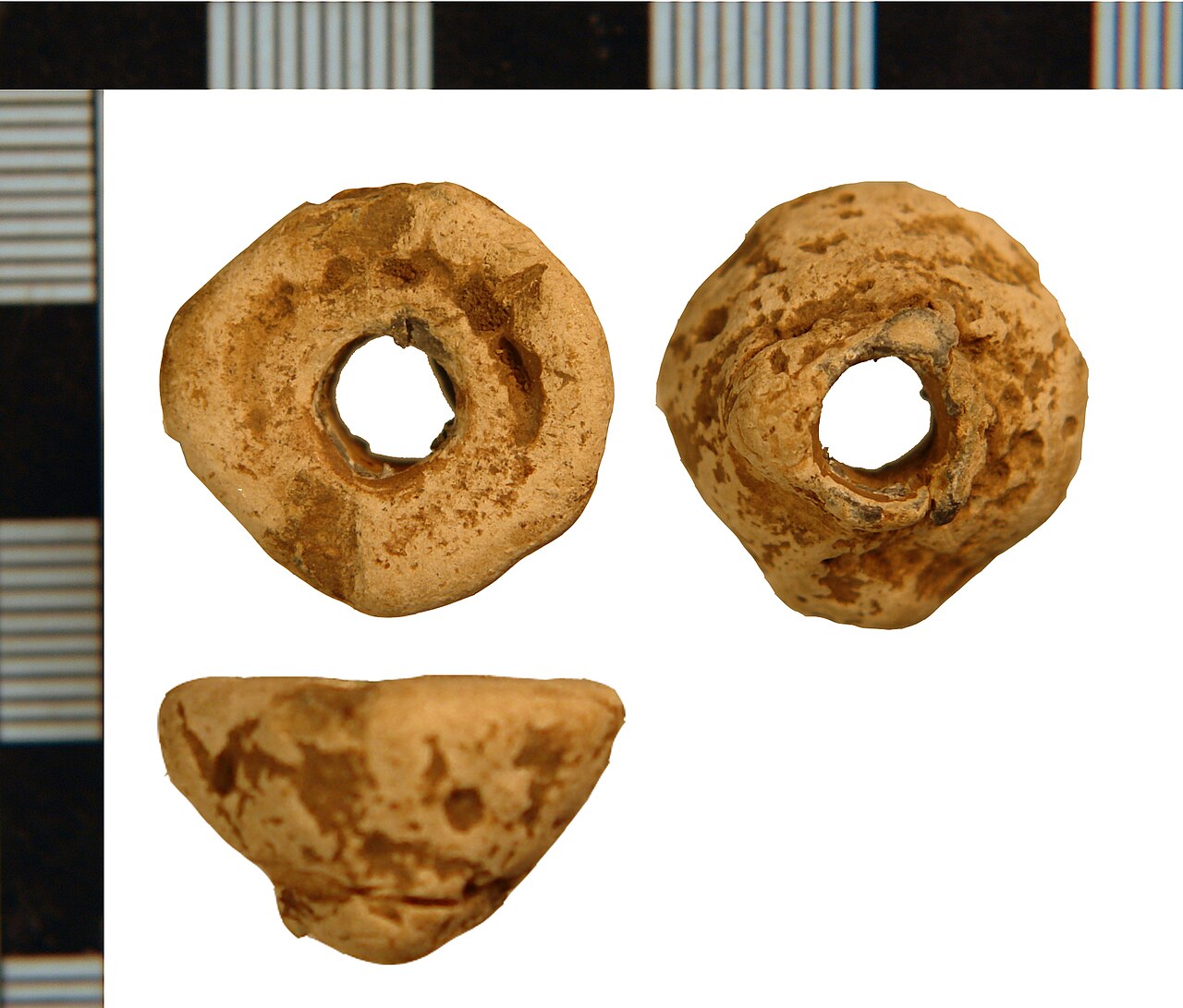
The excavation, announced in late June 2026, revealed a planned craft quarter that operated between the 7th and 10th centuries. Its 82 sunken workshop buildings — known as pit houses — yielded enormous quantities of loom weights and spindle whorls, the signature tools of wool spinning and weaving on the warp-weighted loom. Alongside them came glass beads, Arabic coins from the Middle East, and coins from what is now France and Germany.
One detail stands out: a single larger house set apart from the workshops, which researchers believe housed a manager who oversaw workers, raw materials, and daily output. As Moesgaard Museum historian Kasper H. Andersen put it, the site “shows us that the Viking Age was not just an uncivilised, barbaric and backward era.”
A Viking factory, centuries before factories
The scale is what makes Søften remarkable. Dozens of identical, parallel workshops point to division of labor and centralized control — cloth production organized far beyond the needs of the local population. Researchers believe the finished textiles traveled a few kilometers south to Aros, the Viking trade town that grew into modern Aarhus, and from there onto ships bound for markets across the North Sea and beyond. The Arabic coins in the workshops show just how far those trade networks reached.
Wool cloth — especially sailcloth — was one of the true engines of the Viking Age. A single longship sail could demand more working hours than the ship itself, which is why organized textile production like this mattered as much as any shipyard. If you want to see how this craftsmanship shaped what Norse people actually wore, our guide to the evolution of Viking battle garb from tunics to chainmail picks up the story.
Wear the legend — Steel Viking Collection
Premium Norse-inspired apparel, made on demand.
🇺🇸 Fast US shipping · 🇪🇺 Ships across the EU · 🔒 Secure checkout
Why this changes the picture of Viking society
Finds like Søften keep dismantling the “barbarian” myth. A society that could organize 82 specialized workshops, manage supply chains of wool and dye, and export cloth along routes stretching to the Middle East was a society of planners, traders, and skilled craftspeople — not just warriors. The same organizational skill that filled these workshops also appears in Viking leathercraft; see our complete guide to Viking leatherworking for that side of the workshop bench.
Moesgaard Museum’s team, including archaeologist Liv Stidsing Reher-Langberg, is still analyzing the artifacts, and it may take months or years before the finds go on public display. Coverage from Euronews and NPR has more from the excavators.
From Viking looms to your wardrobe
The Søften weavers proved that Norse style was never an accident — it was engineered, traded, and worn with pride from Jutland to Baghdad. That same spirit drives modern Norse-inspired fashion; if you’re curious how the old aesthetic translates today, start with Viking style in 2026: a modern wardrobe inspired by the Norse.
One thousand years on, the looms of Søften are silent — but the cloth they wove carried the Viking world further than any sword ever did.

 vikings