
The smith’s fire as a sacred altar
In the heart of any Viking settlement, amidst the sounds of daily life, was a rhythm that beat like a second heart: the percussive clang of hammer on steel. This sound emanated from the forge, a place that was much more than a workshop. To the Norse people, the forge was a sacred space, a nexus of primal elements where earth and fire were commanded to create something new. The man who commanded them, the blacksmith, was not merely a craftsman; he was a master of mysteries, a figure of immense respect and even a little fear. His was a power that bordered on the divine, for he could take lumps of bog iron, raw and worthless, and transform them into a tool of survival, a symbol of status, and an instrument of destiny—the Viking sword.
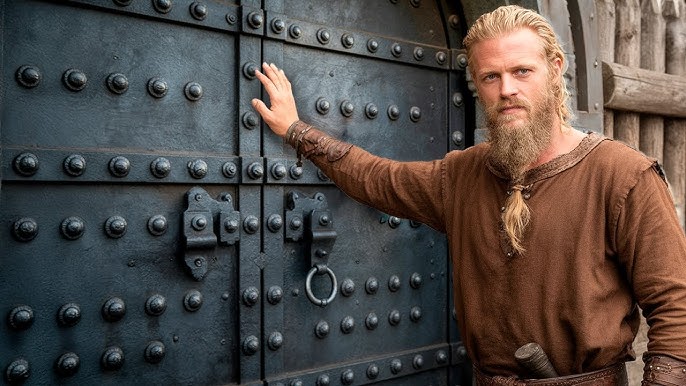
The Viking blacksmith’s role in the community was unique. While chieftains held worldly power and seers communed with the gods, the smith bridged both worlds. He was a practical magician, his knowledge often a closely guarded secret passed down from father to son. To witness a master smith at work was to see a ritual unfold. The fire in the hearth was not just for heat; it was a hungry entity to be fed, controlled, and respected. Each strike of the hammer was precise, a deliberate act that shaped not only the metal but also the blade’s very essence, or spirit. This process was a raw, physical invocation, a prayer offered in sweat and soot.
Perhaps the most magical technique in the Viking smith’s arsenal was pattern welding. This intricate process involved twisting and forge-welding multiple bars of iron and steel together, hammering them flat, and then folding them again and again. The final blade, when polished and etched, would reveal stunning, serpentine patterns flowing across its surface. While this method produced a superior weapon—one that was both hard enough to hold an edge and flexible enough to absorb the shock of a blow—its significance was profoundly spiritual. These swirling patterns, reminiscent of water or writhing serpents, were believed to be a visual representation of the sword’s soul. It was a sign that the blade was alive, imbued with a power that went beyond its physical properties. It was a tangible link to the chaotic, creative forces of the cosmos, channeled and bound into form by the smith’s will.
This sacred act of creation ties directly to Odin, the Allfather. Odin was a god of many facets: war, wisdom, poetry, and magic. He was also a relentless seeker of knowledge, famously hanging himself from the world tree Yggdrasil for nine nights to learn the secrets of the runes. The blacksmith, in his own way, emulated this quest. He sought knowledge not from a tree, but from the heart of the fire, learning the secrets hidden within the steel. By mastering his craft, the smith was not just making a tool for a warrior; he was participating in a divine act of creation. He was a conduit, shaping a weapon fit for a warrior who might one day dine in Odin’s hall. The forge was his altar, the anvil his sacred stone, and the finished blade his offering. Each sword that left his hands was, in a very real sense, a blade forged in the name of Odin, ready to carve its own saga into the fabric of the world.
Runes of power and the warrior’s oath
Once the blade was cooled, quenched, and sharpened to a razor’s edge, its physical creation was complete. But its journey to becoming a true Viking sword—a companion in battle and a keeper of legacy—had just begun. A sword was not merely an object; it was an entity with its own destiny and personality. The first step in awakening this spirit was to give it a name. Names like ‘Leg-biter,’ ‘Sea-King’s Flame,’ or ‘Foe-Reaper’ were more than intimidating titles. They were an identity, a declaration of the blade’s purpose and a recognition of its individual character. In naming his sword, a warrior formed a pact, a bond that would be tested in the shield wall and sanctified in blood.
This bond was often sealed with the most potent magic known to the Norse: the runes. The act of carving or inlaying runes onto a sword’s hilt, guard, or even the blade itself was an incredibly significant ritual. This was not mere decoration. Each rune was a symbol of a powerful cosmic concept, and to invoke it was to call upon that power and bind it to the weapon. A warrior might carve ‘Tiwaz,’ the rune of the sky god Týr, to ensure victory and justice in battle. The ‘Algiz’ rune might be used for protection, a divine shield against an enemy’s strike. Some inscriptions were more direct, forming words of power or even the name of the smith or the owner, forever linking their fate to the blade’s.
The ultimate source of this runic power was, once again, Odin. As the master of runes, the one who paid the ultimate price for their wisdom, any use of this ancient alphabet was an appeal to his authority and knowledge. When a warrior carved a rune into his sword, he was channeling a sliver of Odin’s power, asking the Allfather himself to guide his hand and bless his blade. It was a prayer etched in steel, a permanent invocation that turned the weapon into a sacred relic. The famous Ulfberht swords, renowned for their superior quality, were often marked with their maker’s name, a testament to the belief that the smith’s power and identity were fused with his creation.
This sacred object then became the centerpiece of a warrior’s oath. A Viking’s honor was his most valuable possession, and his oaths were unbreakable promises sworn before the gods. Oaths of fealty to a jarl or king were often sworn upon a sword. By touching the cold steel, the warrior was not just making a promise as a man; he was binding his sword’s spirit, and the divine power within it, to his word. The sword became the silent witness and the ultimate enforcer of his loyalty. To break such an oath was to invite not only the wrath of his jarl but also the fury of the gods whose power he had invoked. The rune-marked sword was, therefore, the physical manifestation of a warrior’s commitment, his honor, and his direct line to the divine favor of Odin.
The sword’s journey from forging to Valhalla
A Viking sword’s life did not begin and end with a single warrior. The finest blades were treasured heirlooms, vessels of history and lineage passed down through generations. A sword that had been wielded by a great father or grandfather carried with it their strength, their stories, and their luck, or *hamingja*. To inherit such a weapon was to inherit a legacy. The young warrior who received it was not just carrying a piece of steel; he was carrying the honor of his ancestors. The sword had seen battles he could only imagine and tasted the blood of enemies long dead. Its nicks and scratches were a physical saga, and its continued presence in the family was a sign of the gods’ enduring favor.
In the hands of its warrior, the sword was an extension of his being. The bond between them was deeply personal, forged in the crucible of training and hardened in the chaos of battle. A warrior learned its balance, its weight, the unique song it sang as it cut through the air. In the shield wall, it was his staunchest ally. Losing one’s sword was a profound disgrace, not just for the loss of a valuable weapon, but for the severing of this sacred partnership. It was a sign of incompetence or cowardice, a failure to protect the keeper of his family’s honor. Conversely, to wield a sword with skill and courage was to prove oneself worthy of its legacy and to earn a place in the sagas.
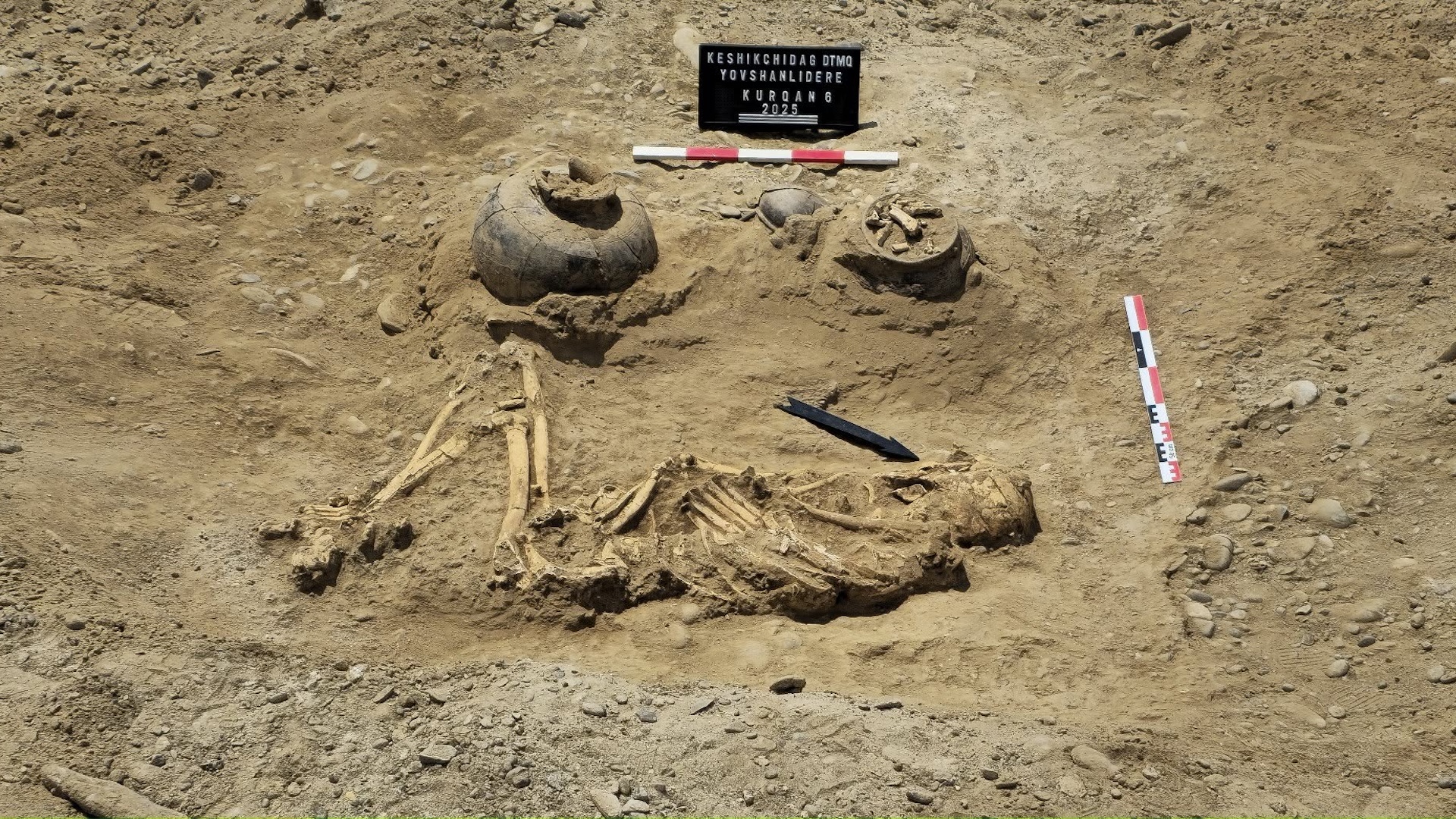
Just as the sword had a life, it also had a death. When a great warrior fell in battle, his journey was not over. If he had died honorably, the Valkyries would choose him to join Odin’s army of Einherjar in Valhalla, where he would feast and fight until the final battle of Ragnarök. But a warrior could not make this journey alone. He needed his most trusted companion by his side: his sword. Archaeological discoveries across the Viking world confirm this belief. Countless burial sites, from simple graves to elaborate ship burials, show warriors interred with their weapons. The sword was placed carefully beside its owner, ready for the journey to the afterlife and the battles that lay beyond.
In some cases, a fascinating ritual took place before burial. The sword was ‘killed’—ritually bent or broken—before being placed in the grave. This act may seem destructive, but its intent was deeply spiritual. By breaking the physical form, the Norse believed they were releasing the sword’s spirit, allowing it to travel with the warrior’s soul to the next world. It ensured that the weapon could not be used by mortals again and that its power was reserved for its rightful owner in Odin’s hall. This final act completes the sword’s sacred cycle. Conceived in the smith’s fire as an offering to the gods of war, marked with Odin’s runes of power, and bloodied in honorable combat, its final purpose was to accompany its master into the Allfather’s embrace. It was the warrior’s key to Valhalla, a final testament to a life lived with courage, and the ultimate proof of a blade forged in the name of Odin.

 vikings


