
The first clash of steel: more than just a sound
Imagine the moment before a battle. The air is thick with tension, the scent of sea salt, and the cold bite of a northern wind. A warrior stands in the shield wall, his breath misting before him. He is not just a man; he is a living embodiment of his community’s strength, his family’s honor, and his own saga waiting to be written. The weight on his shoulders is not merely that of his ambitions, but the tangible burden of his iron helmet and the heavy rings of his mail shirt. This is his armor. It is his second skin, his worldly status, and his ticket to the afterlife.
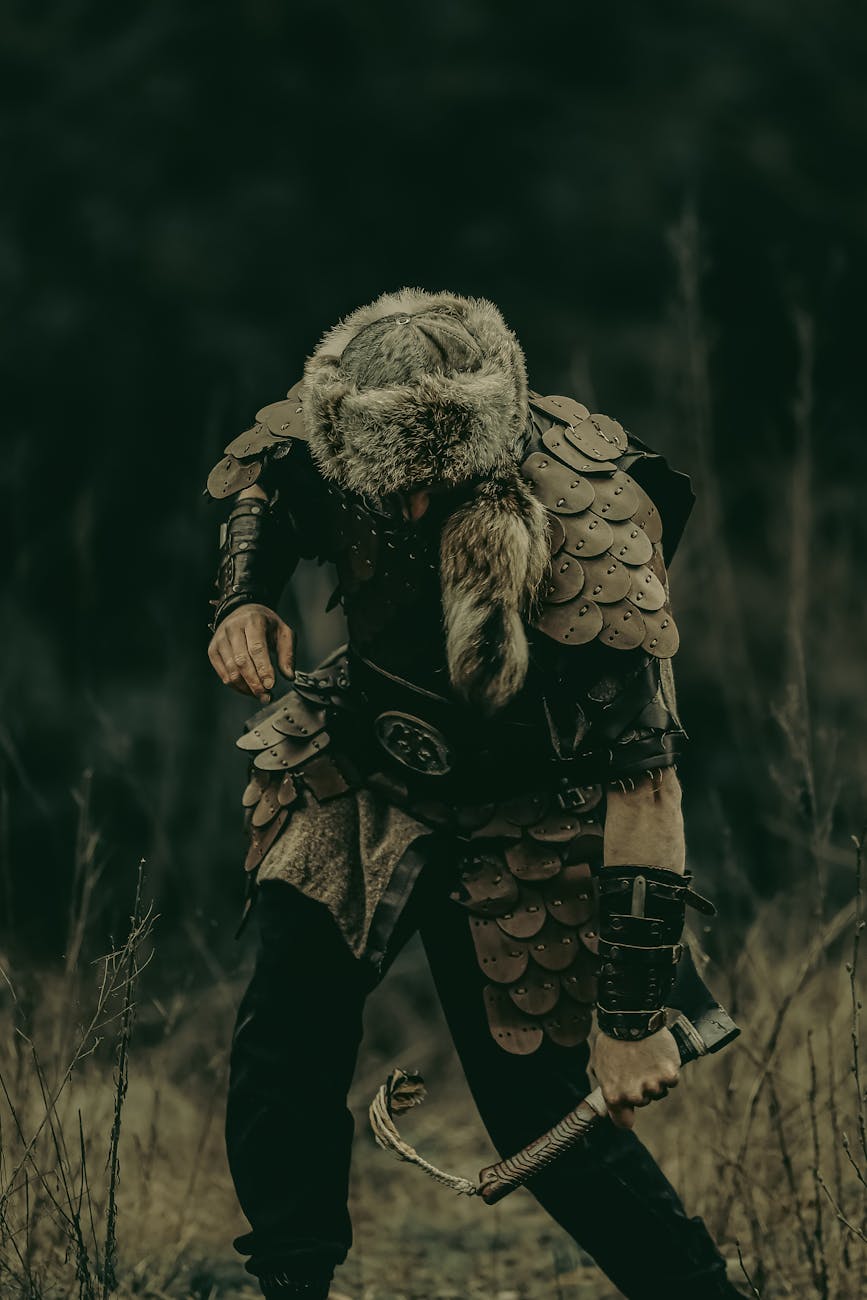
For the Norsemen of the Viking Age, armor was far more than simple protection. It was a profound statement of identity, a canvas for belief, and a crucial component of the warrior ethos that promised a glorious eternity. To understand the Viking warrior, we must look beyond the axe and the longship to the very gear that guarded his life in Midgard and, according to legend, adorned his spirit in the golden halls of Valhalla. This is the story of that armor—from the forge-fires of the mortal realm to the eternal battlefields of the gods.
The armor of Midgard: forging a warrior’s defense
Before a warrior could dream of Valhalla, he first had to survive the brutal realities of earthly combat. The armor worn by Vikings was practical, often dictated by wealth, and surprisingly different from the horned fantasies of popular culture. It was a system of defense built from iron, wood, and leather, each piece playing a critical role in the symphony of war.
The byrnie: a ring-woven second skin
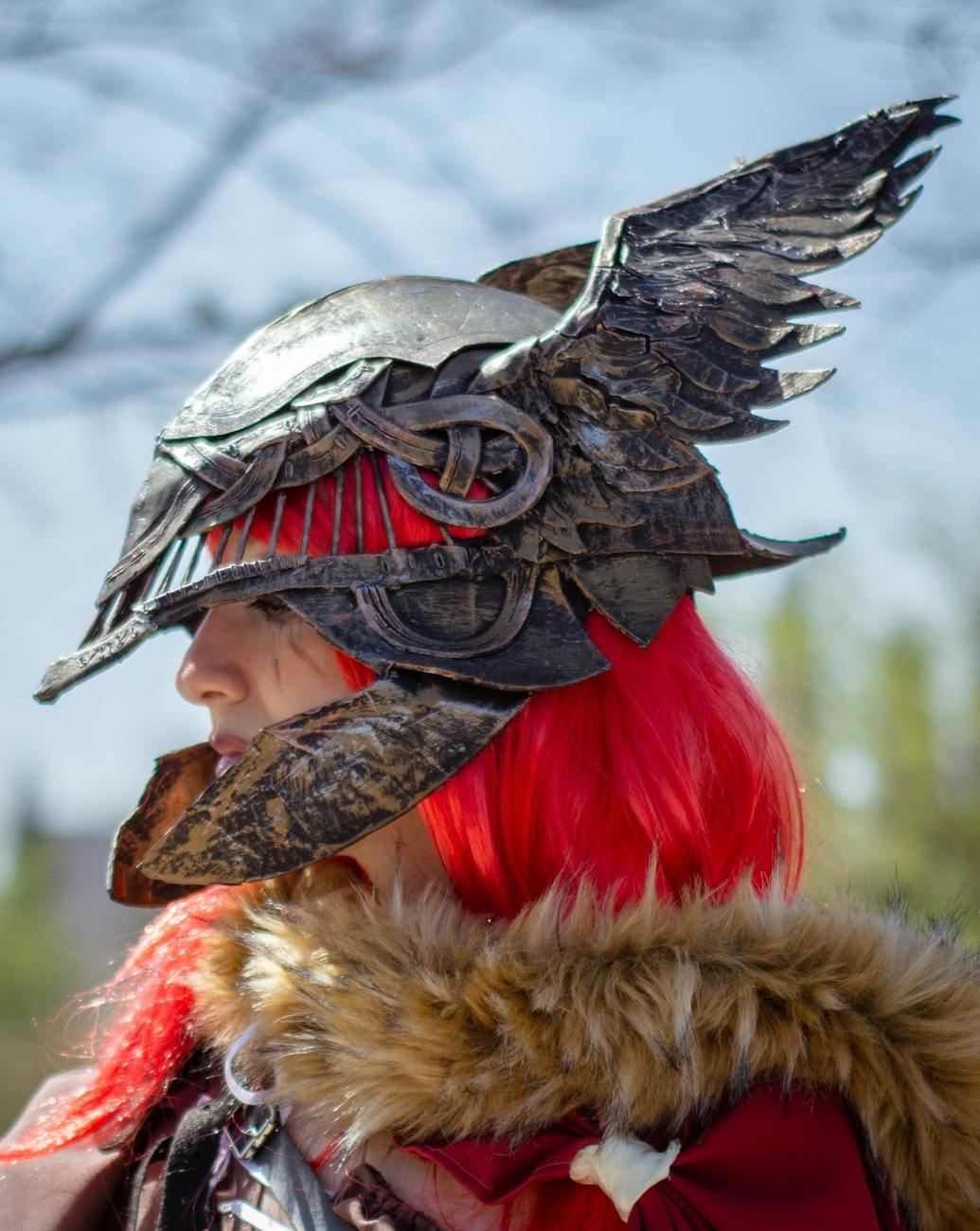
At the heart of a wealthy warrior’s defense was the byrnie, or mail shirt. This was not the gleaming, plate-metal armor of later medieval knights, but a complex garment made of thousands of interlinked iron rings. Each ring was painstakingly riveted shut, creating a flexible but formidable barrier against slashing cuts from a sword or axe. A well-made byrnie could take hundreds of hours to produce, making it an incredibly expensive piece of equipment. Consequently, it was a symbol of immense status. Only chieftains, their professional retainers (the hird), and exceptionally successful raiders could afford such protection. For the common farmer or fisherman called to fight, protection was more likely a thick leather jerkin or a padded wool tunic.
The helmet: guarding the mind and soul
Let us be clear: Viking helmets did not have horns. This enduring myth is a 19th-century invention, born from romantic opera costumes. Real Viking helmets were brutally functional and designed for one purpose: to deflect a killing blow. The most famous example, the Gjermundbu helmet found in Norway, reveals the true design. It is a simple skullcap forged from four iron plates, with a distinctive ‘spectacle’ guard that protected the eyes and nose. It offered excellent protection without obscuring vision. For the Norse, the head was the seat of courage and consciousness. To protect it was to protect the very essence of the warrior, his will to fight, and his ability to win a place among the chosen.
The shield: the warrior’s constant companion
If the byrnie was for the rich, the shield was for every man. The iconic Viking round shield was the single most important piece of defensive equipment. Made from wooden planks, often covered with leather to prevent splitting, and centered with a heavy iron boss to protect the hand, the shield was a versatile tool. In formation, shields were interlocked to create the formidable shield wall, an almost impenetrable barrier of wood and steel. In single combat, it could be used to block, to bind an opponent’s weapon, and even as a blunt-force weapon itself. A warrior’s shield was often painted with personal or clan symbols, a vibrant declaration of identity amidst the chaos of battle. To lose one’s shield was the ultimate dishonor, for it meant you had abandoned not only your own defense but the defense of the man standing next to you.
More than iron and wood: the symbolism woven in
The physical properties of armor were only half the story. To the Viking mind, the material and the mystical were deeply intertwined. Their gear was imbued with meaning, power, and a direct connection to the spiritual forces that governed their world.
Armor as a mark of status and identity
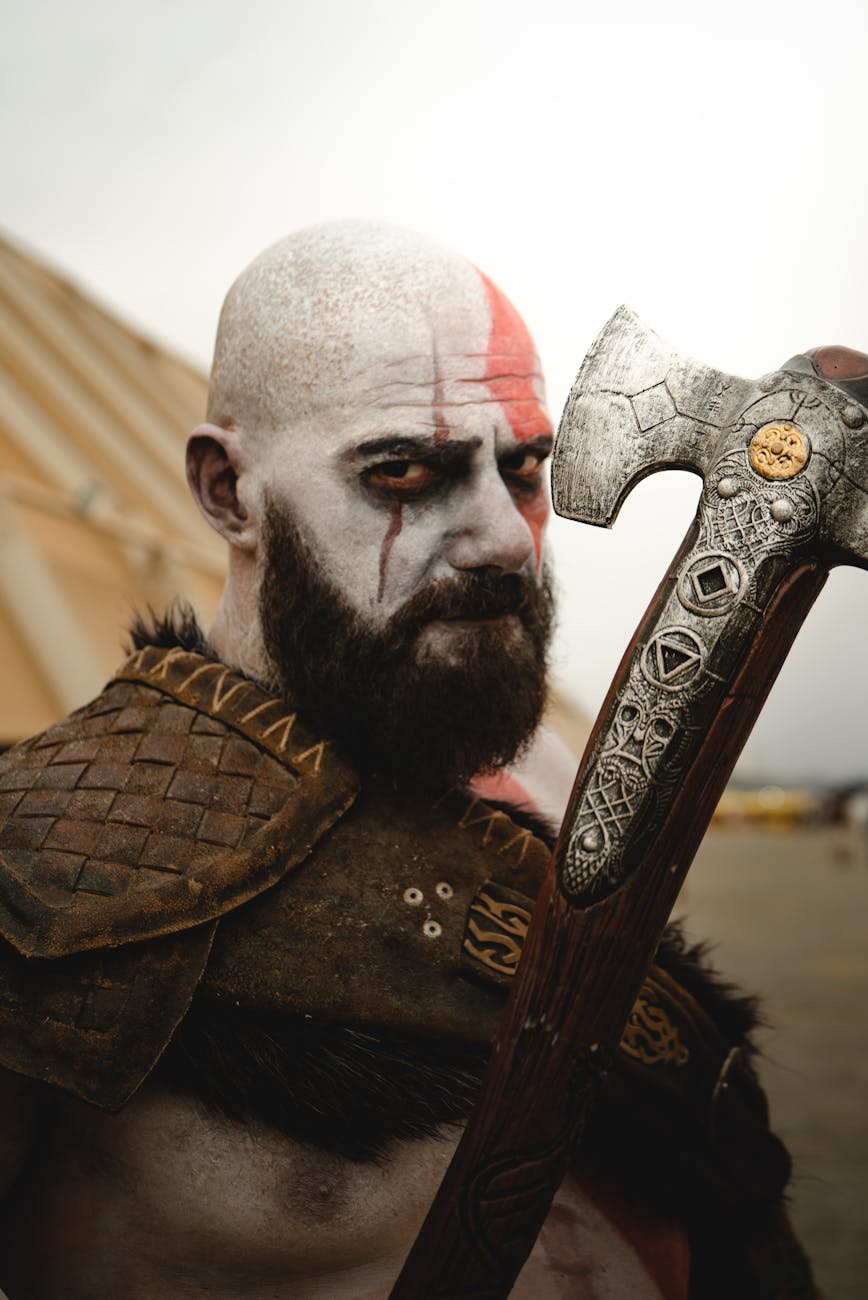
In a society structured by honor and reputation, armor was the ultimate status symbol. A warrior entering a hall clad in a full byrnie and a fine helmet was immediately recognized as a man of power and success. This wasn’t just vanity; it was a practical display of martial prowess. It told everyone that this individual had seen battle and emerged wealthy enough to afford the finest gear. It was a visual resume, proving his worth as a leader, an ally, or a formidable foe. The sagas are filled with descriptions of gifted helmets and swords, cementing alliances and rewarding loyalty, underscoring the social currency of war-gear.
The power of runes and protective symbols
The Vikings believed in the power of symbols to shape reality. While archaeological evidence is sparse for runes carved directly onto armor, it was common practice for weapons and amulets. It is highly likely that warriors sought to imbue their armor with similar spiritual protection. Symbols of the gods—a raven for Odin or a hammer for Thor—could be painted on a shield or worn as an amulet, invoking the deity’s favor in battle. They believed these marks were more than decoration; they were active wards, turning aside blades and strengthening a warrior’s resolve. This practice transformed a simple piece of iron into a sacred object, a nexus of physical and divine protection.
The gates of Valhalla: the armor of the Einherjar
What happens when the shield splinters and the byrnie’s rings are broken? For a warrior who fell with a weapon in his hand, death was not an end but a glorious transition. This is where the physical armor of Midgard gives way to the legendary armor of the afterlife.
Chosen by the Valkyries
According to Norse mythology, the bravest warriors who died in combat were chosen by the Valkyries, Odin’s female spirits of the battlefield. They were escorted from the mortal plane to Asgard, the realm of the gods, to take their place in Odin’s great hall, Valhalla. Here, they would become the Einherjar, the ‘lone fighters’ or ‘army of one,’ destined to feast, fight, and prepare for the final, world-ending battle of Ragnarok.
An eternal battle, an unbroken shield
Life for the Einherjar was a warrior’s paradise. Every day, they would don their wargear, march out into the great fields of Asgard, and fight one another in a joyous, glorious battle. They would suffer grievous wounds, yet by evening, all would be magically healed. They would then return to the hall to feast on the ever-replenishing boar Sæhrímnir and drink mead served by the Valkyries. This daily cycle of combat and celebration was not for sport; it was training. Odin was assembling the greatest army from all of history to stand with the gods against the giants and monsters when Ragnarok arrives.
The perfected armor of an eternal warrior
The sagas do not explicitly detail the armor of the Einherjar, but the implication is clear. It is the idealized form of their earthly equipment. The helmets gleam brighter, the mail is unbreakable, and the shields are never shattered. It represents the perfection of their warrior status, their earthly prowess made eternal. This belief is reflected in Viking burial customs. High-status warriors were often interred with their finest weapons, shields, and sometimes even helmets. This was not just a tribute to their life but a provision for their journey into the next, ensuring they arrived in the afterlife properly equipped and ready to prove their worth once more. Their eternal armor was a reward, a permanent symbol of the glory they had won in Midgard.
Echoes in the modern age: the enduring warrior spirit
Today, the forge-fires have cooled and the shield walls have long since broken. Yet, the allure of Viking armor and the ethos it represents has never been stronger. Historical reenactors spend countless hours meticulously recreating byrnies and helmets, not just for show, but to feel the weight and understand the mindset of those who wore them. Artisans and craftspeople draw inspiration from the functional beauty of Norse designs, creating modern interpretations that carry the spirit of the North.
Beyond the physical, the concept of the warrior’s armor endures as a powerful metaphor. We speak of putting on our ‘armor’ to face a difficult day, of ‘shielding’ ourselves from hardship. This language is an echo of the Viking warrior spirit—a belief in resilience, courage, and facing challenges head-on. The armor of the Viking was his strength, his identity, and his legacy. It carried him through the battles of life and accompanied his soul to the threshold of Valhalla. In every thread of a modern tunic, in the intricate knotwork of a piece of jewelry, or simply in the determination to face our own battles, the echoes of that eternal armor can still be heard.

 vikings


