
Erik Bloodaxe was a real 10th-century Viking king — son of Norway’s first king, briefly king of Norway himself, and twice king of York — and he is about to become the most talked-about Norseman on television. Bloodaxe, the new Prime Video saga from Vikings creator Michael Hirst, has just been renewed for a second season months before the first has even aired, with season 2 cameras rolling in Dublin from August 2026. Here is what the show covers, and what the sagas and the archaeology actually say about the man behind the name.
Bloodaxe on Prime Video: what we know so far
Bloodaxe comes from Michael Hirst — the writer behind Vikings — working with his son Horatio Hirst. The series is expected to premiere in early 2027, and Amazon’s confidence is hard to miss: the show was renewed for season 2 more than six months ahead of its premiere, with filming for the second season beginning in Dublin in August 2026.
The story follows Erik, a warrior destined to become king of Norway, and his wife Gunnhild, whose ambition drives his rise. The announced cast:
- Xavier Molyneux as Erik “Bloodaxe”
- Jessica Madsen as Gunnhild, his queen
- Levi Miller as Haakon, Erik’s half-brother and rival
- Kārlis Arnolds Avots as the poet Egil
- Rod Hallett as Athelstan, King of Wessex
- Alina Tomnikov as the shield-maiden Greta, with Sisse Marie as Thyra and Rune Temte as Gorm, queen and king of Denmark
If that character list looks like a history exam, don’t worry — nearly every name on it belongs to a real person from the 900s. That is exactly what makes this story worth telling.
Wear it: Viking Steel
Axe, steel and forge — premium Norse-inspired apparel, made on demand.
🇺🇸 Fast US shipping · 🇪🇺 Ships across the EU · 🔒 Secure checkout
Who was the real Erik Bloodaxe?
Erik was a son — by most accounts the favorite son — of Harald Fairhair, the king remembered as the first ruler of a unified Norway. When Harald died around the early 930s, Erik took the throne. The sagas say he held it the way he won it: ruthlessly. His byname, blóðøx (“blood-axe”), is usually explained by the brothers he killed to keep the crown — one early Latin history of Norway simply calls him fratris interfector, “brother-slayer.”
His reign lasted only a few years. His youngest half-brother Haakon had been fostered far away in England, at the court of King Athelstan of Wessex — which is why a Wessex king appears in a Viking drama. When Haakon sailed home to claim Norway, the nobles flocked to him, and Erik fled west across the sea. Norwegians would later remember Haakon as Haakon the Good; nobody ever called Erik that.
Gunnhild, Mother of Kings
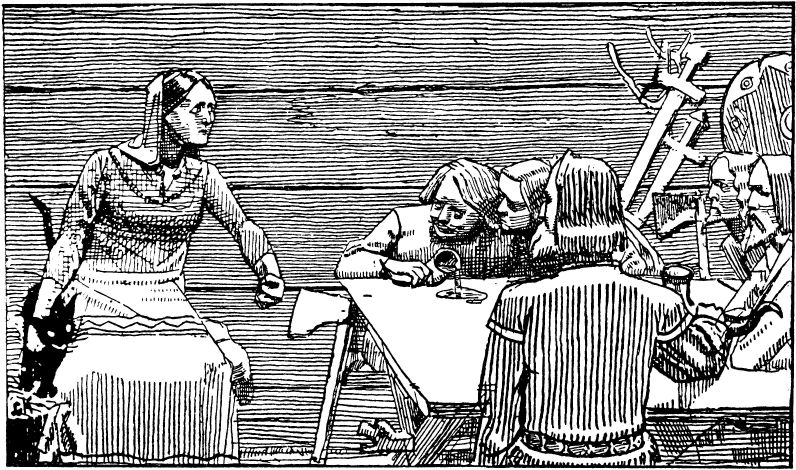
If the show gives Jessica Madsen half the material the sagas give Gunnhild, she will steal every scene. Medieval sources can’t even agree on where Gunnhild came from: the Icelandic sagas make her the daughter of a northern Norwegian chieftain who learned magic from Sami sorcerers, while an early Norwegian chronicle calls her a Danish princess, daughter of King Gorm the Old. The casting of Gorm and Thyra of Denmark suggests the series is running with the Danish version.
What the sources do agree on is her force. The sagas paint Gunnhild as beautiful, brilliant, vindictive and probably a witch — the archetype that later inspired a thousand fantasy queens. She outlived Erik by decades and steered their many sons onto Norway’s throne, earning the title by which history knows her: konungamóðir, Mother of Kings. She belongs to the same tradition of formidable Norse women as the shieldmaidens of saga and archaeology.
King of York: the coin that proves he existed
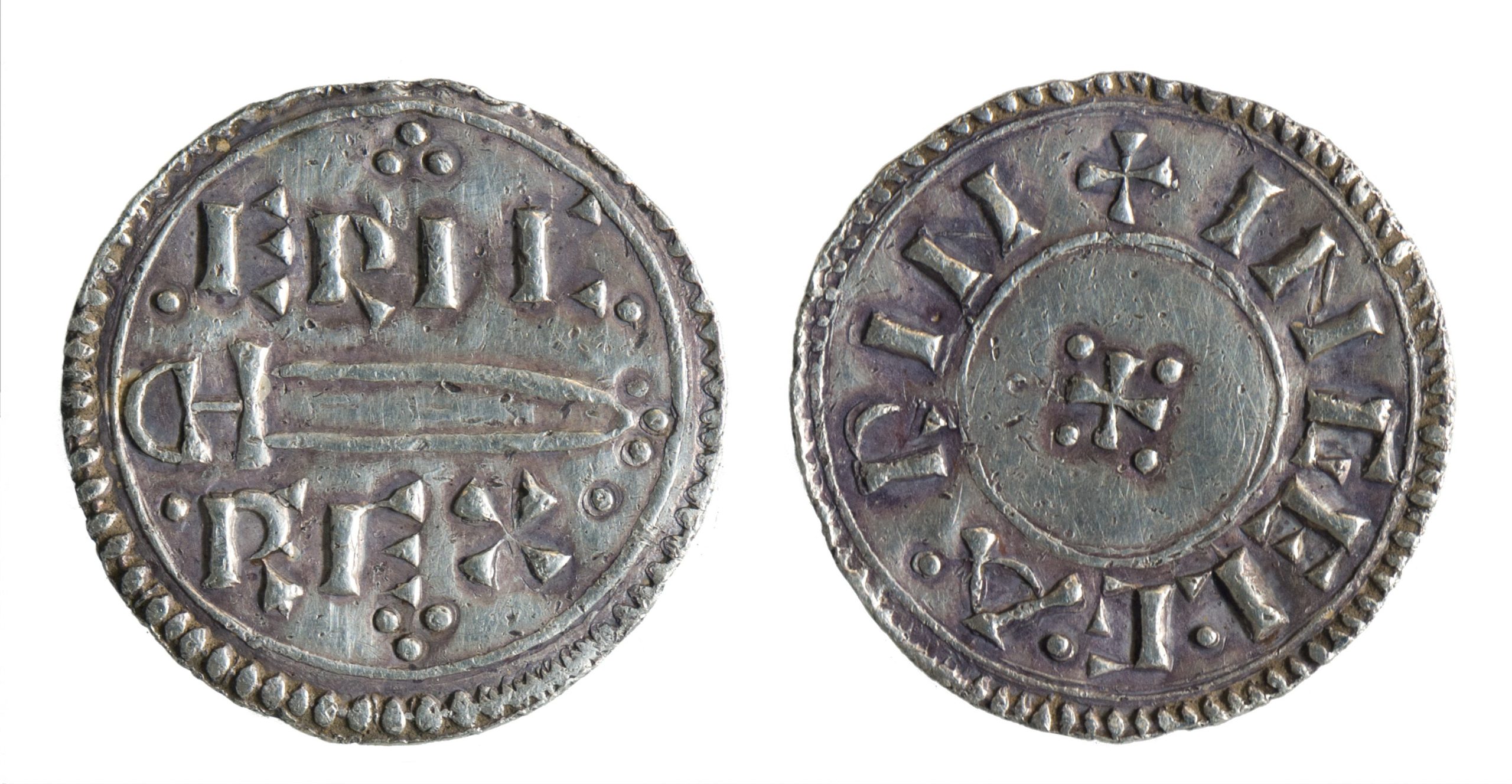
Exiled from Norway, Erik did something remarkable: he got himself accepted as king of Northumbria, ruling from York (Viking Jórvík) — not once but twice, around 947–948 and again 952–954. Between the sagas’ tall tales and the English chronicles’ terse entries, one piece of evidence cuts through all doubt: silver pennies struck at the York mint reading ERIC REX — “King Erik” — many stamped with a bare sword. A saga hero you can hold in your hand, which is rarer than you might think; entire hoards of Viking-age coins are still coming out of the ground today.
It ended the way Viking kings’ stories usually end. In 954 Erik was driven out of York a final time and killed in an ambush at Stainmore, a bleak pass in the Pennines. An Old Norse poem composed soon after, Eiríksmál, imagines Odin preparing Valhalla to receive him — the same warrior’s afterlife behind the phrase “til Valhalla”.
Egil: the poet who talked his way out of execution
The casting of a “poet Egil” promises the best feud in Norse literature. Egil Skallagrimsson — warrior, drunkard and the greatest skald of the age — spent years at war with Erik and Gunnhild, killing one of their sons and raising a cursing-pole against them. Then, in the sagas’ most famous scene, he was shipwrecked in Northumbria and dragged before Erik at York, expecting to die at dawn. Overnight he composed Höfuðlausn — the “Head-Ransom” — twenty stanzas in praise of the king who hated him. Erik, honor-bound by the gift of a great poem, let him walk. If the show does that scene justice, it will be worth the subscription on its own.
Fact and fiction: what to watch for
Expect the timeline to be squeezed. The real Athelstan died in 939, years before Erik appeared in York, and the historical record for Erik’s English reigns is thin enough that even historians argue over which annal entries are his. The sagas themselves were written down some three centuries after the events, so the show’s mix of history and legend is, in a sense, faithful to its sources — the Norse were mixing them first. For a primer on the imagery you’ll see throughout the series — ravens, runes, hammers and knots — see our complete guide to Norse symbols and their meanings.
One thing is certain: between Bloodaxe, new excavations and record museum attendance, the Viking age owns 2026’s cultural moment. If you want to wear a piece of it — forged-steel graphics, ravens, runes — browse the Viking shirt collection: fast US shipping and delivery across the EU.
Image credits: Eric Bloodaxe penny — York Museums Trust via Wikimedia Commons, CC BY 2.0. Gunnhild illustration — Christian Krohg, public domain.

 History Warrior Team


