
The soul of the Viking warrior: more than just a weapon
In the biting winds of the North, where longships cut through grey waves and the call of the raven echoed over fjords, the Viking warrior was defined by his spirit, his ship, and the steel he held in his hand. To the modern mind, a sword is merely a weapon. But to a Norseman, a finely crafted blade was so much more. It was a status symbol, a family legacy, a key to Valhalla, and a direct connection to the gods themselves, particularly Odin, the Allfather of war, wisdom, and death.
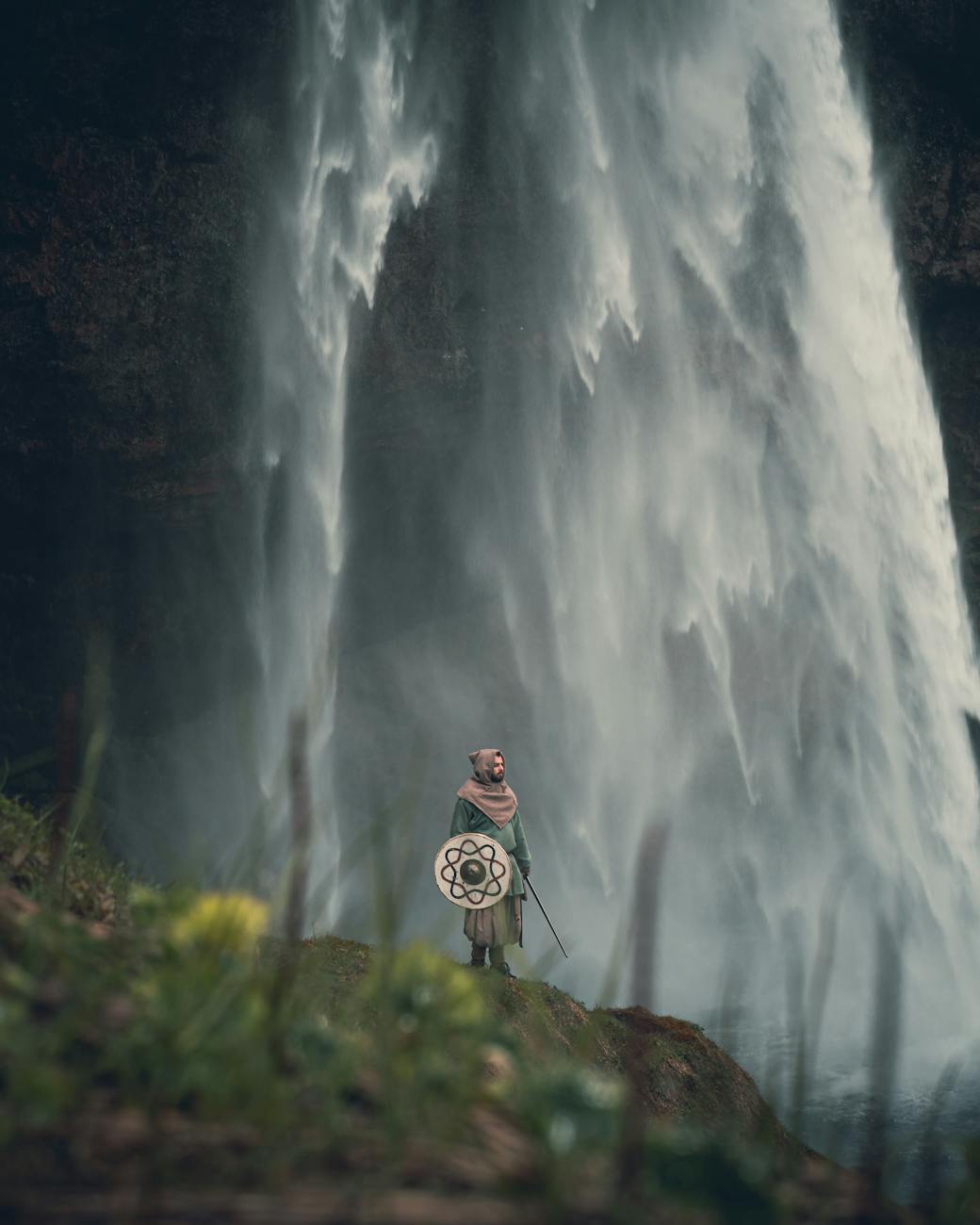
A Viking sword was not a common tool. The complex forging process and the scarcity of high-quality iron made it an object of immense value, often worth more than a small farm and its livestock. Only jarls, chieftains, and their most trusted warriors, the hersirs, could afford such a luxury. To carry a sword was to declare your standing in the world. It marked you as a person of power and influence, a leader of men whose word, like the edge of his blade, was sharp and true.
These weapons were not mass-produced; they were heirlooms. A great sword would be passed down from father to son, carrying with it the stories and honor of generations. Its hilt might be worn smooth by the grip of a grandfather who fell in a shield wall in England, its blade nicked from a duel fought by a father on the rivers of the Rus. To inherit such a blade was to inherit the duty and glory of your ancestors. It was a physical embodiment of a family’s saga, a soul forged in iron and tempered in blood.
Forging a legend: the art of the Norse blacksmith
The creation of a Viking blade was an act of profound skill, a craft bordering on magic. The Norse blacksmith was a master of fire and iron, a respected and somewhat feared figure in the community. He was not just a laborer but an artist, a man who could transform brittle ore into a weapon worthy of a king. The rhythmic clang of his hammer against the anvil was the sound of legends being born, a song of creation that echoed the one sung by the gods at the beginning of time.
The magic of pattern-welding
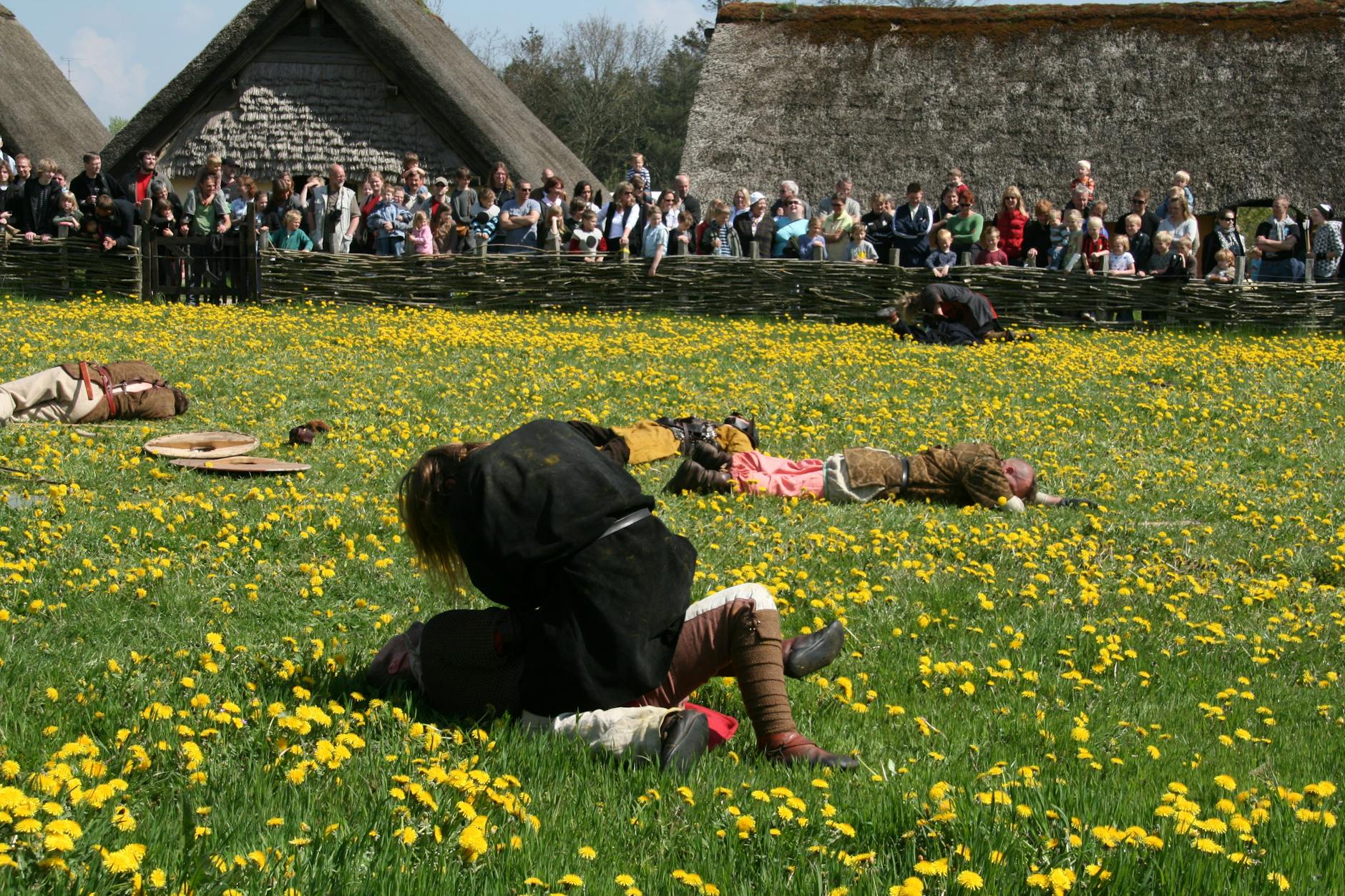
The most prized Viking swords were not made from a single piece of steel. They were crafted using a sophisticated technique known as pattern-welding. The smith would take multiple rods of iron, some with high carbon content (making them hard but brittle) and others with low carbon (making them soft but flexible), and forge-weld them together. He would twist, hammer, and fold these rods, creating a core of incredible strength and resilience.
This process was painstakingly difficult, requiring absolute control over the forge’s temperature and a deep understanding of the metal. The result was a blade that was both hard enough to hold a razor-sharp edge and flexible enough to absorb the shock of impact without shattering. But the functional brilliance of pattern-welding was matched by its breathtaking beauty. When the finished blade was polished and etched, intricate, serpents-in-the-steel patterns would emerge on the surface, shimmering like flowing water. Each pattern was unique, a testament to the smith’s individual artistry.
The anatomy of a Norse blade
While each sword was unique, they generally followed a distinct and ruthlessly effective design. The typical Viking Age sword was a straight, double-edged weapon, perfectly balanced for powerful, decisive cuts.
- The blade: Usually around 30 inches long, the blade was broad and tapered to a sharp point, making it capable of both slashing and thrusting. Running down the center was a wide, shallow groove called a fuller. Often mistakenly called a “blood groove,” its true purpose was to lighten the blade without compromising its structural integrity, improving its balance and making it faster in the hand.
- The hilt: The hilt was where a sword expressed its personality and the status of its owner. The guard was typically a simple, straight piece of iron or bronze, designed to protect the hand. The grip was made of organic materials like wood, horn, or bone, often wrapped in leather for a secure hold.
- The pommel: Capping the hilt was the pommel, a heavy counterweight that gave the sword its nimble balance. Viking pommels are works of art in their own right, often cast in bronze or iron and decorated with intricate knotwork or inlaid with silver and copper wire. Their distinctive multi-lobed shapes are one of the key ways archaeologists classify and date these incredible weapons.
Legendary blades from the sagas
The sagas are filled with tales of extraordinary swords, weapons so famous they were given names and attributed with supernatural powers. These were not just tools but characters in the epic stories of heroes and gods.
The enigmatic Ulfberht: a sword ahead of its time
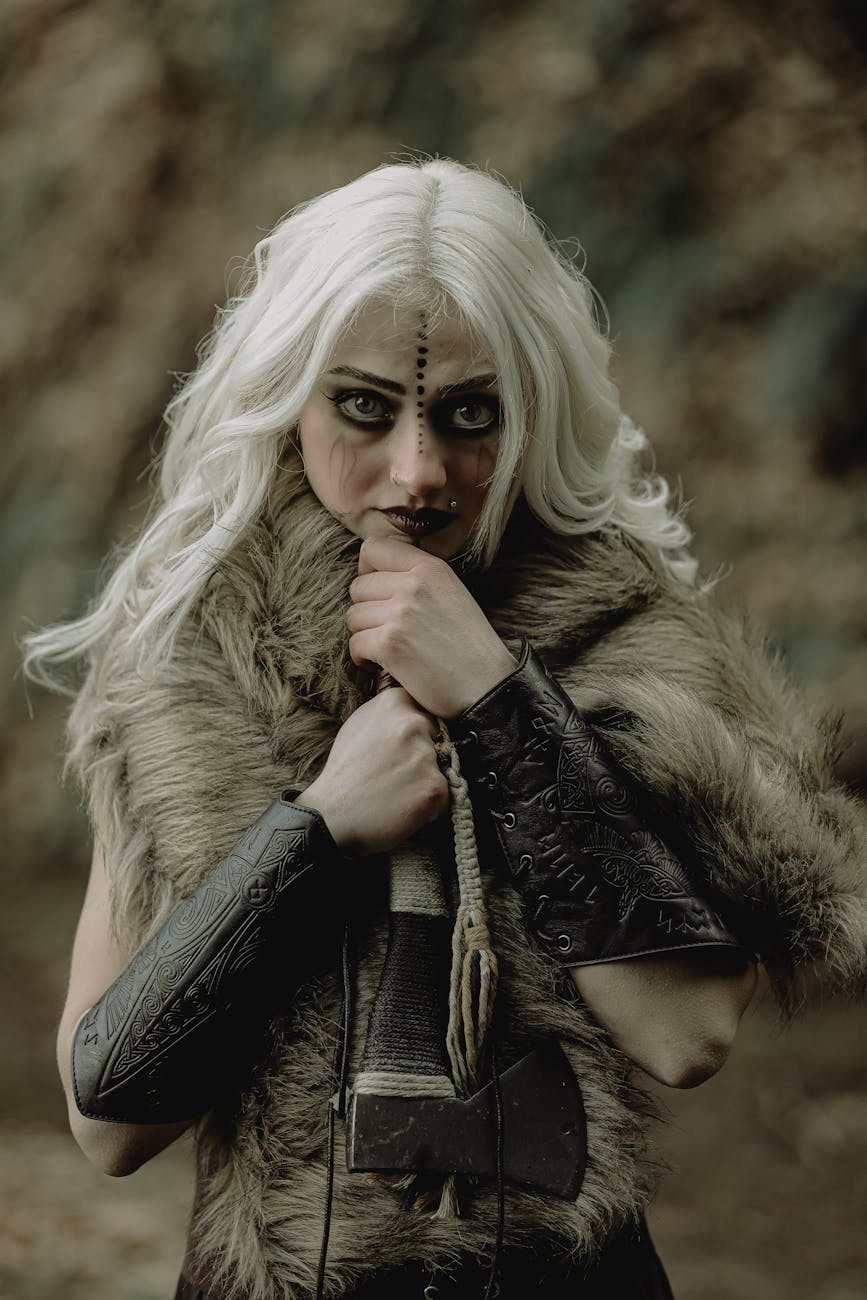
Among the thousands of Viking swords recovered by archaeologists, a special group stands apart. These blades are inscribed with the name +VLFBERH+T, a marker of a workshop or brand of unparalleled quality. The Ulfberht swords, dating from the 9th to 11th centuries, were a technological marvel.
Metallurgical analysis has revealed their secret: they were forged from crucible steel. This was a type of steel with a high, uniform carbon content and virtually no impurities, or “slag.” The result was a metal far stronger, sharper, and more flexible than any other produced in Europe at the time. It was a material not commonly seen in the West until the Industrial Revolution, nearly 800 years later.
The existence of Ulfberht swords raises tantalizing questions. How did Viking Age smiths acquire this material or master this technique? Some theories suggest the raw steel was imported from Central Asia or the Middle East via the extensive Viking trade routes along the Volga river. Others propose that a select group of European smiths held a closely guarded secret, their knowledge passed down through generations. Whatever its origin, an Ulfberht was the ultimate weapon of its day, a blade of legend sought by the wealthiest and most powerful warriors of the North.
Gram, the sword of Sigurd
Perhaps the most famous sword in all of Norse mythology is Gram, the blade wielded by the hero Sigurd. Its story begins with Odin himself. During a great feast, the Allfather, disguised as a wanderer, strode into the hall and thrust a magnificent sword into the trunk of the great tree Barnstokkr. He declared that the sword would belong to whoever could pull it free. Of all the mighty chieftains and warriors present, only Sigmund, Sigurd’s father, could draw the blade.
Gram served Sigmund well until Odin, deciding the hero’s time was at an end, shattered it in battle. The pieces were saved, and years later, the dwarven smith Regin reforged the blade for Sigurd. With the restored Gram, so sharp it could slice through an anvil, Sigurd avenged his father and, most famously, slew the great dragon Fafnir, claiming its cursed treasure. The tale of Gram perfectly illustrates the Viking belief in destiny and the direct intervention of the gods in the affairs of mortals, often through the gift of a legendary weapon.
Beyond the sword: the Viking warrior’s arsenal
While the sword was the weapon of kings, not every Viking could afford one. The typical warrior went to battle with a more common but no less deadly arsenal of blades, each with its own purpose and spirit.
The versatile seax: the Viking’s everyday blade
The seax was a single-edged blade that was part tool, part weapon. Every free Norseman, from farmer to fisherman, would have carried one. They came in all sizes, from small utility knives to fearsome, sword-length weapons known as the langseax. It was the Viking multi-tool, used for everything from cutting rope and carving wood to fighting in the claustrophobic crush of a shield wall when a long sword was too cumbersome.
The fearsome Viking axe: a symbol of the north
More than the sword, the axe was the true symbol of the common Viking warrior. It began as a simple tool for felling trees and building longships, but in the hands of a Norseman, it became a terrifyingly effective weapon. The lightweight, single-handed axe could be thrown or used to hook a shield’s edge and pull it down, exposing the enemy. Its more infamous cousin, the two-handed Dane axe, was a weapon of pure destruction. With its long haft and broad, bearded blade, a strong warrior could cleave through a helmet and the man beneath it with a single, devastating blow.
Runes and rituals: imbuing blades with Odin’s might
For the Viking warrior, the physical properties of a blade were only half the story. To truly be great, a weapon needed to be blessed by the gods and imbued with magic. This was accomplished through ritual, naming, and the carving of sacred runes.
Carving a fateful path: the power of runes on steel
According to mythology, Odin discovered the secrets of the runes by sacrificing himself. He hung for nine nights on the world tree, Yggdrasil, pierced by his own spear, until the mystical symbols revealed themselves to him. Because of this divine origin, runes were seen as more than just letters; they were conduits of cosmic power.
Warriors would carve runes onto the hilts or blades of their swords and axes to invoke this power. A smith might inlay a rune into the blade during its forging, trapping its magic within the very fabric of the steel. The most common rune found on weapons is Tiwaz (ᛏ), the rune of the sky god Tyr, a deity of law, justice, and heroic glory. It was carved to ensure victory in battle and to guide the warrior’s hand to a true strike.
Naming the blade: a soul forged in steel
Just as they named their ships, Vikings often named their most prized weapons. A name gave a sword an identity, a personality, and a history. It transformed the blade from an inanimate object into a trusted companion, a battle-brother that shared in the warrior’s triumphs. The sagas are full of evocative names like Leg-biter, Foe-reaper, and Sea-king’s-fire. This practice reveals the deeply personal and spiritual connection the Norseman felt with his blade. It was not a tool he owned, but a living spirit whose destiny was intertwined with his own.
From the fiery heart of the forge to the cold fury of the shield wall, the blades of the Viking Age were central to the life and identity of the Norse warrior. They were masterpieces of a near-magical craft, symbols of earthly status, and sacred links to the divine will of Odin. Each pattern-welded swirl and carved rune tells a story of ambition, destiny, and the unyielding spirit of the North, a spirit that lives on in the legacy of these legendary blades.

 vikings


