
The enduring legacy of Norse leather
In the windswept lands of the North, where survival was a daily conquest, the Vikings were masters of resourcefulness. Every element of their world, from the forests they foraged to the beasts they hunted, was a gift to be utilized. Among these resources, few were as versatile or vital as leather. It was the shield wall’s sinew, the traveler’s second skin, and the silent testament to a craftsman’s skill. Far more than just rugged armor, leather was woven into the very fabric of Norse life, forming the belts that held their tools, the shoes that trod foreign shores, and the pouches that carried their precious silver.
Today, the echo of the skalds and the clang of the forge still resonate with those who feel a connection to the Viking spirit. We see it in the intricate knotwork, the powerful sagas, and the desire to create something tangible with our own hands. This guide is for you—the modern shield-maiden, the urban berserker, the weekend jarl. We will journey back in time to understand how the Norse worked with hide and horn, and then bring that knowledge into the present day. You will learn the essential tools, the fundamental techniques, and the steps to create your very own piece of Viking gear. It’s time to pick up the tools of your ancestors and master the timeless craft of Viking leatherwork.
From beast to battle: leather’s role in the Viking age
To truly master a craft, one must first understand its history. For the Vikings, leather wasn’t a hobby; it was a cornerstone of their civilization. The harsh Scandinavian climate demanded materials that were durable, insulating, and readily available. The hides of domesticated animals like cattle, goats, and pigs, as well as hunted game like deer and elk, provided the perfect solution.
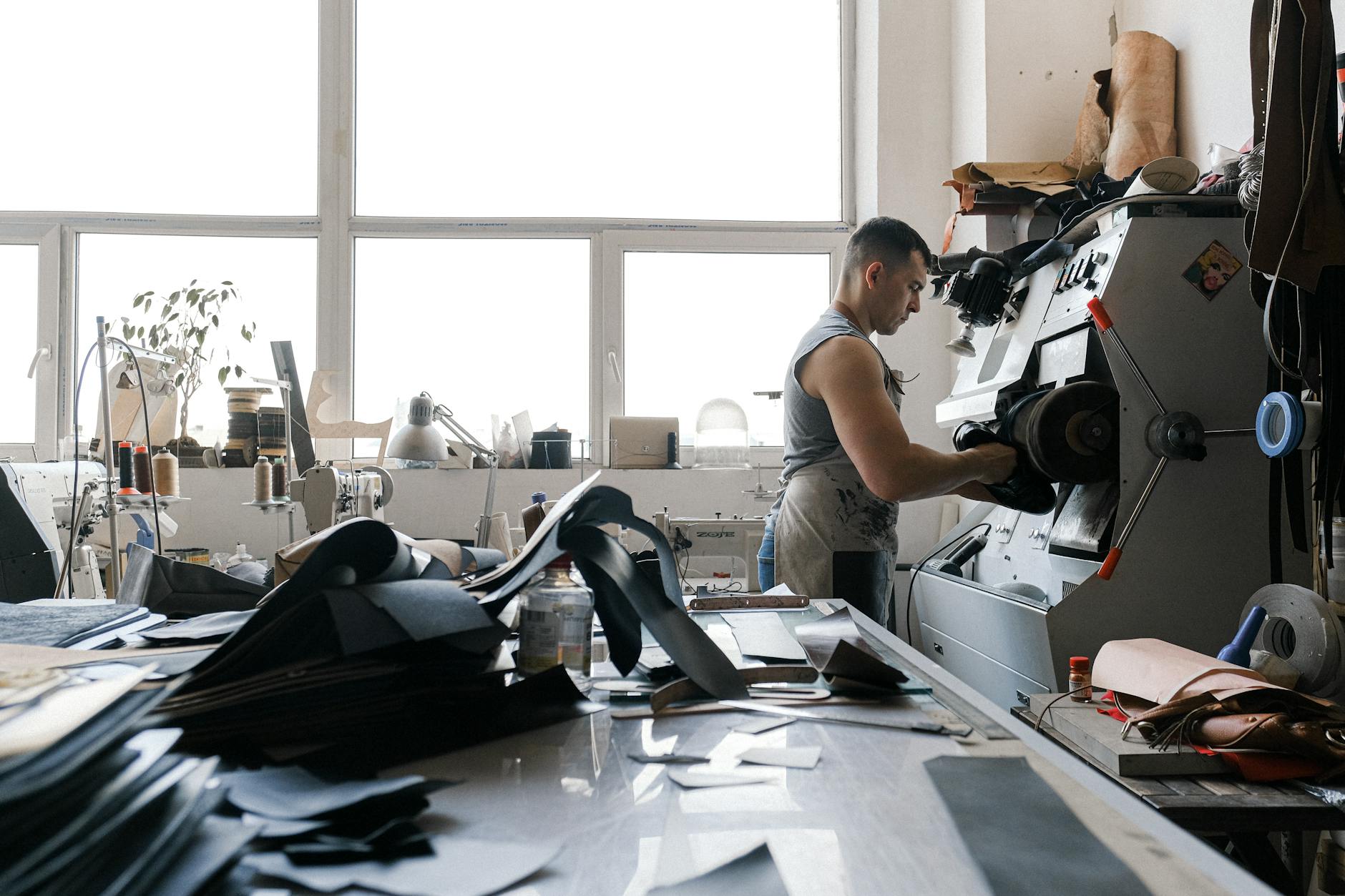
The process of turning a raw hide into usable leather was a labor-intensive art. While modern tanneries use complex chemicals, the Norse relied on the natural world. The most common method was vegetable tanning, a slow process where hides were soaked in water infused with tree bark rich in tannins, such as oak or birch. This process not only preserved the leather, preventing it from rotting, but also gave it a distinctive firm feel and a rich, earthy brown color—the very palette we associate with Viking aesthetics today. Another, more primitive method, involved using fats and even the brains of the animal to soften and preserve the hide, a technique known as brain tanning.
The craftsman’s hand in everyday life and war
Once tanned, leather found its way into nearly every aspect of a Viking’s life. Let’s explore its most crucial applications:
- Footwear (Turnshoes): The iconic Viking shoe, known as a ‘turnshoe’, was crafted from a single piece of soft leather. It was stitched together inside-out and then turned right-side-out, hiding the seams and creating a comfortable, form-fitting shoe perfect for navigating both muddy village paths and the deck of a longship.
- Belts and Pouches: A Viking’s belt was their utility tool. It held not just their trousers up, but also their knife, their whetstone, and a pouch for coins, fire-starting tools, or other personal items. These belts were often decorated with stamped patterns or fitted with intricate bronze or iron buckles, serving as a sign of status.
- Armor and Protection: While mail was the armor of choice for wealthy warriors, hardened leather offered a formidable and more accessible alternative. Known as ‘cuir bouilli’, leather could be soaked in water or wax and then molded into a shape before being dried. The result was a rigid, tough material perfect for creating body armor (lamellar plates), bracers, and greaves. Leather was also used for shield coverings, scabbards for swords and seaxes, and straps for helmets.
- Household and Maritime Goods: The utility didn’t stop at clothing. Leather was used to create water flasks (costrels), strong straps and rigging for their legendary longships, and even hinges for wooden chests. Its strength and water-resistant properties made it indispensable.
By studying archaeological finds from sites like Hedeby in Denmark and Birka in Sweden, we can see the incredible skill of these Norse artisans. The surviving fragments show not just utility, but a deep appreciation for beauty, with many pieces adorned with complex geometric stamps, zoomorphic designs, and runic inscriptions. This historical context is the foundation upon which your own crafting journey will be built.
The modern longhouse: your essential leatherworking toolkit
Before you can craft a belt worthy of a jarl, you must gather your tools. While a Viking craftsman would have used tools of iron and bone, their modern counterparts offer precision and ease that will help you achieve beautiful results from your very first project. You don’t need a sprawling workshop; a sturdy table and a few key implements are all it takes to begin your saga in leather.
The non-negotiables: tools to start your hoard

Think of these as your foundational toolkit. Investing in decent quality here will save you frustration down the road.
- A Self-Healing Cutting Mat: This is your workspace’s foundation. It protects your table and your blade, ensuring clean, safe cuts every time.
- A Heavy-Duty Craft Knife or Head Knife: A sharp, sturdy utility knife is perfect for straight cuts. For curves, many leatherworkers swear by a traditional round head knife, which offers incredible control once you master it.
- Metal Ruler or Straight Edge: For ensuring your cuts are perfectly straight and your measurements are precise.
- Stitching Chisels (or Pricking Irons): These fork-like tools are used with a mallet to punch evenly spaced stitching holes. They are the secret to the neat, uniform stitching seen on professional leather goods. A 4mm or 5mm spacing is a great starting point.
- Harness Needles: These are not your average sewing needles. They have a blunt tip to follow the holes you’ve punched, preventing you from accidentally splitting the leather or your thread. You’ll need two for the saddle stitch.
- Waxed Thread: This thick, durable thread is coated in wax, which helps it glide through the leather and locks the stitches in place for incredible strength.
- A Mallet: A rawhide, wood, or poly mallet is used to strike your stitching chisels and stamping tools without damaging them. Avoid a metal hammer.
- An Edge Beveler: This tool shaves off the sharp, 90-degree corners of your leather edges, giving them a rounded, more comfortable, and professional appearance.
Choosing your hide: vegetable-tanned is king
When you walk into a leather store or browse online, you’ll see many types, but for historical Viking projects, one stands above the rest: vegetable-tanned leather. This is the leather tanned using the traditional method with plant tannins. Its firm, natural character is perfect for tooling, stamping, and wet-forming. It’s the canvas on which you will carve your Norse designs. For a first project like a belt or bracer, look for a 7-9 oz (or 2.8-3.6 mm thick) veg-tan shoulder or side.
Forging your first masterpiece: a step-by-step Viking belt
Theory is the map, but practice is the voyage. It’s time to combine your knowledge and tools to create your first piece of functional Viking gear: a sturdy, handsome leather belt. This project will teach you all the fundamental skills: cutting, stitching, and finishing.
Step 1: measuring and cutting
Measure your waist where you intend to wear the belt. Add about 6-8 inches for the ‘tail’ that will hang down. A traditional Viking belt width is between 3/4 inch and 1.5 inches. Using your metal ruler and a sharp knife, make long, confident cuts to create your belt strap. It’s better to make several light passes than one heavy, wandering one. Cut a point or a rounded shape on the tail end for a finished look.
Step 2: marking and punching your holes
Wrap the belt around a historically-inspired buckle (many online suppliers sell replicas). Mark where the leather needs to fold over to secure it. This is where you’ll stitch. Using your stitching chisels and mallet, punch a line of holes through both layers of the folded-over leather. You’ll also need to punch a hole for the buckle’s tongue and a series of holes on the tail end for adjustment.
Step 3: the unbreakable saddle stitch
The saddle stitch is the heart of hand-crafted leatherwork. It uses two needles on a single piece of thread, creating a locking stitch in every single hole. If one stitch were to ever break, the ones next to it would hold firm—a quality any Viking would appreciate.
Cut a length of your waxed thread about four times the length of the area you need to stitch. Thread a needle onto each end. Pass one needle through the first hole, evening out the thread on both sides. Then, pass the left needle through the second hole. Before pulling it tight, pass the right needle through the *same hole*, being careful not to pierce the thread already there. Pull both ends tight. You’ve completed one stitch. Repeat this ‘one-two’ motion until you’ve secured the buckle. It’s a rhythmic, meditative process that connects you directly to the craft.
Step 4: the art of the edge
A raw, cut edge works, but a finished edge is the mark of a true craftsman. First, run your edge beveler along all the corners of your belt to round them off. Next, dampen the edge slightly with a sponge. Now, take a piece of canvas, denim, or a wooden burnisher and rub the edge back and forth with speed and pressure. The friction and heat will compress the leather fibers, creating a slick, dark, and durable edge that looks incredible.
Step 5: adding the Norse spirit
Your belt is functional, but now let’s make it Viking. This is where you can add your personal signature. Using leather stamps—simple tools with designs on the end—you can create repeating patterns along the belt. You can find stamps for knotwork, runes, or geometric shapes. Lightly dampen the leather surface (a process called ‘casing’), place your stamp, and give it a firm, single strike with your mallet. Plan your design, practice on a scrap piece, and soon you’ll be adding authentic Norse flair to all your creations.
Stand back and admire your work. You’ve done more than make a belt; you’ve practiced an ancient craft. You’ve taken a raw material and, with your own hands, transformed it into something of strength and beauty. This belt is your first step. From here, the possibilities are endless: bracers, pouches, armor, and beyond. The spirit of the North is in your hands—now go and create.

 vikings


