
Olsok, marked every year on July 29, is Norway’s commemoration of the death of King Olav Haraldsson — St Olaf — at the Battle of Stiklestad in 1030. It is the closest thing the Viking Age has to an official ending: the day a Viking sea-king fell in battle and, within a year, rose again as a saint. Here is the real story behind Norway’s day of memory, and why it still matters in 2026.
What is Olsok?
Olsok comes from the Old Norse Ólafsvaka — “Olav’s wake,” the vigil held on the eve of his feast day. It is an official flag day in Norway, and in the Faroe Islands the same feast, Ólavsøka, is the biggest festival of the year, filling Tórshavn on July 28–29 with rowing races, chain dancing and the opening of parliament. For a thousand years, the end of July has belonged to Olaf.
What makes the day remarkable is who it remembers: not a peaceful churchman, but a warrior who spent his youth raiding England and France from a longship — a Viking in every sense of the word.
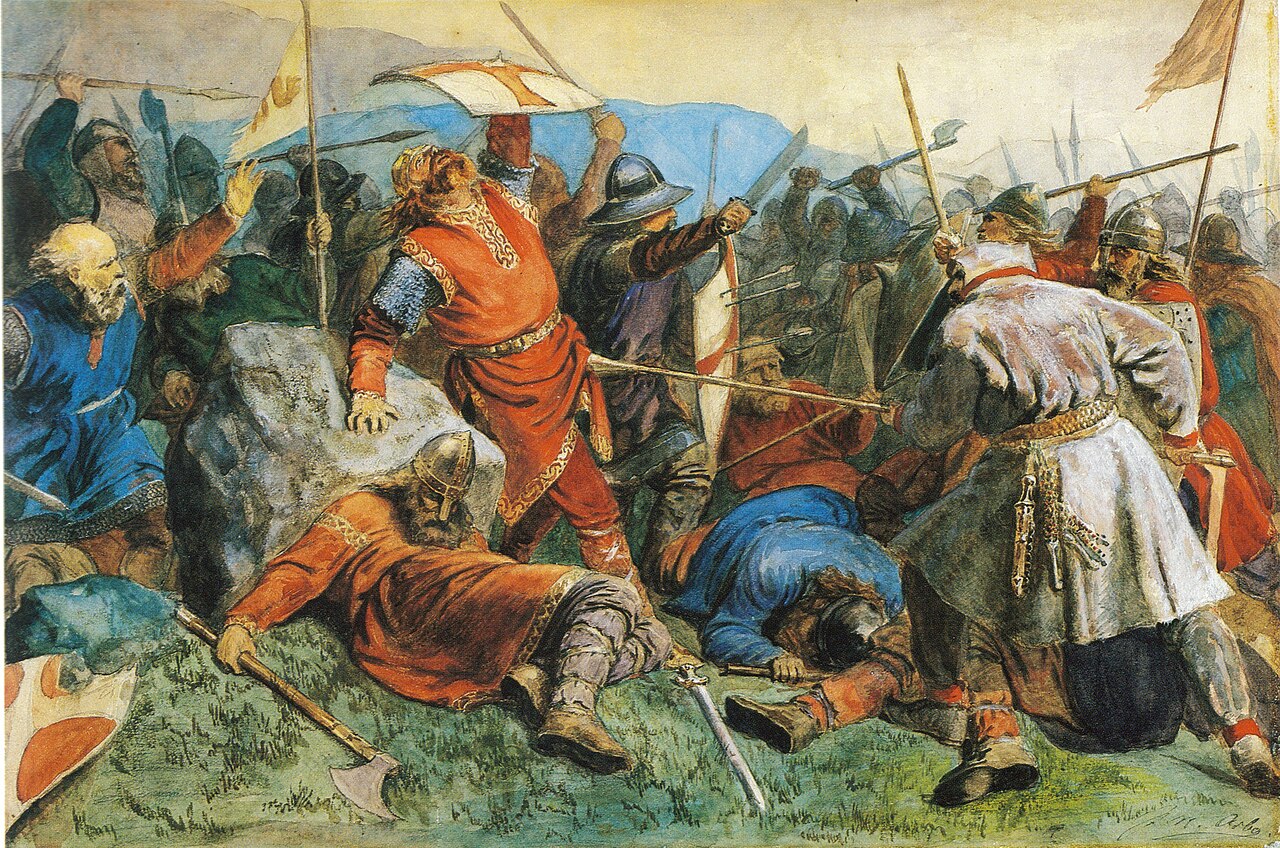
The Battle of Stiklestad: July 29, 1030
Olav Haraldsson seized the Norwegian throne in 1015 and spent thirteen years forcing a patchwork of chieftaincies into one Christian kingdom — often at sword-point. His methods made enemies. In 1028, those enemies allied with Cnut the Great, the Danish king of England, and drove Olav into exile in Kievan Rus.
Two years later he came back over the mountains from Sweden with a small army, and at the farm of Stiklestad in the Trøndelag met a far larger force of Norwegian farmers and chieftains. According to Snorri Sturluson’s Heimskringla, the king fell to three wounds: an axe blow to the knee, a spear thrust beneath his mail shirt, and a sword cut to the neck. The sagas even tied his death to a darkened sun — though astronomers note the eclipse that year actually occurred on August 31. The legend was already growing.
Wear it: Till Valhalla
Premium Norse-inspired apparel, made on demand.
🇺🇸 Fast US shipping · 🇪🇺 Ships across the EU · 🔒 Secure checkout
How a fallen Viking became a saint
Olav lost the battle, but his cause won the century. His body was carried away, buried in secret by the river Nid — and when it was exhumed a year later, witnesses swore it was untouched by decay. On August 3, 1031, Bishop Grimkell declared him a saint. The warriors’ king became Rex Perpetuus Norvegiae — Norway’s Eternal King.
Over his grave rose Nidaros Cathedral in Trondheim, the northernmost great cathedral of medieval Europe and one of its four major pilgrimage destinations, drawing pilgrims from across Scandinavia, the British Isles and beyond. Even the Varangian guardsmen in Constantinople dedicated a church to him. In death, Olaf converted more of the North than he ever did alive.
The day the Viking Age ended
Historians debate the bookend dates of the Viking Age, and 1066 gets most of the attention. But inside Norway, Stiklestad is the turning point: after 1030 the raiding kings give way to a Christian medieval kingdom, and the old warrior ethos — the world of berserkers and the promise of Valhalla for the fallen — fades into saga and memory. A culture that had buried its greatest leaders in ship mounds now buried them beneath cathedral stone.
That is the quiet irony of Olsok: Norway’s national day of memory honors both the man who ended the Viking Age and the age itself.
Olsok in 2026: Stiklestad, pilgrim paths and the countdown to 2030
The commemoration is anything but a dusty church feast today:
- Olsok Days at Stiklestad (July 24–29, 2026) — Norway’s historic festival on the battlefield itself, where the outdoor Saint Olav Drama premieres this year in a brand-new amphitheater.
- St. Olav Ways — the ancient pilgrim paths to Trondheim, including the 640 km Gudbrandsdalen route from Oslo, now a certified European Cultural Route walked by thousands each summer (a bucket-list hike for US and EU travelers alike).
- National Jubilee 2030 — Norway is building toward the 1,000th anniversary of Stiklestad, a millennium of the nation Olaf forged.
If you ever plan a history trip to Scandinavia, the last week of July is the time to do it.
Final thought
Olsok endures because the story at its heart is irresistible: a Viking who became a king, a king who became a saint, and a defeat that built a nation. When Norway lowers its flags to half-mast memory every July 29, it is remembering the exact day one age of the North ended and another began.

 vikings


