
The threads of power: Weaving the image of a Norse king
In the mist-shrouded fjords and wind-swept lands of the North, a king was more than a ruler; he was a living symbol of his people’s fortune. His power was not merely held in the strength of his arm or the sharpness of his sword, but woven into the very fabric of his clothes and forged into the glint of his jewelry. Today, we peel back the layers of earth and time to gaze upon the shadows of these forgotten kings. What did a Viking king truly wear? The answer lies not in myth, but in the silent whispers of burial mounds, the intricate patterns of surviving textiles, and the grand tales of the sagas.

Unlike stone castles and monuments, the Viking Age left behind few standing structures of royalty. Their halls were of wood, long since returned to the earth. Their story, especially the story of their appearance, is told through what they took with them to the grave. Archaeology provides our most tangible link to this lost world. High-status ship burials like Oseberg and Gokstad, or chamber graves like Mammen, offer a breathtaking, if fragmented, glimpse into a world of incredible craftsmanship. Here, amidst rusted iron and darkened silver, we find remnants of silk from the far-off Byzantine Empire, fragments of impossibly fine wool, and golden threads that once shimmered in the firelight of the longhouse.
These relics are more than just old clothes; they are a language of power. Every color, every material, every piece of ornamentation communicated a message of wealth, divine favor, and martial prowess. A king’s attire had to inspire loyalty in his followers and command respect—or fear—from his rivals. It was a carefully constructed image, designed to project an aura of authority that was both earthly and otherworldly. The king was the “ring-giver,” a generous lord who secured the loyalty of his warriors with gifts of precious metal. His appearance had to reflect that wealth. He was also a leader in battle, and his gear had to speak of his strength. Let us journey into the king’s wardrobe and uncover the secrets stitched into the relics of these northern lords.
Garments fit for a jarl: The fabric of Norse royalty
The foundation of any Viking’s wardrobe was the tunic, or kyrtill, but a king’s was a world apart from that of a common farmer. While most Norsemen wore tunics of plain, undyed wool (known as vaðmál), a chieftain or king would be draped in garments of exceptional quality and vibrant color. The most prized wool was incredibly fine, soft, and expertly woven into complex patterns like herringbone or diamond twill, fabrics that required immense skill and time to produce. These textiles were a primary indicator of status. A finely woven tunic was a status symbol in itself, long before any embroidery or jewelry was added.
Color was a declaration of wealth. Dyes in the Viking Age were expensive and labor-intensive, derived from plants and minerals. While a common Viking might have access to simple yellows from weld or browns from walnut, a king had access to a richer and more symbolic palette. The most sought-after color was a deep, vibrant red, produced from the root of the madder plant. This color was associated with war, life, and power, making it a fitting choice for a warrior king. Another high-status color was blue, derived from woad. A rich, deep blue was difficult to achieve and was a clear sign of rank. The legendary Danish king Harald Bluetooth likely earned his name not from a rotten tooth, but from his fondness for expensive, blue-dyed clothing that marked him as a man of immense power.
Beyond even these native luxuries was the ultimate status symbol: silk. This miraculous fabric traveled thousands of miles along the river routes from Miklagard—the Viking name for Constantinople, the heart of the Byzantine Empire. To own silk was to own a piece of a distant, almost mythical world. Small strips of silk, often woven with intricate patterns or gold thread, were used as trim on the cuffs and collars of woolen tunics and cloaks. Archaeological finds, such as those from the boat graves in Vendel, Sweden, and the Mammen grave in Denmark, show how these precious silk bands were carefully applied to elevate a garment from merely functional to truly royal. Fur was another essential element. While a common man might wear sheepskin, a king’s cloak could be lined with the soft, dark pelts of marten, beaver, or even sable imported from the east, providing warmth and an unmistakable sign of a man who commanded vast trade networks.
Forged in fire and myth: A king’s silver and steel
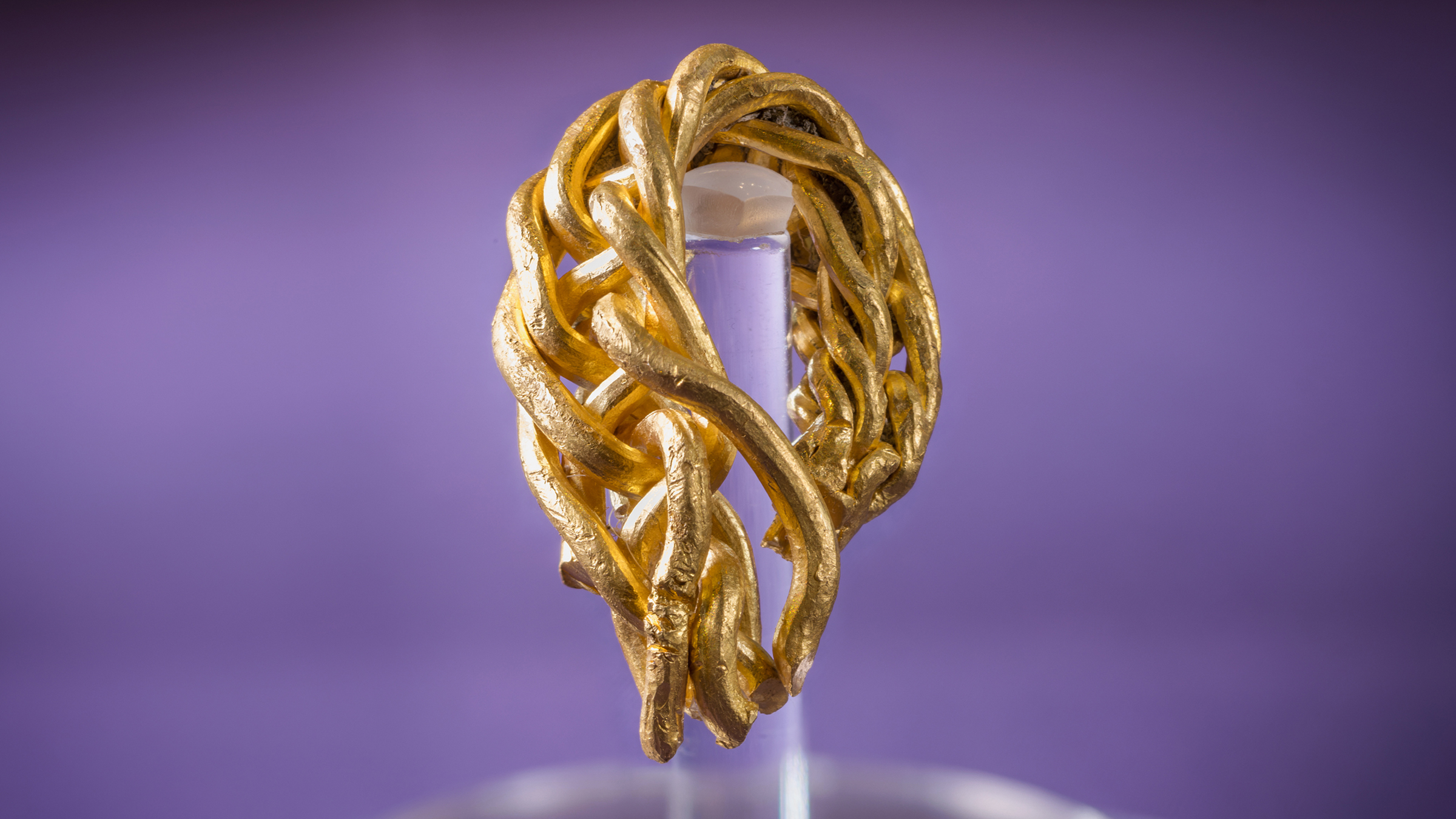
While the fabrics of a king’s clothing spoke of wealth and trade, his metalwork—the jewelry and weaponry he wore—spoke of his very identity as a leader. The Norse sagas are filled with descriptions of kings as “ring-givers,” chieftains who would reward their loyal warriors with magnificent arm-rings of twisted silver and gold. These were not mere trinkets; they were portable wealth and a public symbol of the bond between a lord and his man. A king would wear several of these heavy rings on his arms, a glittering testament to his success in raiding and trading. The Cuerdale Hoard, discovered in England and containing over 8,600 items, including vast amounts of silver arm-rings, shows the sheer scale of wealth that successful Viking leaders could accumulate and distribute.

The most important piece of jewelry was often the brooch, or fibula, used to fasten a heavy wool cloak at the shoulder. A common Viking might use a simple pin of bronze or iron. A king’s brooch was a masterpiece of the metalsmith’s art. These could be massive pieces of gilded silver, intricately carved in the popular animal styles of the era—the Jelling style, the Mammen style, the Ringerike style—each a swirling tapestry of gripping beasts and elaborate knotwork. These brooches were the centerpiece of the royal silhouette, catching the light and drawing the eye, a focal point of power and artistry.
Of course, a Viking king was, above all, a warrior. His weaponry was an inseparable part of his daily attire and personal expression. A king’s sword was his soul. While the average warrior carried a plain, functional blade, a royal sword was a work of legendary craftsmanship. The blades were often pattern-welded, a complex process where iron and steel rods were twisted and forged together to create a blade that was both strong, flexible, and decorated with a mesmerizing, water-like pattern. The true artistry, however, was in the hilt. Hilts were lavishly decorated with silver, bronze, and sometimes gold wire inlays, with pommels and guards shaped into complex, symbolic forms. A famous example is the “sword of the Viking king” found in a 10th-century burial in Norway, its hilt intricately decorated with silver and copper. To be in the presence of a king was to be in the presence of his sword, a constant reminder of his ability to deal both death and justice.
The mantle of authority: Cloaks, crowns, and symbols of rule
Certain items in a king’s wardrobe were less about daily wear and more about pure, symbolic authority. The most significant of these was the cloak, or skikkja. A king’s cloak was a vast expanse of the finest, most richly dyed wool, a literal mantle of his power. Draped over the shoulders and fastened with his magnificent brooch, the cloak created an imposing and dramatic silhouette. In sagas and poems, the giving of a cloak is a profound gesture, an act of adoption or the bestowing of high favor. Its weight was both literal and metaphorical. Lined with exotic fur and trimmed with tablet-woven bands depicting heroic or mythological scenes, the cloak was the ultimate expression of a king’s station, worn in the hall, during ceremonies, and even into battle as a banner for his men to rally behind.
The question of what a Viking king wore on his head is more complex. The image of the horned helmet is a complete fabrication, an invention of 19th-century romanticism. Real Viking helmets are incredibly rare finds, suggesting they were reserved for the wealthy elite. The Gjermundbu helmet, the only complete example ever found, is a simple but effective steel cap with a spectacle-like face guard. While functional, a king may have worn something more symbolic for ceremonial purposes. This could have been a simple silk or gold-embroidered band, a fur-lined cap, or perhaps a metal circlet. In the Eddic poems, rings are mentioned in connection with kingship, and it is plausible that a simple, elegant metal ring or circlet was used to denote royal status in non-martial settings.
Finally, a king possessed unique items of regalia, objects of pure power. While the concept of a crown and scepter as we know it today was not fully formed, there were precursors. The incredible whetstone scepter from the Sutton Hoo burial—an Anglo-Saxon king’s grave that shares much in common with its Norse counterparts—is a perfect example. It is a beautifully carved, entirely non-functional object whose only purpose was to be held as a symbol of authority and justice. Similar symbolic items, perhaps a carved staff of yew or an ornamental axe, likely served the same purpose for Norse kings. These were the relics that, when held, transformed a mere man into a conduit for the luck and prosperity of his entire tribe. They were the final thread in a tapestry of power, completing an image designed to be remembered for generations, an image that still haunts the shadows of the fjords today.

 vikings


