
The gift of Odin: more than just an alphabet
In the biting winds of the North, where the gods walked among mortals and fate was a thread woven by the Norns, language was power. For the Norse people, this power was crystallized in the form of runes. These were not merely letters as we understand them today; each angular symbol was a repository of cosmic energy, a direct link to the forces that governed the world. To carve a rune was to invoke its essence, and to wear it was to carry its power upon your very person. This practice transformed Viking attire from simple cloth and leather into a tapestry of magic, a statement of intent that spoke directly to the gods.
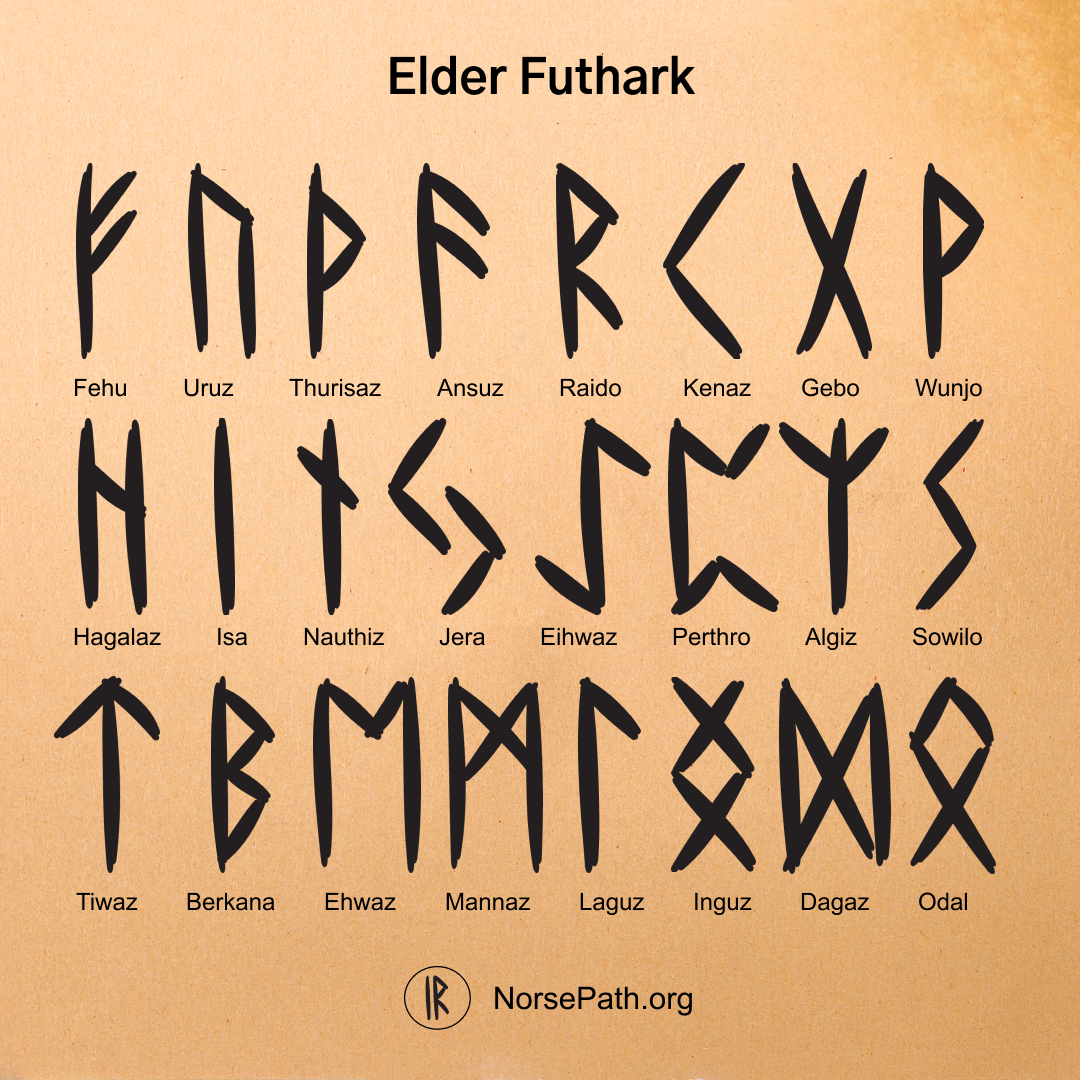
The origins of this potent alphabet are steeped in myth and sacrifice. According to the Hávamál, a collection of Old Norse poems from the Viking Age, the all-father Odin hung himself from Yggdrasil, the world tree, for nine nights. Wounded by his own spear, without food or water, he peered into the depths and seized the runes in a moment of profound revelation. This was no simple invention; it was a torturous acquisition of cosmic knowledge. Odin did not create the runes; he discovered them, paying a heavy price for the wisdom they held. This divine origin story infused the runic system, most notably the Elder Futhark, with an undeniable sacredness. The 24 symbols of this ancient script were seen as a gift from the highest of the Æsir, a tool for understanding and shaping one’s destiny.
Each rune had a name, a sound, and a deep, layered meaning. Fehu (ᚠ) represented cattle and, by extension, wealth and prosperity. Uruz (ᚢ) was the untamed power of the aurochs, symbolizing strength and vitality. Thurisaz (ᚦ) embodied the chaotic force of the giants, a symbol of powerful, directed defense. This was a lexicon of the Viking world, containing everything from the joy of a good harvest to the ferocity of battle. Understanding this, it’s easy to see why a Viking would want to integrate these symbols into their daily lives. They weren’t just decorating their clothes; they were wrapping themselves in prayers for strength, wards against evil, and appeals for a fortunate life. The very fabric of their attire became a medium for this divine communication, a personal connection to the magic Odin himself had bled for.
Weaving fate into every thread: runes in daily Viking garments
While the image of a rune-covered warrior is potent, the use of these symbols was not confined to the battlefield. In the day-to-day life of the Norse people, runes were a constant presence, subtly woven into the very fabric of their existence. From the chieftain’s hall to the farmer’s field, runic magic provided a sense of order and protection in a harsh and unpredictable world. Everyday Viking attire, known for its practicality and durability, became a canvas for these personal beliefs and aspirations.

Consider the simple wool tunic or the heavy cloak, essential garments for surviving the Scandinavian climate. A skilled weaver could incorporate runic patterns directly into the trim or borders of the cloth. A traveler might favor the Raidho (ᚱ) rune, the symbol of the journey and the chariot, woven into the hem of their cloak to ensure safe passage across treacherous lands and stormy seas. A merchant, setting out for the bustling markets of Birka or Hedeby, might have the Gebo (ᚷ) rune, symbolizing a gift or a fair exchange, stitched into their pouch to foster good business and partnership. These were not ostentatious displays, but quiet, personal affirmations of faith and intent.
The application of runes went beyond embroidery. Craftsmen carved them into the tools of daily life that were often worn as part of one’s attire. Bone and antler combs, essential for maintaining the famously well-groomed hair and beards of the Vikings, have been found with runic inscriptions. These might be a simple declaration of ownership or a more magical carving of Berkano (ᛒ), the rune of growth and new beginnings, to ensure healthy hair. Leather belts, pouches, and shoes were also common places for runic markings. A craftsman could stamp or carve a bindrune—a composite symbol created by combining two or more runes—onto a belt to create a highly specific and personal ward. For example, combining Ansuz (ᚨ), the rune of wisdom and communication, with Algiz (ᛉ), the rune of protection, could create a powerful charm to guard against deceit and ill-spoken words.
Archaeological evidence for runes on textiles is scarce due to the perishable nature of the material, but the sagas are rich with references. They paint a picture of a people deeply connected to this symbolic language. In Egil’s Saga, the warrior-poet Egil Skallagrímsson uses runes to expose poison in his drinking horn, shattering it before he can be harmed. While this isn’t clothing, it illustrates the profound trust the Vikings placed in the power of runes to interact with the physical world. It stands to reason that this same trust would extend to the garments they wore on their bodies every single day, turning a simple outfit into a shield for the soul.
The warrior’s sacred ward: runic power on the battlefield
Nowhere was the need for divine favor more acute than on the battlefield. For a Viking warrior, life and death were separated by the thinnest of margins—the strength of a shield, the sharpness of an axe, and the will of the gods. It was here, in the crucible of combat, that runic magic transformed from a personal belief into a vital weapon of war. Adorning battle attire with runes was a declaration of faith and a desperate plea for victory, turning a warrior into a walking, breathing embodiment of divine power.

The shield was the warrior’s first line of defense, and thus a prime canvas for protective magic. While many shields were painted with simple geometric patterns or clan markings, it is highly likely that many also bore runic symbols. The Algiz (ᛉ) rune, with its shape reminiscent of a defending elk’s antlers or an upturned hand, was the ultimate symbol of protection and a ward against evil. Painting it on the face of a shield was a direct appeal to the gods to deflect incoming blows. A warrior might also use a powerful bindrune, perhaps combining Algiz with Uruz (ᚢ) for strength, to create a potent ward that was both a physical and spiritual defense. Facing a shield wall where every shield bore such a fearsome, magical symbol would have been an intimidating sight, a form of psychological warfare against one’s enemies.
Helmets and armor were also imbued with runic power. A warrior might have the Thurisaz (ᚦ) rune etched into their helmet, invoking the might of Thor’s hammer to smash their enemies and protect their own head from harm. Leather arm guards or iron greaves could be carved with Tiwaz (ᛏ), the rune of the one-handed god of justice and war, Tyr. This symbol, shaped like an upward-pointing arrow, was a direct invocation for victory and courage in single combat. To wear the mark of Tyr was to dedicate your fight to him, seeking his favor to guide your weapon and steel your nerve.
Even the weapons themselves were part of this sacred attire. Sagas and poems speak of swords with names and histories, their hilts and blades inscribed with runes to grant them supernatural abilities. A warrior would see their rune-etched axe not just as a tool of war, but as an extension of their will, empowered by the gods to strike true. This practice turned a warrior’s entire panoply—from his helmet to his boots, his shield to his sword—into an interconnected system of magical defense and offense. He was not just a man in armor; he was a vessel for the ancient power Odin had seized from the roots of the world tree, ready to carve his destiny in blood and iron.
Symbols of status and spirit: runes beyond protection
While runes served as powerful tools for protection and victory, their role in Viking attire extended far beyond the immediate concerns of survival. They were also profound symbols of identity, status, and connection to the spiritual world. The runes worn by a powerful jarl or a mystical völva would have been different from those on a farmer’s belt, speaking to their unique roles within the complex Norse society.

For a chieftain or king, runic inscriptions on their clothing and jewelry were a public display of their power and divine right to rule. A magnificent cloak clasp or a heavy silver arm ring might be inscribed with the Dagaz (ᛞ) rune, symbolizing daylight, awakening, and transformation, reflecting the leader’s role in bringing prosperity and enlightenment to their people. The Othala (ᛟ) rune, representing ancestral land and inheritance, would be a powerful symbol to display, reinforcing their connection to their lineage and their claim to their territory. These were not just personal charms; they were political statements, a way of communicating authority and legitimacy through a sacred language.
Ceremonial attire, worn during religious rites and seasonal festivals like Yule, would have been particularly rich with runic symbolism. A Gothi (priest) might wear robes embroidered with the Ansuz (ᚨ) rune, the rune of Odin himself, signifying wisdom, divine communication, and inspiration. This would visually mark them as a conduit to the gods. A völva, a powerful seeress who practiced the magic of seidr, might have runes carved into her staff and amulets stitched into her clothing. Runes like Perthro (ᛈ), associated with mystery, fate, and divination, would be essential to her craft, signifying her ability to see the hidden threads of destiny that were invisible to others.
Finally, runes played an intimate role in personal expression on smaller, cherished items. A finely crafted brooch used to fasten a woman’s shawl could be inscribed with a bindrune for fertility and family, combining Berkano (ᛒ) and Ingwaz (ᛝ). A simple wooden amulet worn around the neck might carry the Wunjo (ᚹ) rune, a symbol of joy, harmony, and fellowship, as a constant reminder to seek happiness. These small, personal pieces of attire show the deeply ingrained nature of runic belief. The runes were a part of every aspect of life, from the grandest ceremony to the most private wish. They were woven, carved, and worn not just to speak to the gods, but to speak of oneself—of one’s hopes, heritage, and place in the great, sprawling tapestry of the Norse cosmos.
From the humblest tunic to the most ornate battle helmet, runes elevated Viking attire beyond mere function. They imbued cloth and metal with meaning, turning every garment into a story and every warrior into a living legend. The threads of their clothing were intertwined with the threads of fate, and the symbols they wore were a constant, silent conversation with the gods they revered. It is a powerful reminder that for the people of the North, there was no separation between the spiritual and the mundane; magic was in the very air they breathed and the clothes they wore upon their backs.

 vikings


