
A shadow on the horizon: The coming of the Hrafnsmerki
Imagine the scene. You stand on a misty Anglo-Saxon shore in the 9th century. The air is still, the silence broken only by the cry of gulls. Then, a shape emerges from the fog — the high, curved prow of a longship, a dragon’s head snarling at the waves. Behind it, another appears, and then another. But it is not the ships that freeze the blood in your veins. It is the banner that one of them flies. Triangular, fringed with tassels, it ripples in the wind, and at its center is the stark, black silhouette of a raven. This is the Hrafnsmerki, the Raven Banner, and its appearance means the fury of the North has arrived.
More than just a piece of cloth, this banner was a potent symbol of Viking power, a psychological weapon, and a sacred link to the gods themselves. It was a standard carried into the heart of battle, said to predict victory or doom for those who fought beneath its shadow. To understand this iconic flag is to understand the Viking mindset — a world where warfare, mythology, and destiny were inextricably woven together. Join us as we march under the Raven Banner and uncover the stories of this legendary northern standard.
The raven’s roost: Symbolism in Norse culture
To grasp the terror the Raven Banner inspired, we must first understand the raven’s place in the Norse world. This was no ordinary bird. In the harsh landscapes of Scandinavia, the raven was a constant, intelligent, and often ominous presence. It was a creature that straddled the worlds of the living and the dead, a messenger of the gods, and a harbinger of battle.
Huginn and Muninn: Odin’s eyes and ears
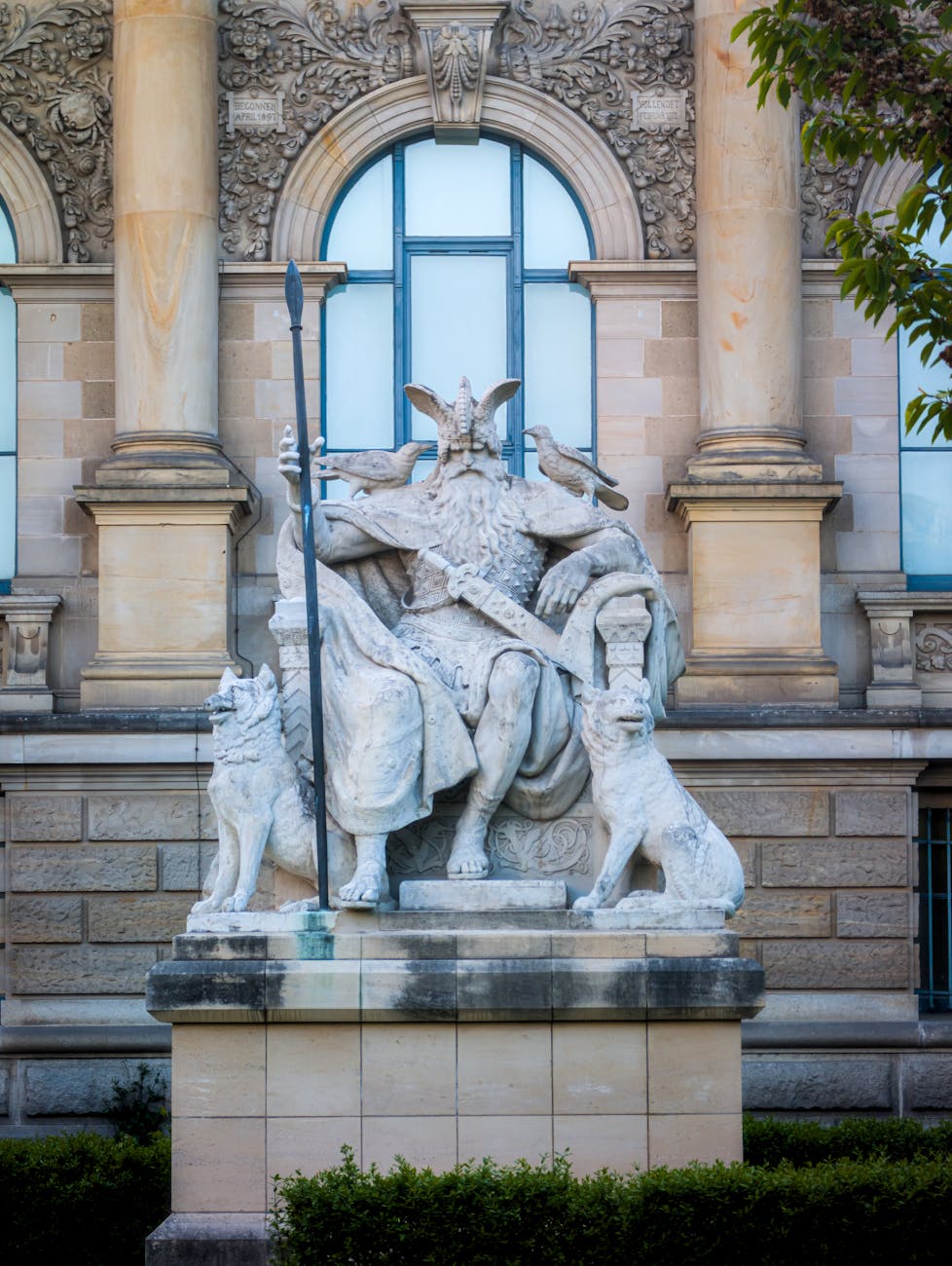
At the very heart of Norse mythology sits Odin, the All-Father, a god of wisdom, war, and death. And perched on his shoulders are two ravens, Huginn (Thought) and Muninn (Memory). Every day, they fly out across the nine realms, seeing all and hearing all. They return at dusk to whisper their findings into Odin’s ear, making him the most knowledgeable of all the gods. This divine connection elevated the raven from a mere animal to a sacred agent of the highest god. A raven wasn’t just a bird; it was potentially an extension of Odin’s will, a spy for the god of warriors. To carry a banner with a raven’s image was to align oneself with Odin, to claim his favor and his sight in the chaos of conflict.
A harbinger of battle
The raven was also a practical symbol of warfare. As carrion birds, they were a common sight on the aftermath of any battlefield, feasting on the fallen. The Vikings, pragmatic and unflinching in their view of life and death, saw this not with disgust but as part of the natural, brutal cycle. The cry of the raven was the prelude to a feast — a feast provided by the clash of swords and axes. A raven circling overhead was a sign that the Valkyries would soon be choosing the slain for Valhalla. Flying a banner with its image was a chilling promise to your enemies: where this flag goes, death and a feast for the ravens will surely follow. It was the Viking way of saying, “We are the storm, and we bring Odin’s judgment with us.”
Woven in legend: The origins of the Hrafnsmerki
Like many Viking artifacts, the true origin of the Raven Banner is shrouded in the mists of saga and legend. There is no surviving banner in any museum, no definitive archaeological find. What we have are powerful stories, written down centuries later, that speak of its creation and its supposed magical properties.
The daughters of Ragnar Lothbrok

The most famous origin story is tied to one of the most legendary Vikings of all: Ragnar Lothbrok. According to the 12th-century Annals of St. Neots, the banner carried by the Great Heathen Army in England was woven by Ragnar’s own daughters. The tale claims they wove the entire banner in a single morning, imbuing it with the magic of their lineage and a desire for vengeance for their father’s death. This story transformed the banner from a simple military standard into a deeply personal symbol of familial honor and retribution. It was not just a flag of an army, but the flag of the sons of Ragnar, a physical manifestation of their quest for revenge against King Ælla of Northumbria.
A magical standard?
The legends go further, attributing supernatural powers to the Hrafnsmerki. It was said to be a tool of divination. If the raven on the banner appeared to flap its wings before a battle, it was an omen of victory. If it hung limp and motionless, it foretold defeat. This belief, whether real or folklore, had a profound psychological effect. For the Vikings marching behind it, a fluttering raven was a sign of Odin’s favor, a surge of divine confidence that would make them fight all the harder. For their enemies, seeing that same fluttering raven meant they were not just facing men, but men who believed destiny itself was on their side. The banner didn’t just represent the army; it was believed to hold their fate in its very threads.
Hoisted in history: The banner in battle
While its origins are legendary, the Raven Banner’s presence is noted in several historical and semi-historical accounts, grounding it firmly in the reality of Viking Age warfare.
The Great Heathen Army
The banner is most famously associated with the Great Heathen Army that invaded the Anglo-Saxon kingdoms in 865 AD. Led by the sons of Ragnar, such as Ivar the Boneless and Ubba, this was no mere raiding party but a full-scale invasion force. The Anglo-Saxon Chronicle records the capture of a banner called the “Raven” from the Vikings in 878 at the Battle of Cynwit. This chronicle confirms that a banner of this name and importance was indeed used by the Viking forces, lending historical weight to the sagas.
Sigurd the Stout and the curse of the banner
The banner’s story doesn’t end in England. The Orkneyinga Saga tells a later, darker tale about a Raven Banner created by the mother of Sigurd the Stout, the Earl of Orkney. She was a völva, a seeress, and wove a curse into the flag: it would bring victory to the man it was carried before, but death to the man who carried it. The saga recounts how, during the fateful Battle of Clontarf in 1014, this curse played out. One standard-bearer after another was killed, until a reluctant warrior was ordered by Earl Sigurd to take it up. When he refused, Sigurd declared, “It is fitting the beggar should bear the bag!” and took the banner himself. He was killed shortly after, a victim of his own cursed symbol of victory. This story serves as a powerful reminder of the Viking belief in fate (wyrd) — that even the greatest symbols of power could carry a terrible price.
Beyond the battlefield: What did the banner look like?
With no surviving examples, our understanding of the banner’s appearance is a tapestry woven from written descriptions and iconographic evidence. The sagas and chronicles consistently describe it as featuring a raven. Most sources also describe it as being triangular in shape, with a rounded outer edge and adorned with tassels or streamers, similar to a windsock. This design would have been practical, catching the wind easily to create the ‘flapping’ motion so crucial to its legendary power.
Further evidence comes from Viking Age coins and stone carvings. Coins minted by Norse rulers in Northumbria, such as Olaf Guthfrithson, show a triangular standard that strongly resembles the descriptions of the Raven Banner. The shape is clear, as are the tassels. While the image on the coin is not detailed enough to definitively be a raven, its context and form make it a compelling piece of corroborating evidence. It was likely made of fine silk or linen, materials precious enough for such a significant object, and the raven itself would have been embroidered or appliquéd onto the fabric.
The legacy of the raven: Modern interpretations
The Raven Banner may have vanished from the battlefields of history, but its spirit endures. The image of the black raven remains one of the most potent and recognizable symbols associated with Viking culture. It has been reclaimed and reinterpreted in countless ways, a testament to its enduring power.
You can see its shadow in modern Viking-inspired apparel, where the raven is a common motif on t-shirts, hoodies, and accessories. It is a symbol of wisdom, connection to the old gods, and the untamed spirit of the North. In the world of historical reenactment, painstakingly recreated Raven Banners are flown at events, bringing a piece of the sagas to life. Tattoo artists ink the stylized raven onto skin, a permanent declaration of heritage or an affinity for the fierce independence the Vikings represent. From heavy metal album covers to popular television shows, the Hrafnsmerki continues to fly, a timeless emblem of a culture that, though long past, refuses to be forgotten.
Embracing the spirit of the banner
The Raven Banner was far more than a flag. It was a declaration of identity, a vessel for magic, a psychological weapon, and a sacred link to the divine. It represented the fusion of the natural world and the supernatural, the belief that the gods were not distant beings but active participants in the affairs of mortals. To fight under the raven was to fight with the eyes of Odin upon you and the weight of destiny at your back.
Today, as we don the symbols of the old North, whether in a finely crafted piece of jewelry or a simple garment, we connect with that same spirit. The raven reminds us of a heritage of courage, of deep-seated mythology, and of the fierce, unyielding will to carve one’s own path, just as the Vikings did under the shadow of its wings.

 vikings


