
The warrior’s weave: Armor and symbols of power
Imagine the scene: a grey, unforgiving sea crashes against the shores of a foreign land. On the wind, a fearsome symbol snaps and dances—a black raven on a field of white or red. This was the hrafnsmerki, the Raven Banner, a sigil that struck terror into the hearts of monks and kings alike. More than just a flag, it was a living embodiment of the Norse spirit. It was the eye of Odin, the Allfather, watching over his chosen warriors, promising victory or a glorious death leading to the halls of Valhalla. But the story of the banner is incomplete without understanding the men who fought beneath it, and the very clothes and armor they wore were a testament to this same fierce identity.
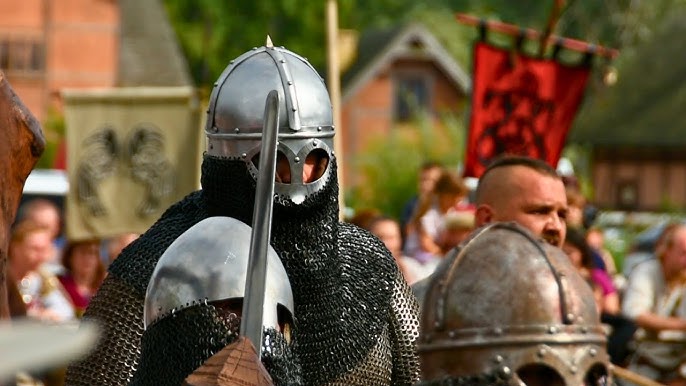
The attire of a Viking warrior on the battlefield was a masterclass in practicality and psychological warfare. It was a layered system designed for survival in the brutal chaos of the shield wall. At its base was the kyrtle, a simple tunic of wool or linen. Wool was a gift from the northern gods themselves—its natural lanolin oils provided remarkable water resistance, and its fibers could keep a warrior warm even when damp. Over this, a padded garment known as a gambeson or aketon might be worn. This thick jacket, made of layers of linen or wool stuffed with fleece or cloth scraps, was crucial. It could absorb the shock of a blunt blow from a club or axe handle, and more importantly, it prevented the sharp rings of chainmail from being driven into the flesh.
The most iconic piece of Norse armor was, of course, the mail shirt, or byrnie. A status symbol afforded only by successful warriors, a byrnie was a painstaking creation of thousands of interlinked iron rings. Each ring was riveted shut, forming a flexible but formidable defense against slashing cuts from swords and axes. It was heavy, expensive, and a testament to a warrior’s prowess and wealth. But protection was only part of the story. The Viking warrior’s gear was an extension of his saga. His leather belt, holding his seax and personal items, might be stamped with protective runes or patterns. The helmet, a simple conical design often with a nasal guard, was the crown of the warrior, protecting his most vital asset. While the horned helmets of popular culture are a romantic myth, archaeological finds suggest some helmets were adorned with engravings, brow plates, and even animal motifs, turning a piece of functional iron into a statement of personal power. Every scuff on the leather, every dent in the helmet, every repaired ring in the byrnie told a story of a battle survived, a raid successful, a life lived on the edge. This was the clothing of a man who fought under the raven’s shadow, a man who believed his fate was already woven by the Norns and met it head-on, clad in iron, wool, and unyielding spirit.
Threads of the jarl: Attire of leadership and status
While the common warrior was clad for function, the jarl or chieftain who commanded the longship was dressed to broadcast his power, wealth, and divine right to lead. If the Raven Banner was the symbol of the warband’s collective might, the jarl’s attire was the symbol of the authority that held it all together. His clothing told a story of long voyages, shrewd trading, and victories that yielded treasures from distant lands. While his warriors wore the earthy tones of undyed wool, the jarl’s kyrtle and cloak would be dyed in vibrant, costly colors.
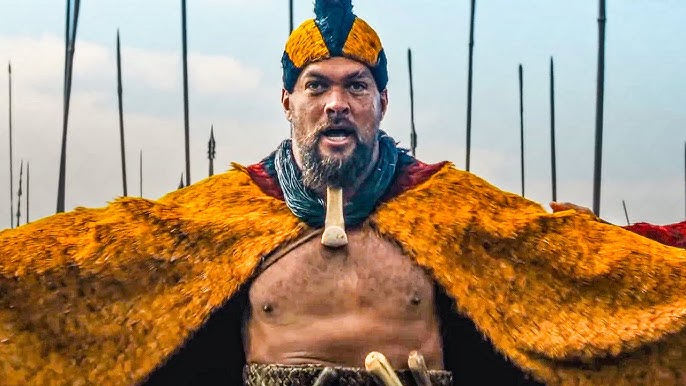
Deep reds, derived from the madder root, signified a warrior’s blood and fire. Rich blues, from the woad plant, spoke of the endless sea and the sky. The most prestigious color was a purplish-red, sometimes achieved through complex dyeing processes involving rare lichens or even the precious Tyrian purple obtained through trade, a color that mimicked the cloaks of Byzantine emperors. The fabric itself was of a much finer quality. The wool was softer, the weave tighter, and often, it was supplemented by the ultimate luxury: silk. Strips of shimmering silk, traded from as far as Constantinople and the vast lands of the Rus, would be used to line the cuffs and collar of a tunic. This wasn’t just for comfort; it was a blatant declaration that this was a man who had traveled the world and returned with its riches.
Beyond the fabric, the jarl’s status was written in metal and intricate needlework. His cloak, a heavy rectangle of fine wool, was not merely tied but fastened at the shoulder with a large, ornate brooch, or fibula. These were often masterpieces of Norse art, cast in bronze or solid silver, depicting gripping beasts, intricate knotwork, or mythological scenes. His wrists and arms would be adorned with arm-rings of twisted silver and gold. These were not mere jewelry; they were a mobile treasury and a tool of power. A successful jarl was a “ring-giver,” a lord who rewarded the loyalty of his warriors by breaking off pieces of his arm-rings after a victorious campaign. This act bound his men to him with oaths of silver and blood. The belt, too, was a centerpiece, with a buckle and strap-end cast in ornate designs that echoed the art styles of the time. The jarl, standing on the prow of his ship with the Raven Banner flying high above, was a living saga. His silk-trimmed tunic, his silver fibula, and his gold arm-rings were the verses that told of his greatness, ensuring every man who followed him knew they were in the service of a true king of the sea.
The hearth-fire cloth: Everyday garments and Norse identity
When the longships were beached and the Raven Banner was furled, the fierce spirit of the North did not fade. It simply returned to the hearth, woven into the very fabric of everyday life. The stories of the Norse were not only forged in the heat of battle but also spun in the quiet determination of the homestead. The daily attire of the Viking Age people reveals a culture deeply connected to their environment, valuing resilience, craftsmanship, and family above all else.
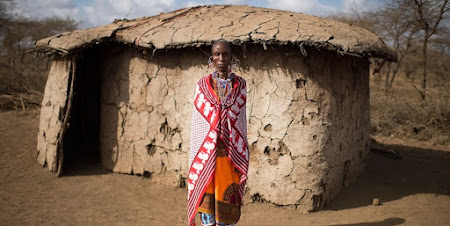
For a Norse man, the core of his wardrobe remained the wool or linen kyrtle, a tunic that fell to the mid-thigh or knee. Paired with this were trousers, which varied in style. Some were loose-fitting, while others, particularly those influenced by Eastern contact, were baggy at the top and snug around the lower leg, sometimes wrapped with leg-windings (winingas) for extra warmth and protection. A simple leather belt held his knife and a pouch for personal belongings. Over it all, a rectangular cloak, fastened at the shoulder, provided a vital shield against the biting northern winds. It was a simple, functional ensemble, built to withstand the rigors of farming, fishing, and building.
The clothing of a Norse woman was elegant in its practicality and offered a canvas for personal expression. Her foundational garment was a long linen underdress or chemise, called a serk. Over this, she wore the iconic hangerok, or apron-dress. This was a tube of wool, folded over at the top, which was suspended from the shoulders by two straps and fastened in the front by a pair of large, oval brooches. These brooches were a woman’s signature possession. Often passed down through generations, they were intricate pieces of metalwork, and from them, she might suspend beads of amber, jet, and glass, along with useful tools like a small knife, a needle case, or keys to the farm’s food chests. The brooches and the treasures they held told the story of her family, her travels, and her status as the respected matriarch of the household. A shawl or cloak, often fastened with a third, smaller brooch, completed the outfit, providing warmth and modesty. The beauty of this everyday attire lay in its details. While not as opulent as a jarl’s finery, it was decorated with tablet-woven bands of geometric patterns, stitched onto cuffs, collars, and hems. This intricate weaving was a highly skilled art form, a way for women to bring color and identity to their clothing. Each pattern was a quiet testament to her skill and her family’s heritage. This was the clothing that raised the warriors who fought under the raven. It was the cloth of a strong, self-reliant people whose identity was not just in the banner they flew at war, but in the sturdy, well-crafted garments they wore in peace.

 vikings


