
The banner of the all-father: Odin’s watchful eyes
Imagine the scene: a grey, churning sea, the sharp sting of salt spray in the air. On the horizon, the menacing silhouettes of longships cut through the mist, their dragon-headed prows rising and falling with the waves. At the mast of the lead ship, a banner snaps violently in the wind. It is not a king’s crest or a jarl’s sigil. It is a stark, black raven, its wings outstretched against a field of white or red silk. This is the Raven Banner, the Hrafnsmerki, and its presence signals more than an approaching raid—it signals the arrival of destiny itself.

For the Viking warrior, this banner was not merely a piece of fabric. It was a conduit to the divine, a direct line to the All-Father, Odin. In Norse mythology, Odin was accompanied by two ravens, Huginn (thought) and Muninn (memory). Each day, they would fly across the nine realms, returning at dusk to perch on his shoulders and whisper all they had seen and heard. The raven became a powerful symbol of Odin’s omnipresence, his wisdom, and his role as the god of war, poetry, and death. To march into battle under the Raven Banner was to march directly under his watchful, one-eyed gaze.
This profound connection between the warrior and his god was woven into the very fabric of his attire. A Viking’s clothing was never just about protection from the elements or the enemy’s blade; it was a physical manifestation of their identity, their beliefs, and their place in the cosmos. Every piece, from the wool of their tunic to the leather of their boots, was part of a larger narrative. The Raven Banner set the stage, and the warrior’s attire told his personal story within that epic saga.
The banner itself was said to possess magical qualities. Sagas recount how the raven’s wings would appear to flap in the wind before a victorious battle, yet hang limp and still when defeat was imminent. This belief infused Viking raiders with a sense of fatalistic courage. If Odin was with them, victory was assured. If he was not, they would die gloriously and be carried by the Valkyries to the halls of Valhalla. This worldview shaped their approach to life, death, and consequently, their appearance. They dressed not as men hoping to survive, but as men prepared to meet their gods. Their attire became a testament to their readiness, a uniform for the chosen warriors of Odin, designed to be worthy of his attention on the battlefield.
Threads of the warrior: from tunic to battle gear
A warrior’s journey from the longhouse to the shield wall was marked by the careful selection and layering of his garments. Each item served a practical purpose, but also carried a symbolic weight, echoing the fierce spirit of the raven flying overhead. This was not fashion as we know it, but a language spoken in wool, leather, and iron.
The foundation: wool and linen
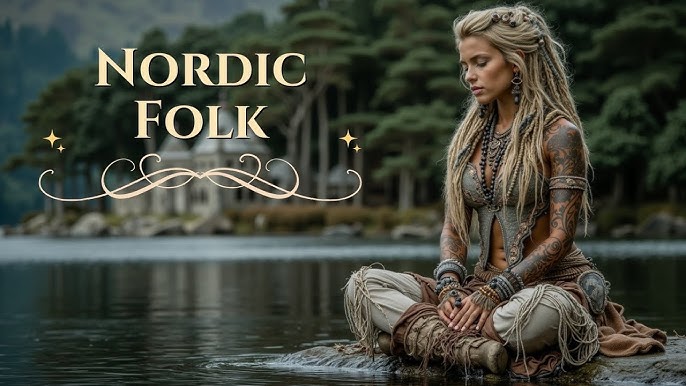
The base of any Viking’s attire, whether a farmer or a fearsome raider, was the kyrtill, or tunic. Typically made from hardy, lanolin-rich wool, these garments were masterpieces of practicality. Wool provided incredible insulation against the harsh northern climes, even when wet, making it the ideal material for long sea voyages. Beneath the wool tunic, a warrior would wear an undertunic of softer linen, which was more comfortable against the skin and could be easily washed.
But function was only half the story. The color and decoration of a tunic spoke volumes about its wearer. While many would have worn the natural, undyed colors of sheep’s wool—creams, greys, and browns—a successful warrior could afford vibrant hues. Dyes made from madder root (reds), woad (blues), and weld (yellows) were valuable commodities. To enter a shield wall in a blood-red or sky-blue tunic was a bold declaration of status and success. It was a way of saying, “I have traveled, I have raided, and I have prospered.” Intricate embroidery often adorned the cuffs, collar, and hem, sometimes featuring geometric patterns, knotwork, or even stylized representations of animals like wolves or ravens, further cementing the warrior’s connection to the mythological world.
Paired with the tunic were simple but effective trousers, or brækur. These could be loose-fitting or snug, often secured with leg wraps (winingas) made from strips of wool. These wraps provided warmth, support, and protection for the lower legs against thorns and rough terrain—a simple but ingenious piece of Viking technology.
The sinews of war: leather and fur
Layered over the foundational garments came the materials of strength and intimidation: leather and fur. A thick leather belt was an essential piece of kit, cinching the tunic at the waist and providing a place to hang a scramasax (a short, single-edged sword), a pouch for personal items, and perhaps a drinking horn. These belts were often decorated with stamped patterns or fitted with bronze or silver buckles, again signaling the owner’s wealth and standing.
Leather was also crucial for sturdy boots and shoes, typically of the turn-shoe construction, which were both durable and flexible. For the warrior, leather bracers protected the forearms from bowstrings and glancing blows, while a leather jerkin could offer a light layer of protection over the tunic. The raw, primal nature of these materials connected the warrior to the wild, untamed world they sought to conquer. Fur, from wolf, bear, or fox, would be used to line cloaks and hoods, providing unparalleled warmth and a fearsome, animalistic silhouette that could strike terror into the hearts of their enemies. For a berserker, who channeled the spirit of the bear or wolf, wearing the animal’s pelt was a literal embodiment of their battle fury.
The iron skin: armor and helm
For the most successful Viking warriors, the final layer was a skin of iron. Chainmail, or byrnie, was an incredibly expensive and labor-intensive piece of armor. Each shirt was composed of thousands of interlinked iron rings, each one individually riveted shut. Owning and wearing a byrnie was the ultimate status symbol, proof of immense success in raiding. It offered excellent protection against cutting weapons, turning aside sword slashes that would be fatal to a lesser-equipped man.
The helm was equally important. While the horned helmet is a popular myth, historical Viking helmets were typically simple, functional bowl-shapes made of iron plates riveted together. The most iconic variant is the “spectacle helm,” which featured a guard around the eyes and nose, resembling a pair of glasses. This design provided facial protection without significantly obscuring vision and created a terrifyingly impersonal look. Like all other attire, even these purely functional items could be adorned. Some helms show evidence of intricate engravings and bronze or silver inlays, transforming a piece of armor into a work of art fit for a king.
Weaving the saga: beyond the battlefield
The influence of the raven and the warrior ethos was not confined to the shield wall. The same principles of functionality, symbolism, and status were woven into the daily lives and garments of the entire Norse community. The spirit of the North was present in every thread, whether destined for a longship or a longhouse.

In the relative peace of the homestead, Viking attire was still a reflection of a harsh and demanding world. Women wore a long linen underdress (serk) covered by a woolen apron-dress (hangerok), which was held up by two large brooches on the shoulders. These brooches, often ornate oval designs made of bronze or silver, were not just decorative; they were essential tools for fastening the garment. Strings of glass and amber beads were often draped between them, displaying family wealth and trade connections that stretched from Scandinavia to the Byzantine Empire.
Men’s everyday wear was similar to their battle attire, just without the iron. A simple wool tunic, trousers, and a heavy cloak (feldur) fastened at the shoulder with a pin or fibula was the standard. This cloak was perhaps the most versatile garment of all. It was a blanket at night, a shelter from the rain, and a symbol of a free man’s status. The quality of the wool and the intricacy of the fibula holding it in place spoke to a man’s position in the community.
Craftsmanship as cultural identity
It is impossible to discuss Viking attire without honoring the immense skill of the craftspeople. Weaving was a fundamental part of life, a task primarily undertaken by women. Using the warp-weighted loom, they produced incredibly fine and durable textiles. The patterns they created were not random; they were part of a visual language, with complex diamond twills and herringbone weaves adding texture and strength to the fabric. Creating a warrior’s tunic or a ship’s sail was an act imbued with significance, a contribution to the clan’s survival and glory.
Similarly, leatherworkers, blacksmiths, and jewelers were highly respected artisans. The creation of a sword, a chainmail shirt, or a silver brooch was a near-magical process. These items were often given names and passed down through generations, accumulating stories and a legacy of their own. Sometimes, runes would be carved into a weapon or stamped onto a belt buckle, intended to grant the wearer luck, protection, or strength. These weren’t just clothes or accessories; they were talismans, imbued with the hopes and fears of their makers and wearers.
In this way, the entire wardrobe of a Viking was a living saga. The Raven Banner may have flown high above the battlefield, telling a story of divine favor and impending conflict, but the true history was written in the clothes on their backs. The wear on a leather boot told of long marches. The richness of a red tunic spoke of successful voyages. The heft of a silver arm-ring signified oaths of loyalty sworn to a jarl. Every thread was a memory, every garment a chapter, and every warrior a walking story, ready for their final verse to be written in glory under Odin’s watchful eyes.

 vikings


