
Wear it: Viking Raven
Premium Norse-inspired apparel, made on demand.
🇺🇸 Fast US shipping · 🇪🇺 Ships across the EU · 🔒 Secure checkout
The woven prophecy: origins and symbolism of the Hrafnsmerki
Imagine the scene. A grey sea foams against the prow of a longship as it slices through the waves towards an unsuspecting shore. On board, warriors grip their axe hafts and shield rims, their hardened faces turned towards the land. Above them, whipping in the salted wind, is not the banner of a king or a country, but something far more primal. A black raven, stark against a white or blood-red field, its wings seemingly beating with a life of their own. This was the Hrafnsmerki, the Raven Banner, one of the most iconic and feared symbols of the entire Viking Age.

More than just a piece of cloth, the Raven Banner was a conduit of divine power, a tool of psychological warfare, and a focal point for the Viking war machine. To understand its power, we must look to the very heart of Norse belief: to Odin, the Allfather. Odin was a god of war, wisdom, and death, but he was also inextricably linked to the raven. His two mythical ravens, Huginn (Thought) and Muninn (Memory), flew across the Nine Worlds each day to bring him news. The raven, therefore, was seen as Odin’s eyes and ears on the battlefield, a direct link to the divine. To fight under the Hrafnsmerki was to fight under the watchful gaze of the Allfather himself, a promise of his favor in the brutal calculus of combat.
The origins of the banner are shrouded in the mists of legend. Sagas, our primary window into the Norse world, speak of banners woven by women of great power. The daughters of the legendary Ragnar Lothbrok were said to have woven a banner that could predict the outcome of a battle. The Orkneyinga Saga describes a banner woven by the mother of Sigurd the Stout, imbued with powerful and dangerous magic. This act of creation, typically by a female relative of the chieftain, infused the banner with personal and mystical significance. It wasn’t mass-produced; it was a sacred relic, its every thread steeped in hope, fear, and enchantment.
Accounts and depictions on coins suggest the banner was often triangular, similar to a windsock, with a stylized raven at its center. Its most potent feature, however, was its supposed prophetic ability. According to the 12th-century text, the Annals of St. Neots, when the banner was carried into battle, if victory was assured, the raven would appear to flap its wings as if alive. If defeat was imminent, it would hang limp and motionless. Was this genuine magic, a trick of the wind catching the triangular fabric, or simply a matter of perception? To the Vikings and their foes, it hardly mattered. The belief in its power was enough. For the Norsemen, it was a surge of morale, a sign that Odin was with them. For their enemies, the sight of that flapping raven was a terrifying omen, a harbinger of the slaughter to come.
In the shadow of the raven: legendary warlords and famous battles
The story of the Raven Banner is not one of static symbolism; it is a saga written in blood and iron, carried by some of the most formidable figures in Viking history. Its legend is forever entwined with the sagas of chieftains, jarls, and kings who staked their lives and legacies on the prophecy woven into its threads.
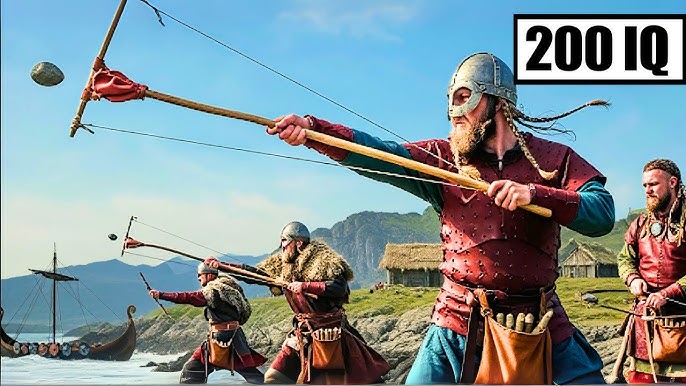
Perhaps the most famous carriers were the sons of Ragnar Lothbrok. In the 9th century, fueled by a desire to avenge their father’s execution by the Northumbrian King Ælla, the Great Heathen Army descended upon England. Led by figures like Ivar the Boneless and Ubba, they brought with them a Hrafnsmerki, a banner the sagas claim was named “Land-waster.” This banner was their rallying point, a symbol of unified Norse fury. For years, Anglo-Saxon kingdoms fell before the army that marched in its shadow. The psychological impact was immense. To the Christian Saxons, the raven was a pagan symbol of death and darkness, and its presence on the battlefield confirmed they were fighting against a truly demonic force. The banner’s story in England, however, also contains a crucial lesson. In 878, at the Battle of Cynwit, the forces of Wessex managed to defeat a Viking army led by Ubba. In the aftermath, the Saxons captured the famed banner. This event was a massive propaganda victory for the English and a devastating blow to Norse morale, proving that even Odin’s favor was not absolute.
An even darker tale of the banner’s power comes from the Battle of Clontarf in 1014. Sigurd the Stout, the powerful Jarl of Orkney, was preparing to fight alongside his allies against the Irish High King, Brian Boru. According to Njal’s Saga, Sigurd’s mother, a powerful sorceress, presented him with a finely-wrought Raven Banner. She promised him, “Victory will be his for whom it is borne before, but death for him who bears it.” Her prophecy was a double-edged sword. In the brutal fighting at Clontarf, Sigurd’s standard-bearer was quickly struck down. Another warrior who rushed to pick it up met the same fate. And another. Seeing the reluctance of his men, and knowing the banner’s fall would mean the collapse of his army’s spirit, Jarl Sigurd made a fatal choice. “It is fitting the beggar should bear the bag,” he said grimly, tearing the banner from its staff and tucking it under his own cloak. He charged back into the fray, and shortly thereafter, was slain by a spear. His army was ultimately routed, but the chilling legend of the cursed banner endured, a stark reminder of the price of power and the fatalism at the heart of the Viking warrior ethos.
The banner’s use wasn’t limited to these legendary figures. It was a recognized symbol of Norse leadership across the Viking world. Cnut the Great, the Danish king who conquered England, Denmark, and Norway to forge a massive North Sea Empire, was recorded as having a raven banner made of white silk. The fearsome Harald Hardrada, the “Last Viking,” may well have fought under a Hrafnsmerki at the Battle of Stamford Bridge in 1066. Its presence signified a connection to the old ways, a claim to a legacy of conquest blessed by the gods of Asgard.
More than a relic: the enduring legacy of the raven banner
For all the stories written in sagas and chronicles, one striking fact remains: not a single Raven Banner has ever been recovered by archaeologists. This is not surprising. Banners were made of silk, wool, or linen—organic materials that stand little chance of surviving a thousand years buried in damp soil. Unlike swords, axes, and jewelry, the fabric of Viking war-craft has almost entirely returned to the earth. So how do we know so much about a relic that has left no physical trace?

Our evidence is threefold: the sagas, the accounts of their enemies, and the enduring images on their treasures. While the Norse sagas were written centuries after the events they describe, they preserve a powerful cultural memory of the banner and its importance. Christian chroniclers, like those who wrote the Anglo-Saxon Chronicle, recorded its capture with a sense of triumph, confirming its significance from an outside perspective. Perhaps the most tangible evidence comes from numismatics—the study of coins. Viking leaders in the Danelaw, such as Olaf Guthfrithson, King of Dublin and Northumbria, minted silver pennies around 940 AD. On these “Raven Pennies,” we see a clear depiction of a raven with outstretched wings, often alongside a triangular banner. This is as close as we can get to a contemporary image, a portrait of the Hrafnsmerki stamped in silver, a testament to its power as a symbol of Norse rule and identity.
With the end of the Viking Age and the conversion of Scandinavia to Christianity, the Raven Banner was gradually replaced by the symbol of the cross. The old gods were pushed into the background, and their symbols of war and prophecy faded from the battlefield. For centuries, the Hrafnsmerki remained a footnote in dusty chronicles and epic poems.
Today, however, the raven is flying once more. The banner has seen a powerful resurgence in modern culture. It appears in historical fiction, television series like “Vikings” and “The Last Kingdom,” and video games such as “Assassin’s Creed Valhalla,” where it serves as instant visual shorthand for the fierce, untamable spirit of the North. Beyond entertainment, it has been embraced by historical reenactment groups who painstakingly recreate them for their living history displays. It is also a potent symbol within modern Asatru and other Norse pagan faiths, representing a connection to Odin and the pre-Christian spiritual path. While the original banners are lost, the *idea* of the Hrafnsmerki—a symbol of insight, fearless battle, and the wild heart of the Norse people—is more potent than ever. It has transformed from a physical relic of war into an enduring emblem of heritage.
The Hrafnsmerki was never just a flag. It was a story woven in thread, a prophecy carried on the wind, and a declaration of intent that needed no translation. It told all who saw it that the followers of Odin had arrived, ready to claim victory or a glorious death. Though the longships no longer raid and the shield walls have long since broken, the shadow of the raven stretches long across history, a timeless reminder of the fierce spirit that once conquered under its wing.

 History Warrior Team


