
The soul of the symbols: understanding the runes and their meanings
Before the first chip of wood is carved or the first mark is tooled into leather, one must understand that Norse runes are far more than a simple alphabet. To the people of the North, these were not mere letters but potent symbols, each vibrating with its own inherent power and cosmic meaning. They were a gift from Odin himself, who hung from the world tree Yggdrasil for nine nights to gain their wisdom. To craft a rune was to invoke its very essence, to channel its power into the physical world. This understanding is the foundation upon which all Norse craftsmanship is built.
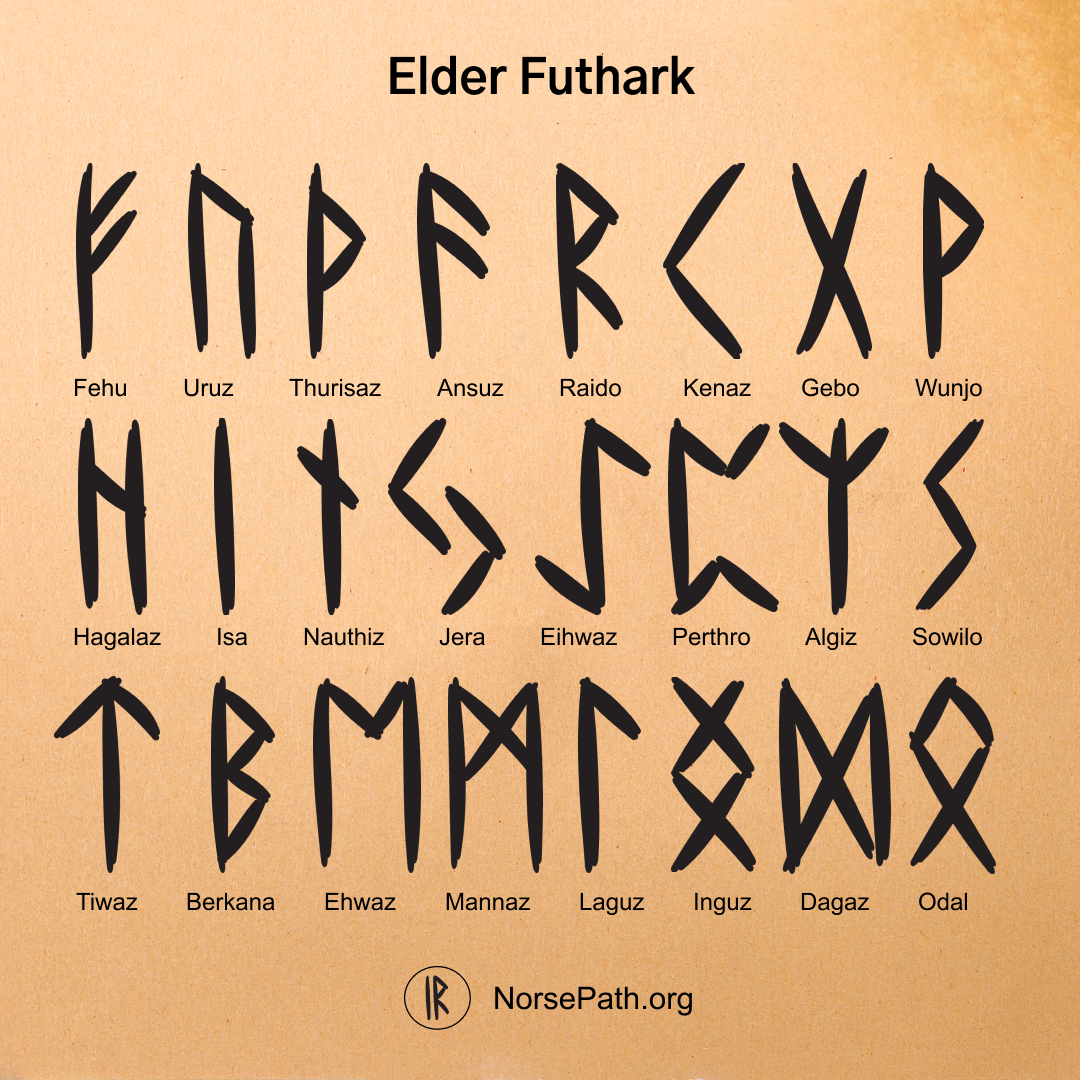
The most ancient and widely recognized runic alphabet is the Elder Futhark, a system of 24 characters divided into three groups, or ættir. Each rune represents a phonetic sound, but more importantly, it is an ideograph for a powerful concept. Fehu (ᚠ), for example, is the sound ‘f’, but it embodies the concept of wealth, cattle, and abundance. Uruz (ᚢ) represents the untamed strength of the aurochs, a symbol of primal power and vitality. Ansuz (ᚨ) is the rune of the Æsir, of Odin, and signifies divine inspiration, communication, and wisdom.
When a Viking craftsman chose a rune for an object, the decision was deliberate and deeply personal. Carving Algiz (ᛉ), the rune of protection, onto a shield was not just decoration; it was a plea for divine defense in the chaos of battle. Inscribing Raidho (ᚱ), the rune of journeys, onto a ship’s prow was a ritual to ensure safe passage across the treacherous seas. These symbols were woven into the very fabric of life and death.
Beyond the Elder Futhark, other powerful symbols permeated Norse culture, often appearing alongside runes on apparel and accessories. The Aegishjalmur, or Helm of Awe, was a powerful sigil of protection and irresistibility in combat, meant to strike fear into the hearts of enemies. The Vegvisir, the runic compass, was believed to guide a traveler through the harshest weather, ensuring they would never lose their way. The Valknut, three interlocked triangles, was a symbol deeply associated with Odin and the passage of a warrior’s soul to Valhalla. To work with these symbols was to engage with the most profound beliefs of the Norse people—fate, power, protection, and the journey of the soul. The art begins not in the hands, but in the heart and mind, with a deep respect for the meaning behind the mark.
The craftsman’s touch: materials and tools of the rune carver
The act of bringing a rune or symbol to life was an intimate dance between the craftsman, their tools, and the raw materials provided by nature. The choice of material was never arbitrary; each medium was believed to possess its own spirit and properties that would harmonize with the magic of the runes. The forests, mountains, and animals of the North provided a rich palette for the Viking artisan.

Wood was perhaps the most common and sacred medium. Tacitus, the Roman historian, noted that the Germanic tribes cast lots from the wood of a fruit-bearing tree. Different woods held different significances. Ash, the wood of the world tree Yggdrasil, was a conduit for cosmic and ancestral knowledge. Oak, strong and enduring, was associated with Thor and imbued carvings with strength and resilience. Yew, with its connection to both life and death, was a powerful wood for more profound magical workings. The process involved carefully selecting a branch, smoothing its surface, and using a sharp knife, or ‘seax’, to slice into the grain. The shavings would fall away, revealing the stark, angular lines of the Futhark, as if the symbol was always waiting to be released from within the wood.
For more permanent and personal items, bone and antler were highly prized. These materials, taken from the great beasts of the land like elk and deer, were seen as vessels of the animal’s life force. Carving runes into a piece of antler for a knife handle or a pendant was a way to carry that animal’s strength and spirit with you. The process was more demanding than carving wood, requiring sharp, precise tools to etch into the hard surface, but the result was a durable, beautiful object that could last for generations.
Of course, the most enduring testaments to this art are the great runestones that dot the Scandinavian landscape. While these are monumental, the same techniques were used on a smaller scale for personal talismans or memorial stones. Engraving on stone is a slow, meditative process, a battle of will between the carver and the ancient, unyielding material. Each tap of the hammer on the chisel is a deliberate act, permanently setting the symbol’s intent into the earth itself.
Finally, there is the gleam of metal. A blacksmith would forge a sword, an axe head, or an arm-ring, and then, while the metal was still workable or through careful engraving, would hammer runes into its surface. Runes of victory on a sword’s blade or runes of protection on a Mjolnir pendant transformed a simple object into a sacred artifact. The tools were simple—knives, chisels, awls, and hammers—but in the hands of a skilled craftsman, they were instruments capable of binding the intangible power of the cosmos to the tangible world of humanity.
Weaving magic: runes in viking textiles and leatherwork
While carvings in wood, bone, and stone speak of permanence, the application of runes to Viking apparel and accessories tells a story of personal, wearable power. These symbols were not just for static objects; they moved with the wearer, offering protection, proclaiming identity, and weaving magic into the very threads they wore and the leather they carried. This is where the world of symbolic art met the everyday reality of Viking life.
Textiles were a canvas for symbolic expression. Though archaeological evidence is scarce due to the perishable nature of fabric, sagas and written accounts suggest that symbols were woven and embroidered into clothing. A warrior’s cloak might have a protective symbol stitched into its hem, a hidden ward against an enemy’s blade. The sails of longships, the banners carried into battle—these large swathes of fabric were prime real estate for powerful runes that could influence the winds or the morale of an army. The colors used were also significant. Madder for red, the color of blood and life; woad for blue, the color of the sea and the sky. A rune stitched in a specific color could amplify its intended purpose, creating a complex tapestry of meaning and magic that was both beautiful and functional.
Leatherwork was an even more durable medium for runic art. As a core component of Viking apparel, leather was used for everything from belts and pouches to shoes, armor, and bracers. The technique of tooling, or carving into moistened leather, allowed for crisp, permanent designs. A craftsman would press and carve symbols into a belt that would be worn daily, creating a constant circle of protection or strength around the wearer’s waist. A warrior’s bracer, meant to protect the forearm, would be an ideal place for the Helm of Awe or the Tiwaz rune (ᛏ), invoking the god of war, Tyr, for victory and justice.
This act of creation was often a ritual in itself. It is believed that as a craftsman carved or stitched a rune, they would chant its name or a related incantation, a practice known as ‘galdr’. This process was thought to awaken the rune’s power and infuse it directly into the object. The final step was often to color the runes, a practice described in the sagas as ‘blóta’, or reddening them with a pigment, sometimes even blood, to give them life. This transformed a simple piece of apparel into a charged talisman. Today, this tradition lives on. Modern artisans who create Norse-inspired leather goods and clothing are not just replicating a style; they are participating in a craft that is thousands of years old, connecting the wearer back to the fierce and spiritual world of their ancestors, where every mark had meaning and every thread held power.

 vikings


