
Forging a legend: the materials of a Viking warrior’s defense
The roar of the longship cutting through the waves, the biting salt spray on your face, the weight of an axe in your hand—these are the images that define the Viking Age. But central to the saga of every warrior was the gear that protected them, the second skin of leather and steel that stood between them and a glorious death. The armor of a Viking was more than mere protection; it was a testament to their status, a canvas for their beliefs, and a crucial component of their legend. To understand the echoes of Valhalla, we must first understand the materials that forged its champions.

Unlike the full plate armor of later medieval knights, Viking Age protection was a practical, often brutalist affair, designed for mobility and ferocious, fast-paced combat. The cornerstone of any well-equipped warrior’s defense was the byrnie, or chainmail shirt. This was the pinnacle of Norse armor smithing. Forged from thousands of interlinked iron rings, each one painstakingly riveted shut, a byrnie could weigh upwards of 12 kilograms (26 pounds). It offered superb protection against the slashing cuts of swords and axes, turning potentially lethal blows into mere bruises. Owning chainmail was a significant status symbol. The sheer amount of labor and expensive iron required meant that only chieftains (Jarls), their household guards (huskarls), and wealthy free warriors could afford such a luxury. For a modern enthusiast commissioning a custom piece, deciding between historically accurate riveted mail and more affordable butted mail is often the first major decision, balancing authenticity with budget.
Beneath the mail, or as a standalone defense for the common warrior, was leather. But this wasn’t the soft, supple material of a modern jacket. Norse craftsmen likely used a technique known as cuir bouilli, or boiled leather. By soaking thick hide in hot water, wax, or oil, they could shape it and allow it to dry into a hard, rigid shell. This hardened leather was ideal for creating jerkins, vambraces (forearm guards), and greaves (shin guards). It was lighter and cheaper than mail, offering decent protection against glancing blows and projectiles. In custom Viking creations today, leather remains the most versatile and personal medium. It can be tooled, dyed, and stamped with intricate designs, allowing a warrior to carry their story and symbols directly on their armor.
Of course, no discussion of Viking defense is complete without the shield. The iconic round shield was a warrior’s constant companion. Typically constructed from planks of linden, fir, or poplar wood, it was light enough to be maneuvered easily but strong enough to stop an arrow or turn a blade. The edges were often rimmed with leather or rawhide to prevent splitting, and at its center was the iron shield boss, a domed piece of metal that protected the warrior’s hand and could be used to punch and deflect. While not “worn” in the same way as a byrnie, the shield was an active, essential piece of a Viking’s armor system. Modern reproductions celebrate this, often featuring hand-painted designs that transform a simple defensive tool into a piece of heraldic art, telling the story of the clan or the individual who wields it.
More than metal: the symbolism etched in steel and leather
To the Norse people, the world was alive with meaning, and the gods were a constant presence in their daily lives. This spiritual worldview was woven directly into their equipment. A warrior’s armor was not just a physical barrier but a spiritual one, imbued with symbols and runes meant to invoke the gods’ favor, instill fear in enemies, and guide the wearer’s soul to the afterlife. When you commission a custom piece of Viking armor, you are not just recreating a historical artifact; you are participating in this ancient tradition of imbuing inert material with powerful intent.
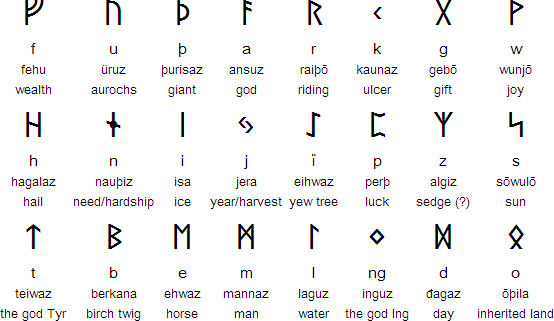
Runes were perhaps the most direct way to channel this power. The Elder Futhark alphabet was more than a system of writing; each rune held a specific, potent concept. A warrior might have the Tiwaz rune (↑), the symbol of the sky god Tyr, carved into their helmet for victory and justice in battle. The Algiz rune (ᛉ), representing a divine protector, might be tooled into a leather vambrace to ward off harm. Another powerful symbol was the Helm of Awe (Ægishjálmur), a circular stave of eight armed tridents, believed to grant the wearer invincibility and strike terror into the hearts of their enemies. These weren’t mere decorations; they were active spells, a form of battle magic etched into the very gear that would see the fight.
Animal motifs were also profoundly important, connecting the warrior to the raw, untamed forces of nature. The wolf, a creature of cunning, ferocity, and pack loyalty, was a common symbol, often associated with Odin’s wolves, Geri and Freki. Warriors who sought to channel this primal rage were known as Úlfhéðnar, or “wolf-hides.” The bear, a symbol of berserker fury and immense strength, was another favored totem. The raven, representing Odin’s messengers Huginn (thought) and Muninn (memory), symbolized wisdom and foresight on the battlefield. Perhaps the most fearsome was the serpent or dragon, like Jörmungandr, the World Serpent. Intricate knotwork depicting these beasts coiled around shield bosses, helmets, and leather straps, serving as a warning to foes and a source of strength for the wearer. When designing a custom piece today, choosing an animal totem is a deeply personal act, a way of defining the spirit of the warrior you wish to embody.
Even the abstract patterns held deep significance. The endless, looping braids of Norse knotwork represented the interconnectedness of fate, the threads woven by the Norns that governed the lives of gods and men. A Valknut, the symbol of three interlocking triangles, was inextricably linked to Odin and the fallen slain—the einherjar. To wear it was to dedicate oneself to Odin, a solemn vow that if one fell in battle, their soul would be claimed for the halls of Valhalla. This is the true essence of custom Viking armor: it is a narrative. Every scratch, every rune, every symbol tells a story of identity, belief, and destiny.
The modern Jarl: commissioning your own piece of Valhalla
In an age of mass production, the desire for something unique and meaningful has never been stronger. For enthusiasts of Norse culture, commissioning a custom suit of Viking armor is the ultimate expression of this desire. It is a journey back in time, a collaboration with a skilled artisan to forge a tangible link to the Viking spirit. But where does one begin the process of creating a personal piece of Valhalla?
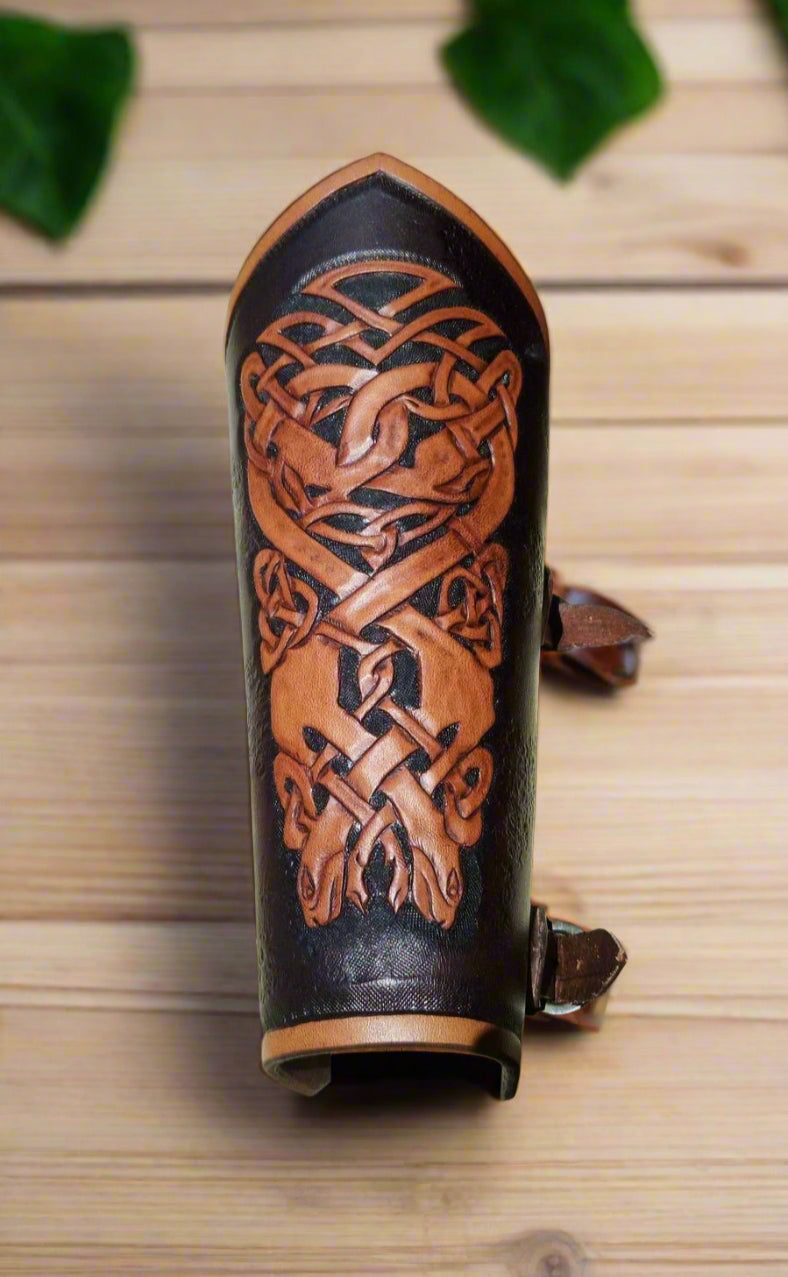
The first step is finding the right craftsman. A true artisan is more than a metalworker or a leatherworker; they are a historian, a storyteller, and an artist. Look for someone whose portfolio demonstrates not only technical skill but also a deep understanding of the Viking aesthetic and historical construction methods. Do they understand the difference between 9th-century and 11th-century helmet designs? Do they know how to properly shape and harden leather? A great artisan will guide you, asking crucial questions to help define your vision. Is this armor for intense reenactment combat, a stunning LARP costume, or a display piece for your hall? The intended use will heavily influence material choices, thickness, and construction techniques.
Once you’ve found your smith, the design process begins. This is where your saga takes shape. It is a conversation where you bring your vision and the artisan brings their expertise. You will discuss the core components: a chainmail byrnie, a leather lamellar vest, a classic Spangenhelm helmet. You’ll select materials, balancing the raw authenticity of hand-riveted mail and forged steel with the practicalities of your budget and needs. This is also the stage where you infuse the armor with your own identity. You will choose the symbols that speak to you. Perhaps you feel a connection to the steadfastness of Thor and wish to incorporate Mjölnir into your belt buckle. Maybe you value wisdom and foresight, choosing to have Odin’s ravens tooled into your bracers. You might even create a personal bindrune, combining multiple runic concepts into a single, unique glyph that is yours alone.
From these conversations, the artisan begins their work. Precise measurements are taken, as custom armor, like a fine suit, is tailored to the individual. Patterns are drawn, leather is cut, and steel is heated in the forge. This process is a slow, deliberate art. Each ring of a mail shirt is linked by hand. Each scale of a lamellar plate is individually stitched. The clang of the hammer on the anvil is the heartbeat of creation, shaping raw metal into a helmet that will protect its wearer. This journey from raw materials to finished masterpiece is a profound experience. The final result is not just a costume. It is a piece of wearable history, a functional work of art that carries your story, your beliefs, and the echoes of the eternal warriors who dined in Odin’s great hall. It is your own personal piece of Valhalla, ready for you to forge your own legend.

 vikings

