
Gathering the hallowed materials and tools of the smith
Before the first spark flies and the hammer sings its song upon the anvil, a true Norse blacksmith honors their craft by knowing their tools and materials. The Viking axe was not just a weapon; it was a companion, a tool for survival, and a symbol of strength. To create one is to imbue a piece of steel with purpose. This journey begins not in the fire, but in the careful preparation of your forge.
The soul of the axe: High-carbon steel
The heart of any blade is the steel from which it is born. The Vikings were masters of metallurgy for their time, often using bloomery iron and painstakingly forge-welding harder steel edges onto softer iron bodies. For the modern smith, the path is clearer. You need high-carbon steel. This isn’t a suggestion; it’s a necessity. High-carbon steel (like 1060, 1075, or 1084) has the ability to be hardened and tempered, allowing it to hold a sharp, durable edge that would make a raider proud. You might start with a fresh billet of steel, or, in the resourceful spirit of the Norse, repurpose an old leaf spring from a truck or a large, high-quality hammer head. The key is the carbon content, which gives the axe its very soul.
The heart of the workshop: The forge and anvil
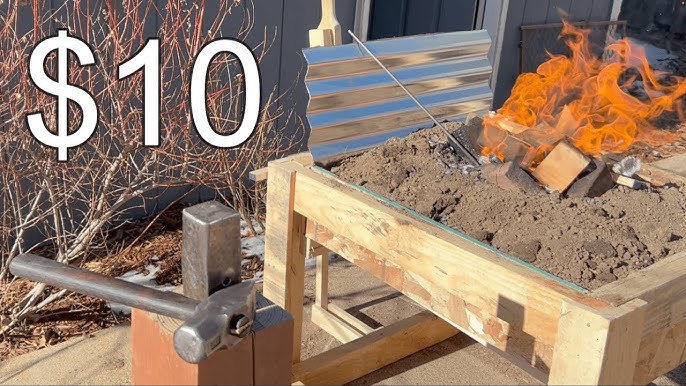
Your forge is the roaring heart of the operation, the place where you’ll bend raw steel to your will. Whether you choose a traditional coal or charcoal forge for its authentic feel and intense, focused heat, or a modern propane forge for its control and convenience, it must be capable of reaching a welding temperature (a bright yellow-white heat). Your anvil is the forge’s silent partner. It must be solid, heavy, and have a flat, smooth face. A true anvil, weighing at least 100 pounds (45kg), is ideal, but a sturdy block of steel securely mounted will serve a determined beginner. This is your altar of creation; treat it with respect.
The hands of the smith: Hammers and tongs
You will speak to the steel through your hammer. You’ll need at least two: a cross-peen hammer (around 2-3 pounds) for directing the steel and drawing it out, and a flatter-faced hammer for smoothing and refining the shape. A heavier sledgehammer is also essential if you have a friend to act as a striker for heavy-duty shaping. Tongs are your extension into the fire. You must have a sturdy pair that can grip your steel billet securely from multiple angles. Dropping a piece of white-hot steel is a mistake you only make once.
The shield of the craftsman: Essential safety gear
A Viking warrior entering battle without a shield was a fool. A blacksmith entering the forge without safety gear is no different. The forge is an environment of beautiful danger. Protect yourself with non-negotiable gear: safety glasses or a full-face shield to guard against sparks and scale, leather gloves (for handling material, not for hammering, as they can reduce grip), a thick leather apron to protect your body from heat and hot metal, and sturdy leather boots to shield your feet. Hearing protection is also wise, as the ring of the anvil can be deafening over time. The Norse were practical; a debilitating injury served no one.
Forging the axe head: A dance of fire, steel, and willpower
With your materials gathered and your forge breathing its hot breath, the true work begins. Forging an axe head is a primal process, a physical conversation between you and the metal. Each hammer blow is a word, shaping the steel’s form and destiny. We will focus on a classic bearded axe head, a versatile and iconic design.

Step 1: Awakening the steel
Begin with your rectangular billet of high-carbon steel. Place it deep into the hottest part of your forge. Your goal is to reach a bright, even forging temperature—a vibrant orange-yellow glow. A simple and effective trick passed down through generations of smiths is the magnet test. At its critical temperature, steel becomes non-magnetic. Touch a magnet to the glowing billet; if it doesn’t stick, you are ready to forge. This is the moment the steel becomes workable, like clay in a potter’s hands.
Step 2: Creating the eye
The eye is the most critical part of the axe head, as it secures the handle. The traditional method is to punch and drift it. Bring your hot steel to the anvil. Using a sharp, handled punch and your hammer, drive a hole through the thickest part of the billet. This requires confidence and powerful, accurate strikes. Reheat the steel as needed—never work cold steel, as it will resist and can crack. Once the initial hole is made, you will use a tapered tool called a drift. Drive the drift into the hole from both sides, reheating the steel between each pass. This process slowly expands and shapes the hole into the iconic teardrop or D-shape of a Viking axe eye, which helps lock the handle in place.
Step 3: Shaping the form
With the eye formed, you can now shape the body of the axe. This is where the artistry begins. Reheat the steel and use the peen of your cross-peen hammer to “draw out” the material. Hammering with the peen directs the flow of the steel, stretching and thinning it to form the main body (the cheeks) and the flared blade (the bit). You will work on both sides of the eye, carefully hammering to create the profile you desire. This is a rhythmic, powerful process. Picture the final shape in your mind and let every blow serve that vision. To form the distinctive “beard,” you will focus on drawing the lower part of the blade downward and back toward the handle. Regularly check your work for symmetry and shape.
Step 4: Refining the blade
Once the rough shape is achieved, switch to the flat face of your hammer. Use lighter, more controlled blows to flatten and refine the surfaces, cleaning up the lines and establishing the initial bevel of the cutting edge. This stage is about precision. You are no longer moving large amounts of material but are finessing the final form. Remember the Viking creed: a tool should be as beautiful as it is functional. Take your time, reheat often, and let the axe reveal its final shape under your steady hand.
The final trials: Giving the axe its soul and edge
A shaped piece of metal is not yet an axe. It lacks the hardness to hold an edge and the resilience to withstand impact. The final stages—heat treatment and finishing—are a form of alchemy, transforming the soft, forged steel into a true tool worthy of a warrior. This is where you give the axe its soul.

Step 5: Heat treatment – the fiery baptism
This is a three-part ritual. First is normalizing: heat the axe head to its critical (non-magnetic) temperature and let it cool slowly in the open air. Repeat this two or three times. This process refines the grain structure of the steel and relieves the stresses built up during the violent forging process, preventing it from cracking in the next, most crucial step.
Next comes hardening. Heat the blade evenly one last time, just past non-magnetic. The color should be a uniform, glowing orange. Then, with swift and deliberate purpose, plunge the blade edge-first into a container of quenching oil (canola oil works well). The explosive sizzle and plume of smoke is the sound of the steel’s molecular structure locking into a hard, brittle state called martensite. This is the axe’s fiery baptism, a moment of dramatic transformation.
The final part is tempering. The hardened steel is now as hard as a file but also as brittle as glass. To give it toughness, you must temper it. Clean the scale off the axe head so you can see the bare metal. Gently heat it with a torch or in an oven at a low temperature (around 400°F / 200°C). Watch the steel closely as it heats up. It will change color, moving from a light straw yellow to bronze, then purple, and finally blue. For an axe, you want to stop when you see a bronze or dark straw color. This process sacrifices a small amount of hardness for a great deal of durability, creating the perfect balance for a cutting tool.
Step 6: The final edge and hafting
Your axe head is now a functional piece of hardened steel. The work of fire is done; now begins the work of abrasion. Using files, grinders, and sharpening stones, carefully grind the final, sharp bevel onto the cutting edge. Take care not to overheat the edge, as this will ruin the temper you worked so hard to achieve. Work your way to a keen, fearsome edge that can bite deep into wood.
Finally, your axe needs its body. Select a strong, straight-grained piece of wood like ash or hickory for the handle, or haft. Carve it to fit the eye of your axe head perfectly. The fit should be so snug that it requires a mallet to seat it fully. Drive a wooden wedge into the top of the handle, expanding it to lock the head in place. A metal cross-wedge can be added for extra security. A well-fitted handle is paramount for both safety and performance.
With the head oiled to ward off rust and the handle treated with linseed oil, your work is complete. You hold in your hands not just a tool, but a legacy. You have walked the path of the Norse blacksmith, using fire, steel, and willpower to create something of lasting strength and purpose. The song of the anvil may have ended, but the spirit of the North now lives in the edge of your axe.

 vikings

