
The loom and the land: weaving with northern soul
Before a single warrior could don their gear or a shieldmaiden her finery, the story of their garments began in the very soil and on the backs of the beasts that roamed the North. Viking clothing was not conjured from distant markets; it was born of the land itself, a testament to the resilience and resourcefulness of a people intimately connected to their environment. To understand their garments of glory is to first understand the raw, powerful materials from which they were painstakingly crafted.

The undisputed king of the Norse wardrobe was wool, or ull. In the harsh, unforgiving climate of Scandinavia, wool was life. The native Northern European short-tailed sheep provided a fleece that was both hardy and versatile. This wasn’t the soft, processed merino we know today. Viking wool was a dual-coated fleece, containing a rough, water-resistant outer layer of guard hairs and a soft, insulating inner layer. This natural engineering made it the perfect material for cloaks and tunics that needed to repel biting winds, sleet, and snow. The process was laborious: shearing, cleaning, carding, and finally, spinning the fibers into yarn using a simple drop spindle. Every thread represented hours of work, a currency of time and skill.
While wool offered protection from the cold, linen, or lín, provided comfort against the skin. Cultivated from the flax plant, linen was the primary material for undergarments like the long shirt (serk) or tunic (kyrtill). Its production was a testament to patience, involving harvesting the flax, retting it (a process of controlled rotting to break down the stalk), scutching it to remove woody parts, and finally combing and spinning the long, strong fibers. The resulting fabric was breathable, durable, and became softer with every wash. A finely made linen garment was a sign of a well-managed farmstead and a mark of personal comfort and hygiene.
Forged from field and forest
Beyond the loom, leather (leðr) and fur (skinn) were essential components of the Viking ensemble. Leather, tanned using natural methods like bark tanning, was the material of function. It formed the sturdy turnshoes that carried Vikings across continents, the belts that held their tools and weapons, the pouches that secured their coins, and the armor that could turn a blade. The hides of deer, cattle, and goats were most common, each piece a byproduct of the hunt or the herd. Fur, on the other hand, was a statement of both warmth and prowess. The pelts of animals like wolves, bears, martens, and beavers were used to line cloaks and trim cuffs, offering unparalleled insulation and broadcasting the wearer’s skill as a hunter or their wealth as a trader. In every strip of leather and every swatch of fur, one could read a story of survival and dominance over the wild.
Color, too, came from the earth. The Vikings were masters of natural dyeing, transforming their textiles from earthy neutrals into a vibrant display of status. Common plants yielded a surprising palette: weld for bright yellows, woad for deep blues, and madder root for powerful reds. These colors were more than decoration; they were a language. A deep red cloak wasn’t just warm; it was a proclamation of wealth, as the dye stuffs were often cultivated or traded at great expense. The most common folk might wear undyed or ‘greige’ wool, but a jarl or his shieldmaiden would stand out in a sea of earth tones, their garments a brilliant testament to their place in the world.
Dressed for the Danelaw: the Viking wardrobe unveiled
The image of the Viking is often a caricature of horns and hides. The reality, however, was a sophisticated and practical system of layered garments, designed for a life of hard work, long voyages, and sudden, brutal conflict. The construction was deceptively simple, based on rectangles and triangles to minimize the waste of precious, hand-woven fabric. Yet, within this framework, a rich and varied wardrobe emerged that clearly distinguished man from woman, warrior from farmer, and chieftain from commoner.
The warrior’s wear: garments for the jarl and his hird
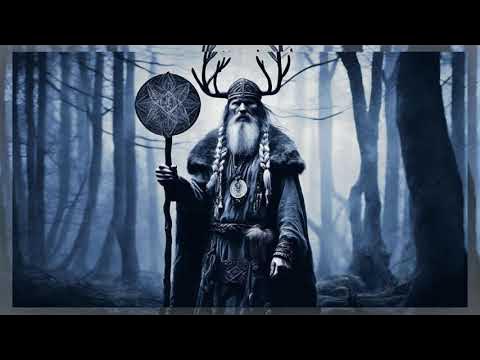
The foundation of a man’s attire was the kyrtill, or tunic. This T-shaped garment, typically made of wool, could range from thigh-length for a warrior needing freedom of movement to ankle-length for a man of high status in a formal setting. Underneath, a linen kyrtill would be worn against the skin for comfort. The real variation came in the details: a wealthy jarl’s tunic might be made of finer, dyed wool and adorned with intricately woven bands of silk, a prized import from the east, around the cuffs and neckline.
Covering the legs were brók, or trousers. These weren’t the tailored trousers of the modern day but came in several styles. Some were simple, straight-legged affairs, while others, influenced by eastern cultures, were baggy and pleated, gathering at the ankle. Regardless of the cut, they were almost always worn with leg wraps known as winingas. These long strips of wool were wound from the ankle to the knee, providing support, protection from brush, and crucial warmth. They were a distinctive and ubiquitous element of the male Viking silhouette. Over everything, a Viking man would wear a cloak, or skikkja. This was often a simple rectangle of thick, heavy wool, worn over one shoulder and fastened with a large brooch, or fibula. The cloak was a multi-purpose tool: a blanket by the campfire, a shield from the rain, and a clear symbol of the wearer’s status, conveyed through the quality of the wool and the richness of the brooch that held it fast.
The shieldmaiden’s strength: attire of the northern woman
The clothing of a Viking woman was both elegant and eminently practical, designed to manage a bustling household, a thriving farm, or a trading post. Her foundational garment was the serk, a long underdress made of linen, which could be either plain or finely pleated. Over this, she wore the iconic Norse garment: the hangerok or smokkr, often called an apron-dress. This was a tube of wool, suspended from the shoulders by two straps, which were looped and pinned in place at the front by a pair of large, ornate brooches. These brooches, known as tortoise or oval brooches, were the centerpiece of her attire.
From these brooches, a woman of means would often drape strings of glass, amber, and silver beads, creating a beautiful and audible display of her family’s wealth. The hangerok was open at the sides, allowing for complete freedom of movement. A belt of leather or woven fabric would cinch the waist, from which she would hang the keys to the farm’s food stores—a powerful symbol of her authority—along with other necessities like a small knife or a spindle whorl. For warmth, women wore woolen shawls or cloaks, fastened in the center of the chest with a third, often circular or trefoil-shaped, brooch. This layered ensemble was a perfect blend of form and function, a working uniform that could also be a canvas for incredible displays of personal wealth and artistry.
More than thread: symbolism and status in Norse garb
To the Norse, clothing was never just a covering. It was a narrative woven in wool and linen, a public declaration of one’s identity, lineage, wealth, and connection to the gods. Every choice, from the color of a tunic to the design on a belt buckle, was imbued with meaning. In a society with no formal uniforms, these ‘garments of glory’ were the primary way to communicate your story to the world without speaking a single word. This is where the true art of custom Viking creation comes to life.
The most immediate signal of status was the richness of one’s clothing. As mentioned, vibrant colors like red, blue, and the incredibly rare purple were difficult and expensive to produce, instantly setting the wearer apart as a member of the elite. Similarly, the use of imported materials like silk and silver or gold thread for embroidery was a flagrant display of a successful raider or a far-reaching merchant. A simple farmer’s tunic might have a band of colored wool at the hem, while a king’s might be trimmed with Byzantine silk and shimmering with metallic thread, a visible manifestation of his power and influence.
Woven magic and personal sagas
Beyond material wealth, clothing was deeply personal and symbolic. The intricate patterns found in tablet-woven bands or embroidered on garments were not merely decorative. Complex knotwork, zoomorphic designs of wolves or ravens, and geometric patterns could all hold protective significance, acting as talismans woven directly into the fabric. A warrior might have a depiction of Odin’s ravens on his cuff to grant him wisdom in battle, or a traveler might wear a band with a knot representing Mjöllnir for protection. These custom details transformed a simple garment into a piece of personal armor, both physical and spiritual.
The jewelry that held the clothing together was perhaps the most potent symbol of all. The brooches, or fibulae, were essential tools, but they were also works of art. The style of a tortoise brooch could indicate a woman’s regional origins—from Gotland, for example. The quality of the metal, from simple bronze to ornate gilded silver, spoke volumes about her family’s standing. These were not disposable items; they were heirlooms, passed down from mother to daughter, carrying the legacy of the clan with them. For a man, the penannular brooch that fastened his cloak was his signature piece. A massive silver brooch, intricately carved with grasping beasts, declared him a man of formidable power and success. In the creation of a custom Viking kit, choosing your brooches is like choosing the chapter headings of your personal saga. They are the focal points around which the rest of your story is built, turning simple cloth into a true garment of glory.

 vikings

