
The indelible mark of the northmen: historical roots of norse body art
In the heart of every warrior, there is a story. For the Vikings, these stories were not just sung in great halls or carved into stone; they were likely worn upon their very skin. The modern fascination with Viking tattoos—intricate knotwork, powerful beasts, and cryptic runes—is more than a fleeting trend. It is a connection to a past where art was armor, and identity was etched with purpose. But did the Vikings truly cover themselves in the elaborate tattoos we imagine today? The answer, like much of Norse history, is woven from threads of fact, informed speculation, and compelling accounts from those who witnessed them firsthand.

Our most vivid and frequently cited description comes from an Arab diplomat, Ahmad ibn Fadlan, who encountered a group of Scandinavian traders known as the Rus’ on the Volga River around 922 AD. His account is a rare window into their world, and his words paint a striking picture: “From the tips of his toes to his neck, each man was tattooed in dark green with designs of trees, figures, and the like.” He described them as tall as date palms, with bodies covered in images. While ibn Fadlan used the Arabic word for tattooing, scholars debate whether he was describing permanent ink or a form of body paint made from materials like woad, which produces a dark blue-green stain. Without preserved Viking skin, we may never know for certain.
However, the circumstantial evidence is strong. The practice of tattooing was widespread among neighboring and contemporary cultures, including the Scythians and the Picts, whose very name means “painted people.” Given the Vikings’ extensive travels and cultural exchanges, it is highly plausible that they adopted or already practiced this form of permanent body modification. It was a way to display one’s allegiance to a chieftain, devotion to a god like Odin or Thor, or to commemorate a significant battle. A tattoo was a non-verbal declaration of who you were and what you stood for—an indelible mark of your place in the world.
These ancient marks would have been more than mere decoration. In a world governed by fate and the whims of the gods, symbols held immense power. A warrior might bear the image of a wolf to channel its ferocity, or a raven to seek Odin’s wisdom. These designs were a form of psychological warfare and spiritual reinforcement, a way to carry one’s beliefs and strengths into the shield wall. This deep, symbolic purpose is the true treasure passed down through the ages, forming the bedrock upon which the modern Viking tattoo revival is built.
Decoding the pantheon: the powerful symbols of viking tattoos
The enduring power of Viking-inspired tattoos lies in their rich symbolic language. Each design is a piece of a larger mythology, a single word in an epic poem of gods, monsters, and heroes. Understanding these symbols is key to appreciating why they resonate so deeply with us today. They are not just cool designs; they are emblems of strength, protection, wisdom, and the unbreakable cycles of life and death. When someone chooses a Norse symbol for their skin, they are invoking the ancient meaning behind it.

Here are some of the most potent symbols that have found their way from runestones and relics into modern tattoo art:
- Aegishjalmur (The Helm of Awe): Perhaps one of the most fearsome symbols, this eight-armed stave was a sigil of protection and victory. It was believed to grant the wearer invincibility in battle and to strike terror into the hearts of their enemies. Warriors would draw it on their foreheads before a fight, a magical act to channel its formidable power. As a tattoo, it represents ultimate protection and the courage to face any adversary.
- Vegvísir (The Runic Compass): While its origins are found in a post-Viking-Age Icelandic grimoire, the Vegvísir has been wholeheartedly adopted into modern Norse symbolism. Its name means “wayfinder” or “signpost,” and the manuscript states, “If this sign is carried, one will never lose one’s way in storms or bad weather, even when the way is not known.” Today, it is a tattoo for those seeking guidance and a reminder that they can navigate through life’s toughest challenges without losing their path.
- Valknut (The Knot of the Slain): This enigmatic symbol of three interlocking triangles is heavily associated with Odin, the Allfather. It appears on ancient picture stones alongside scenes depicting battles and sacrifices. Its true meaning is debated, but it is widely believed to represent the transition between life and death and Odin’s power to bind and unbind the fates of men. For a warrior, it was a mark of dedication to Odin, signifying a willingness to die in battle and be carried by the Valkyries to Valhalla. As a tattoo, it is a tribute to fallen loved ones and an acceptance of one’s destiny.
- Yggdrasil (The World Tree): The great ash tree Yggdrasil is the very center of the Norse cosmos, its branches reaching into the heavens and its roots delving into the nine worlds. It represents the interconnectedness of all things, the cycle of birth, growth, and death, and the unbreakable structure of reality. A tattoo of Yggdrasil symbolizes a deep connection to life, family, and the universe, as well as wisdom and spiritual growth.
- Huginn and Muninn (Odin’s Ravens): Odin’s two raven companions, whose names mean “Thought” and “Memory,” flew across the nine worlds each day to gather information for the Allfather. They represent intellect, wisdom, and the pursuit of knowledge. A tattoo of these ravens often symbolizes a quest for truth and a sharp mind, a powerful connection to the god of wisdom and war.
- Jörmungandr (The World Serpent): One of Loki’s monstrous children, this giant serpent grew so large that it encircled the entire world, biting its own tail. Jörmungandr represents the destructive forces of nature and the concept of the ouroboros—the eternal cycle of creation and destruction. As a tattoo, it is a powerful symbol of the raw, untamable power of the natural world and the cyclical nature of life.
The modern shield wall: why we crave the viking spirit today
The resurgence of Viking tattoos is not simply about aesthetics; it is a cultural phenomenon rooted in a collective desire for meaning, strength, and connection. In an increasingly digital and disconnected world, these ancient symbols offer a tangible link to a past defined by raw courage, unwavering community, and a profound respect for the natural world. They serve as a modern form of armor, empowering the wearer to face their own personal battles.
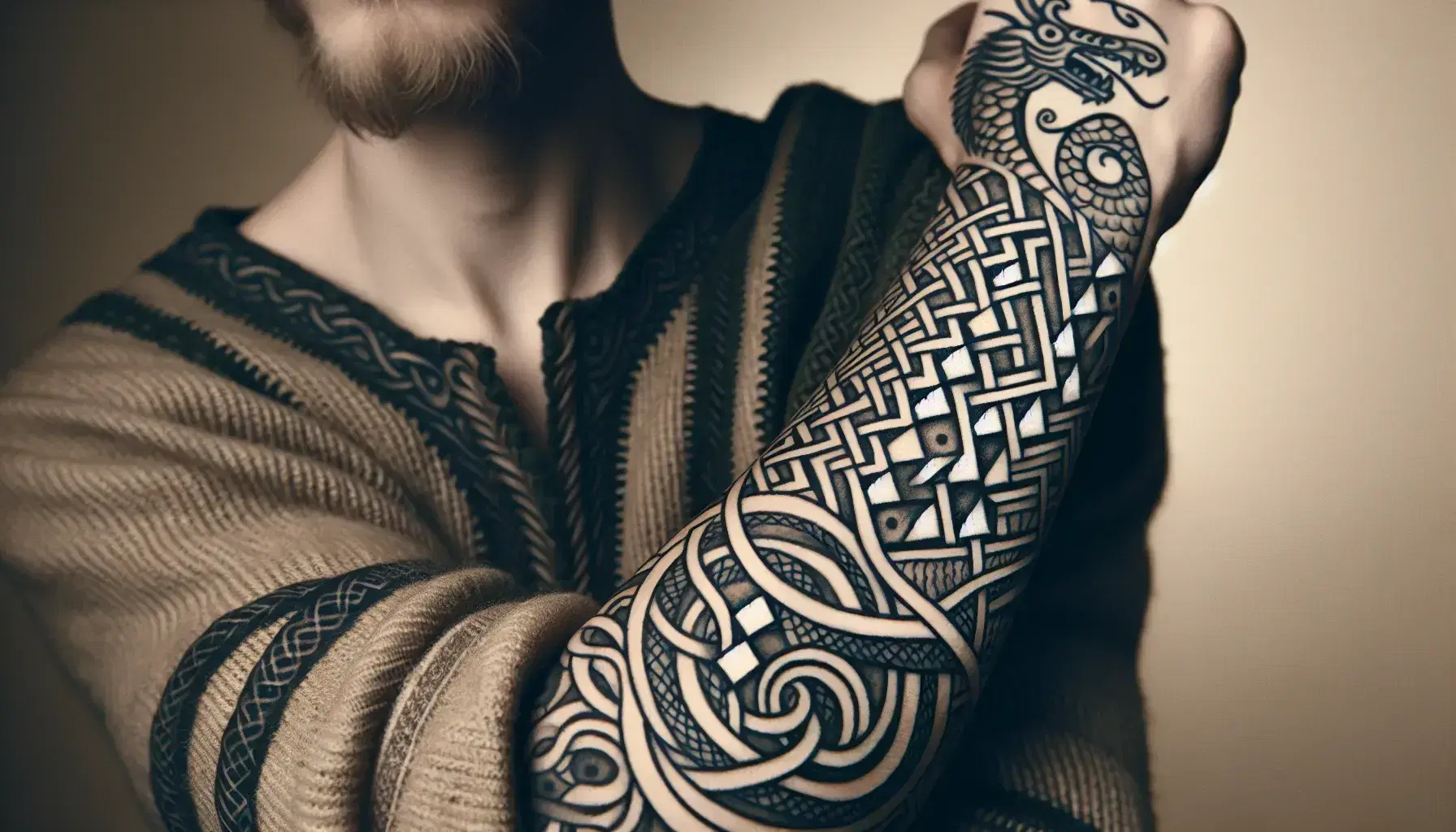
One of the primary drivers of this revival is the search for identity and heritage. For individuals with Scandinavian ancestry, these tattoos are a proud declaration of their roots, a way to honor the ancestors who braved harsh seas and unforgiving landscapes. But the appeal extends far beyond bloodlines. The Viking ethos—one of self-reliance, relentless exploration, and fierce loyalty—resonates with people from all walks of life. To wear a Norse tattoo is to align oneself with these timeless values, to adopt a warrior’s mindset in the face of modern challenges, whether in the boardroom, the gym, or the home.
Pop culture has also played an immense role in reintroducing the world to the visceral beauty of Norse culture. Epic television series like “Vikings” and “The Last Kingdom,” along with blockbuster video games such as “God of War” and “Assassin’s Creed Valhalla,” have brought the legends and aesthetics of the North to a global audience. They have transformed historical figures into relatable heroes and showcased the stunning visual language of Norse art. This exposure has demystified the symbols and ignited a passion for the intricate knotwork, bold animal motifs, and powerful runic inscriptions that translate so perfectly to skin.
Ultimately, the reason these designs remain so compelling is that they feel authentic and powerful. They are not delicate or subtle. They are bold, primal, and unapologetic. The thick lines of Nordic knotwork, the snarling faces of wolves and dragons, and the stark geometry of ancient staves all speak to a primal strength. Inking these symbols onto one’s body is a deeply personal ritual. It is a commitment, a statement of intent, and a permanent reminder of the inner strength one wishes to embody. It is a way of saying, “I will not be broken. I will not lose my way. I am a warrior in my own right.” In this way, the spirit of the Vikings lives on, not as a relic of the past, but as a fearless, living art form worn by a new generation of Northmen and shieldmaidens.

 vikings


