
The historical roots of Norse ink: More than just markings
The clang of steel, the salt spray of the North Sea, and the indomitable spirit of the Norsemen—these are the images that thunder through our minds when we think of the Viking Age. But beyond the sagas and the battlefields, there existed a deep and intricate culture of symbolism and personal expression. A key part of this, shrouded in mystery and debated by historians, is the art of the Viking tattoo. While the harsh northern climate has left us with no preserved tattooed skin, compelling evidence suggests that body art was a vital part of Norse identity.
Our most vivid account comes from the 10th-century Arab traveler, Ahmad ibn Fadlan, who encountered a group of Scandinavian traders known as the Rus’. He described them as tall as date palms, with bodies covered from “fingertip to neck” with dark green or blue-black patterns resembling intricate trees and symbols. While he was an outsider looking in, his detailed description of these walking canvases of knotwork and powerful imagery gives us our strongest clue that tattoos were indeed a part of their world.
It’s logical to assume that a culture that so painstakingly carved elaborate designs into their longships, weapons, and runestones would not stop at their own skin. For the Vikings, art was functional and magical. A carving on a ship’s prow wasn’t just decoration; it was meant to ward off sea monsters and hostile spirits. Similarly, a tattoo would have been far more than a mere aesthetic choice. It was a permanent mark of identity, a visual declaration of one’s clan, faith, or accomplishments. These were symbols of power, meant to be seen. A warrior marked with the likeness of a wolf or bear might be invoking the spirit of that animal, seeking its ferocity and strength in the shield wall. Runic inscriptions could have been talismans for protection, luck, or victory. In a world governed by fate and the will of the gods, these permanent markings were a way to exert some control, to carry one’s beliefs and sources of strength directly on the flesh. This deep-seated need for meaningful expression is precisely why these ancient concepts still resonate with such power today.
Unpacking the symbolism: Potent marks of the Northmen
To understand the enduring appeal of Viking tattoos, we must first understand the language they speak. Each symbol is a vessel of meaning, a piece of a story that has been passed down through generations. These are not just cool designs; they are archetypes of the human experience—of struggle, guidance, protection, and destiny. When you choose a Norse symbol for a modern tattoo, you are tapping into this ancient wellspring of power. Let’s delve into some of the most potent symbols that continue to inspire fearless designs.
The Helm of Awe (Ægishjálmur)
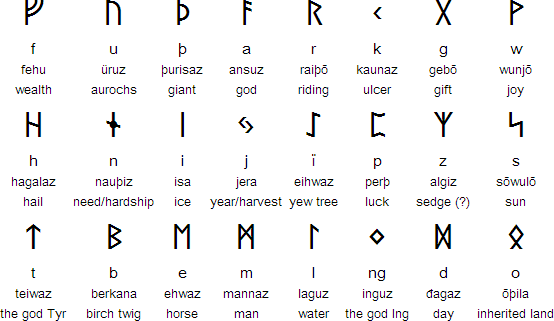
One of the most powerful and visually striking symbols, the Helm of Awe is a magical stave consisting of eight armed spokes radiating from a central point. It was believed to grant the wearer protection and invincibility in battle. The sagas tell of warriors drawing this symbol on their foreheads to strike fear into the hearts of their enemies. As a tattoo, it represents more than just physical protection; it is a mark of mental and spiritual fortitude, a reminder to face your own internal and external battles without fear.
Vegvísir (The runic compass)
Often called the Viking compass, the Vegvísir is a symbol of guidance and protection. Its name translates to “That Which Shows the Way.” An Icelandic grimoire states, “If this sign is carried, one will never lose one’s way in storms or bad weather, even when the way is not known.” While its origins are from the post-Viking Age, its spirit is purely Norse. For a people who navigated vast and treacherous seas, a guide was essential. Today, a Vegvísir tattoo is a powerful metaphor for finding your path through the storms of life, a declaration that you will find your way, no matter the obstacles.
The Valknut (The knot of the slain)
This mesmerizing symbol, comprised of three interlocked triangles, is inextricably linked to the Allfather, Odin. It has been found on ancient runestones and picture stones associated with battle and sacrifice. The Valknut is often interpreted as the “knot of the slain warrior,” symbolizing the binding of the soul and its journey to Valhalla. It is a profound and somber symbol, representing a warrior’s pledge to Odin and an acceptance of fate. For a modern bearer, it signifies courage, freedom from the fear of death, and a deep connection to the warrior’s path.
Yggdrasil (The world tree)
At the center of Norse cosmology stands Yggdrasil, the immense ash tree that connects the Nine Worlds. Its roots dig deep into the unknown, and its branches reach to the heavens. It is the ultimate symbol of life, the cosmos, and the interconnectedness of all things. A Yggdrasil tattoo represents a connection to nature, to heritage, and to the cosmic cycle of life, death, and rebirth. It is a profound statement about one’s place in the universe and the strength drawn from deep roots.
Huginn and Muninn (Odin’s ravens)
Perched on Odin’s shoulders, the ravens Huginn (Thought) and Muninn (Memory) fly across the world each day to bring him news. They are his eyes and ears, symbols of intellect, wisdom, and the relentless pursuit of knowledge. A tattoo of these two ravens can represent a thirst for wisdom, the balance between intellect and intuition, and a connection to the Allfather’s shamanic quest for understanding. It is a mark for the thinker as much as the warrior.
Forging a modern identity with ancient ink
So, why has this ancient symbolism experienced such a massive resurgence? In a world that often feels disconnected and chaotic, Norse tattoos offer a powerful anchor. They connect us to a past defined by resilience, exploration, and an unshakeable will. The modern revival, fueled by epic television series, video games, and a growing interest in ancestral heritage, goes far beyond a passing trend. It’s about embodying the virtues these symbols represent.
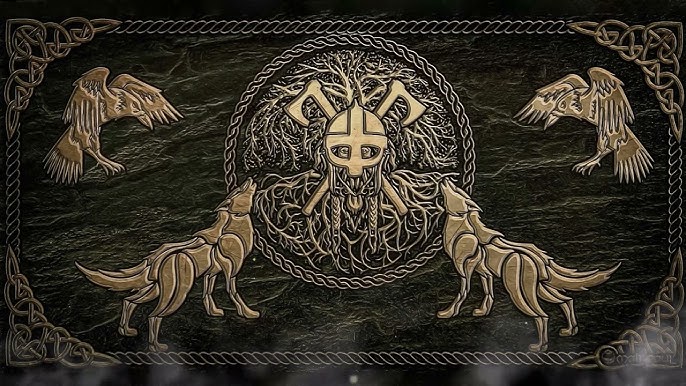
Modern tattoo artistry has elevated these ancient designs to new heights. You can see them rendered in countless styles, from stark, traditional blackwork that mimics the carvings on a runestone to breathtakingly realistic portraits of gods and goddesses locked in eternal struggle. This is where the world of “Custom Viking Creations” truly comes alive. People are no longer just copying symbols; they are weaving them into personal narratives. A warrior might get a sleeve that tells the story of Ragnarök, not as an end, but as a symbol of their own trials and rebirth. A father might get Thor’s Hammer, Mjölnir, tattooed over his heart as a mark of protection for his family. A scholar might choose a simple, elegant runic inscription that holds a personal mantra.
This act of choosing and customizing a Viking tattoo is a modern ritual. It’s a process of self-discovery, of researching the myths and finding the symbol that speaks to your soul. It’s about collaborating with an artist to forge a piece of armor for your spirit, rendered in ink. It’s a declaration that says, “I value strength. I honor my roots. I am the master of my own fate.” By marking our skin with the symbols of the Northmen, we are not just decorating our bodies. We are reminding ourselves, and the world, that the fearless spirit of the Vikings—their courage, their thirst for life, and their deep connection to the forces of nature—is not just a relic of history. It is a living fire that still burns within us today.

 vikings


