
The shadow of Odin’s wings
Imagine the scene. A grey northern sea, the air thick with salt spray and the tension of impending battle. On the horizon, the distinct silhouette of a longship cuts through the waves. At its mast, a banner flutters in the fierce wind—not a simple piece of colored cloth, but a symbol woven with myth and terror: a black raven upon a stark field. This was the **Hrafnsmerki**, the legendary Raven Banner, a standard that struck fear into the hearts of its enemies and filled Viking warriors with the unyielding spirit of the North.

More than just a flag, the Raven Banner was a conduit of divine power, a relic steeped in the magic of the old gods. It was the emblem of kings and chieftains, a promise of Odin’s favor, and a dark omen for those who stood against it. Its story is not one of simple heraldry but of magic, prophecy, and the brutal reality of the Viking Age. To understand this iconic standard is to understand the very mindset of the Norse warrior—a world where the gods walked among men, and where victory was foretold in the flutter of a raven’s wing. In the chronicles of history and the verses of the sagas, the Raven Banner flies as one of the most potent symbols of Viking power. Join us as we march under its shadow and uncover the stories woven into its very threads.
Woven with magic and myth: the birth of the Hrafnsmerki
The origins of the Raven Banner are shrouded in the mists of legend, much like the figures who were said to carry it. Unlike the standardized flags of modern armies, the **Hrafnsmerki** was likely a more personal and mystical object. Sagas and chronicles describe it as a triangular or rectangular banner, often made of white silk or linen, bearing the image of a raven intricately woven or sewn into its fabric. The raven itself was no mere decoration; it was the heart of the banner’s power.
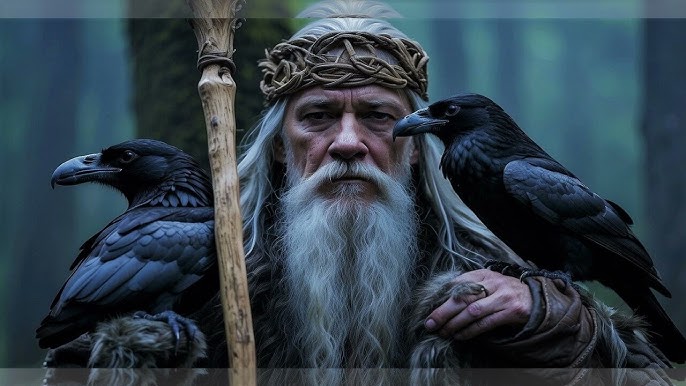
In Norse mythology, the raven is inextricably linked to the Allfather, **Odin**. His two ravens, **Huginn** (thought) and **Muninn** (memory), flew across the Nine Worlds each day, returning to whisper all they had seen and heard into his ear. The raven was therefore a symbol of wisdom, insight, and divine knowledge. But it was also a creature of the battlefield—a carrion bird that followed armies, feasting on the fallen. This duality made it the perfect emblem for the Viking warrior: a symbol of both Odin’s cunning strategy and the brutal, inevitable reality of war.
Legend attributes the creation of the most famous Raven Banners to the daughters of the legendary Ragnar Lothbrok. The 12th-century *Annals of St. Neots* recounts a tale where three of Ragnar’s daughters wove a banner in a single afternoon. This banner possessed a powerful magical property: when carried into battle, the raven would appear to beat its wings if victory was assured, but would hang limp and lifeless if defeat was imminent. This was not just a morale booster; it was a tool of prophecy, a direct line to the will of the gods. For the Vikings who fought beneath it, the banner’s movement was as crucial as the commander’s orders. For their enemies, often devout Christians, the sight of this pagan icon, seemingly alive with dark energy, was a terrifying instrument of psychological warfare.
The choice of a raven was a masterstroke of symbolism. It declared that the warriors were not just fighting for land or silver, but with the blessing of the highest god in their pantheon. Each flap of the woven wings was a whisper from Odin himself, a promise that Valhalla awaited the brave and that their enemies were already counted among the dead.
Hoisted in battle: echoes from the historical record
While steeped in myth, the Raven Banner is not pure fantasy. It flutters through the pages of historical accounts, a consistent and fearsome presence in the Viking incursions across Europe. Though no physical banner has ever been recovered from an archaeological dig—its delicate silk and wool threads long since surrendered to the earth—written records provide compelling evidence of its existence and its impact.
One of the most significant mentions comes from the *Anglo-Saxon Chronicle*. In the entry for the year 878, it describes the Battle of Cynwit in Devon. A Viking force led by Ubba, a son of Ragnar Lothbrok, besieged a Saxon stronghold. The Saxons, in a desperate, pre-dawn charge, broke the Viking shield wall and routed their army. The Chronicle notes with triumph that among the spoils, the Saxons captured the Vikings’ most prized standard, which they called “Raven.” This account corroborates the sagas’ claims, linking the banner directly to the legendary sons of Ragnar and confirming its use in the Great Heathen Army’s campaign in England.
The Norse sagas, of course, are rich with tales of the banner. The *Orkneyinga saga* tells the tragic story of Sigurd the Stout, the Earl of Orkney. His mother, a powerful sorceress or *völva*, wove him a raven banner that she claimed would bring victory to any army that followed it, but would bring death to the man who carried it. The prophecy held true. Sigurd won numerous battles under the banner, but in each one, his standard-bearer was slain. At the decisive Battle of Clontarf in 1014, with no one else willing to take up the cursed honor, Sigurd carried the banner himself. He achieved his fated victory but fell on the battlefield, a testament to the double-edged nature of divine favor in the Norse world.
Further evidence comes from numismatics. Viking leaders in the Danelaw, such as Olaf Guthfrithson, King of Dublin and Northumbria, minted coins in the 10th century that prominently feature a raven. These “Raven Pennies” served as a mobile form of propaganda, stamping the king’s authority and his connection to this powerful symbol onto the very currency of his realm. The banner was more than an accessory of war; it was a mark of legitimacy and divine right to rule.
The raven’s enduring flight: a symbol beyond the battlefield
The Raven Banner was never a national flag in the modern sense. The concept of a unified “Viking nation” did not exist. Instead, it was a dynastic or personal standard, a symbol of a particular chieftain’s power, lineage, and divine connection. To fly the Hrafnsmerki was to declare oneself a leader favored by Odin, a warrior walking a path laid out by fate. Its power was rooted in a deeply personal and spiritual worldview, where leadership and religious authority were one and the same.
The symbolism of the raven itself gave the banner its profound psychological weight. To the Norse, the raven was a guide. It was believed that Viking navigators would release ravens from their ships to find the nearest land. In the same way, the banner guided warriors in battle, pointing the way to victory. It represented the keen intelligence and strategic thinking gifted by Odin, a reminder to fight not just with brute strength but with cunning.
For their Christian adversaries, the raven had a wholly different and sinister meaning. In Christian iconography, the raven was often associated with paganism, darkness, and evil. The sight of this black bird on a banner, carried by warriors who desecrated monasteries and defied their God, would have been seen as a truly demonic emblem. The Raven Banner thus fought on two fronts: it inspired courage in the Norse ranks while simultaneously projecting an image of unholy terror onto their foes.
Though the last historical mention of the banner fades into the past after the 11th century, the raven’s flight is far from over. The symbol has endured, becoming one of the most recognizable icons of Norse heritage. Today, it is embraced by enthusiasts of Viking history, practitioners of modern Norse paganism (Asatru), and artists around the world. It appears in tattoos, jewelry, clothing, and art, a powerful link to the ancient North. It continues to represent what it always has: wisdom, fearlessness, a deep connection to the old ways, and the untamable spirit of the Viking Age.
The physical banners may have turned to dust, but the stories they told are woven into the fabric of history. Under the shadow of the raven’s wing, kings were made, kingdoms were conquered, and an age was defined. The Hrafnsmerki remains a silent, powerful testament to the fierce world of the Norsemen, a treasure of the North whose legend will never fall.

 vikings


